
SpaceX could become one of the biggest beneficiaries of the artificial intelligence boom over the next decade, with Goldman Sachs reportedly projecting that the company’s AI-related revenue may increase by as much as 100-fold by 2030. The forecast reflects growing confidence among investors that the Elon Musk-led aerospace company is positioned to play a significant role in the infrastructure powering the next generation of AI technologies.
The prediction highlights a broader shift in how financial markets are evaluating SpaceX. Long recognized as a pioneer in space exploration, satellite deployment, and commercial launch services, the company is increasingly being viewed as a technology and communications giant whose assets could become critical to the future of artificial intelligence.
According to analysts, SpaceX’s expanding satellite internet network and growing data capabilities could place it at the center of an emerging ecosystem where AI applications require constant connectivity, real-time communication, and large-scale data transmission. As businesses and governments invest heavily in AI systems, demand for reliable digital infrastructure is expected to grow rapidly, creating new opportunities for companies capable of supporting those needs.
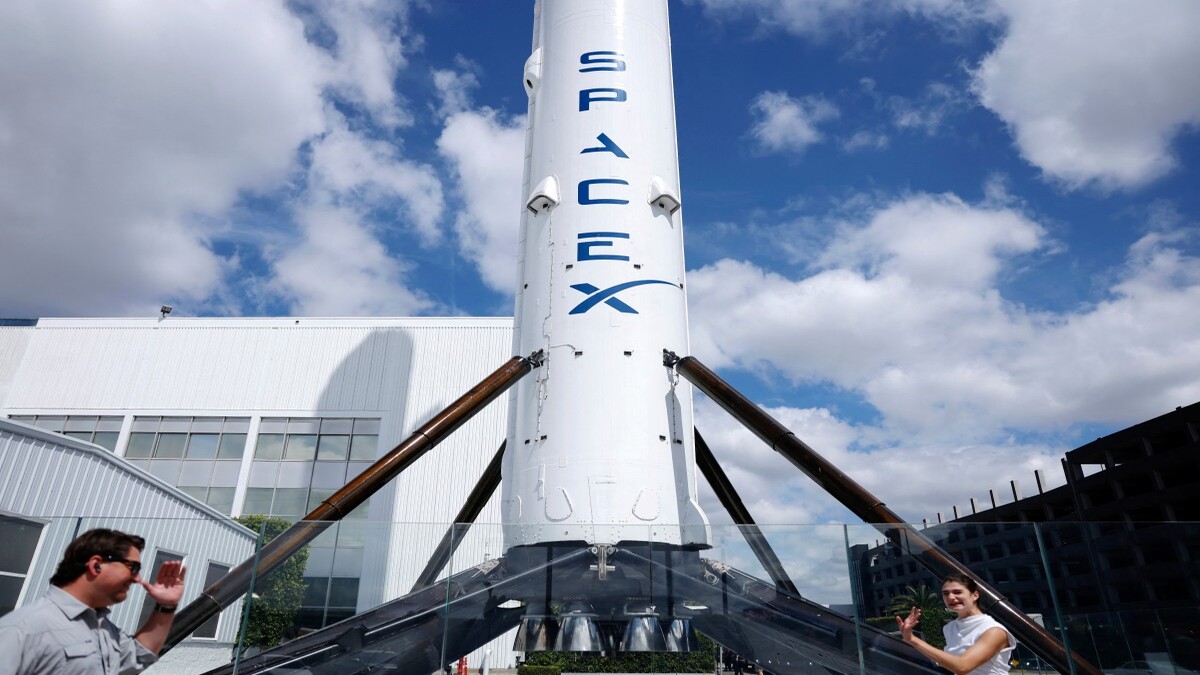)
At the heart of SpaceX’s AI ambitions is Starlink, the company’s satellite internet division. Over the past several years, Starlink has grown from an ambitious concept into one of the world’s largest low-Earth-orbit satellite networks. With thousands of satellites already in operation and millions of customers across dozens of countries, the service has established itself as a major player in the global telecommunications industry.
Industry experts believe Starlink’s infrastructure could become increasingly valuable as artificial intelligence expands into industries ranging from transportation and logistics to healthcare, manufacturing, agriculture, and defense. Many AI-powered systems rely on continuous streams of data, often requiring low-latency communication networks capable of operating in remote or underserved areas.
SpaceX’s satellite network provides a unique advantage in that regard. Unlike traditional internet infrastructure, which depends on ground-based cables and cellular towers, Starlink can deliver connectivity almost anywhere on Earth. This capability is expected to become particularly important as AI-powered devices and autonomous systems become more widespread.
The growing importance of connectivity has led analysts to view satellite networks as a crucial layer of future AI infrastructure. Autonomous vehicles, industrial robots, remote monitoring systems, and smart logistics platforms all require reliable communication links to function effectively. As these technologies become more common, demand for global connectivity solutions could rise substantially.
Investors are increasingly recognizing that artificial intelligence is not solely about software and algorithms. The technology depends on a complex network of supporting infrastructure, including data centers, semiconductor manufacturing, cloud computing systems, and communications networks. Companies controlling these foundational elements are attracting growing attention from Wall Street.
SpaceX’s unique business model gives it an advantage that few competitors can match. The company not only operates a satellite communications network but also possesses its own launch capabilities. This vertical integration allows SpaceX to deploy satellites more quickly and cost-effectively than many rivals, reducing operational expenses and enabling rapid expansion.
The company’s reusable rocket technology has already transformed the economics of space launches. By lowering the cost of putting satellites into orbit, SpaceX has been able to scale Starlink at a pace that competitors have struggled to match. Analysts believe this advantage could become even more valuable as demand for AI-supporting infrastructure accelerates.
The projected growth in AI-related revenue also aligns with broader trends across the technology sector. Since the emergence of advanced generative AI systems, businesses worldwide have significantly increased spending on infrastructure capable of supporting machine learning applications. Demand for computing power, data storage, and network capacity has surged, driving investment across multiple industries.
Technology giants have announced plans to spend hundreds of billions of dollars on AI infrastructure over the coming years. This investment wave has created opportunities not only for software developers but also for companies that provide the physical backbone required to support AI operations.

SpaceX’s role in this ecosystem could extend beyond internet connectivity. Industry observers believe the company’s satellite network may eventually support advanced data collection, real-time analytics, and communication services designed specifically for AI applications. Such services could generate new revenue streams that complement the company’s existing business activities.
The defense sector represents another area of potential growth. Governments around the world are rapidly integrating artificial intelligence into military and intelligence operations. Satellite-based communications and data transmission capabilities are expected to play a critical role in these efforts, creating additional opportunities for SpaceX.
At the same time, the company faces significant challenges. Competition in both satellite communications and AI infrastructure is intensifying as established technology firms and emerging startups seek to capture a share of the growing market. Regulatory hurdles, spectrum allocation disputes, and the costs associated with maintaining a large satellite constellation could also affect long-term growth.
Market analysts caution that projections extending several years into the future should be viewed with some degree of uncertainty. The pace of AI adoption, technological breakthroughs, economic conditions, and competitive developments could all influence actual revenue outcomes.
Nevertheless, the reported forecast underscores the growing belief that SpaceX is evolving into far more than an aerospace company. Investors increasingly view the firm as a critical provider of digital infrastructure capable of supporting some of the most transformative technologies of the coming decade.
The company’s ability to combine space-based communications, advanced engineering, and large-scale deployment capabilities has positioned it uniquely within the rapidly expanding AI economy. While rockets and space missions remain central to its identity, the future growth story may increasingly revolve around data, connectivity, and artificial intelligence.
If Goldman Sachs’ expectations prove accurate, SpaceX could emerge as one of the most influential players in the global AI landscape by 2030. Such growth would not only reshape the company’s revenue mix but also reinforce its position as a technology powerhouse whose influence extends far beyond the boundaries of the aerospace industry.