
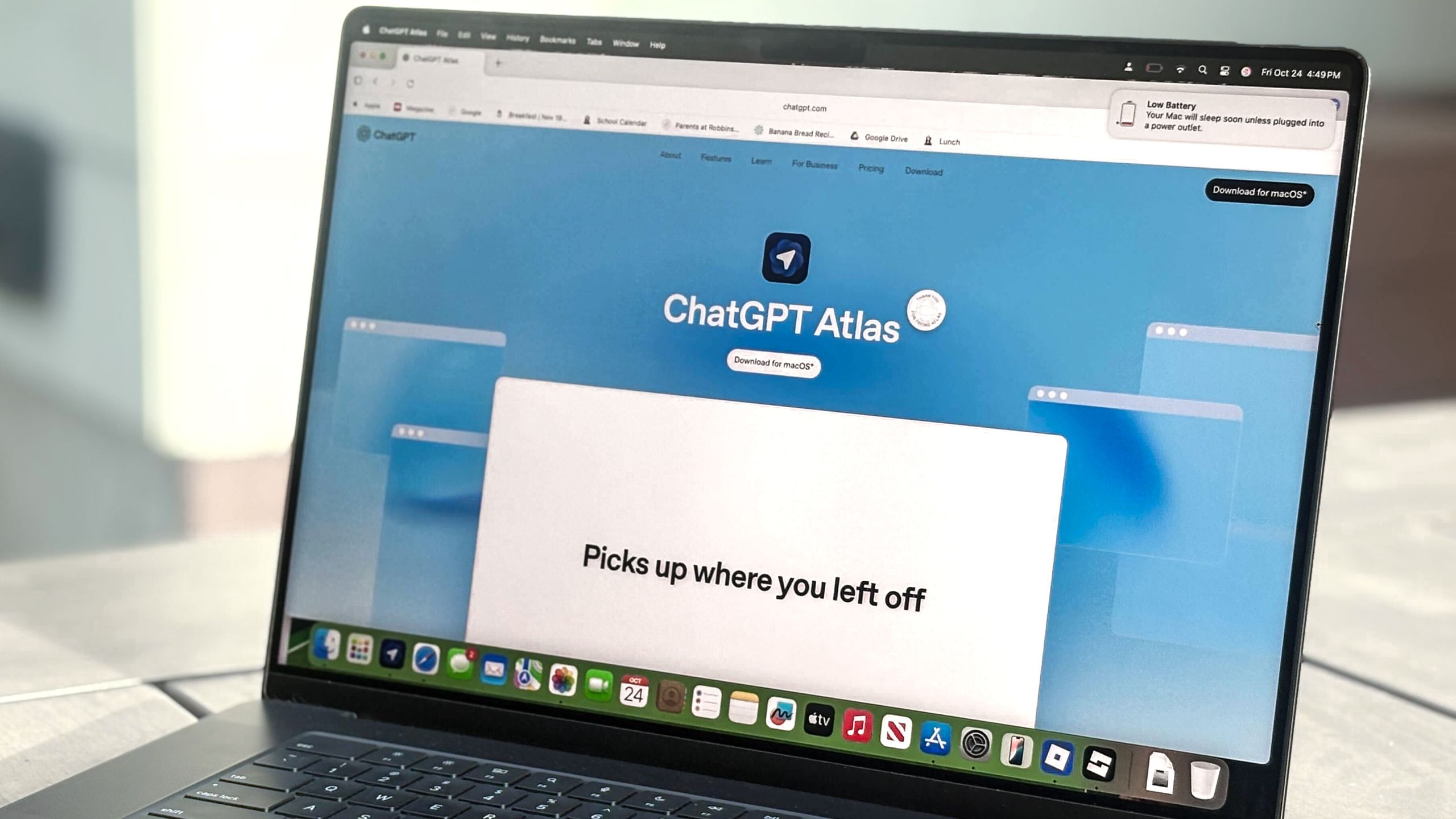
OpenAI is set to discontinue its experimental ChatGPT Atlas browser, marking a strategic shift in the company’s approach to AI-powered web browsing. Instead of developing and maintaining a standalone browser, the artificial intelligence company is now focusing on a new ChatGPT extension for Google Chrome that promises a more seamless and context-aware browsing experience.
The move signals OpenAI’s evolving vision for how users interact with artificial intelligence on the web. Rather than asking users to switch to a dedicated browser, the company is integrating ChatGPT directly into one of the world’s most widely used web browsers, allowing the AI assistant to become a natural part of everyday online activities.
At the heart of this transition is the new ChatGPT Chrome extension, which introduces one of the assistant’s most significant capabilities to date: access to the context of the webpage currently being viewed. With the user’s permission, ChatGPT can understand the contents of an open webpage, enabling it to provide more relevant responses without requiring users to copy and paste text or repeatedly explain what they are reading.
The feature significantly changes how users interact with AI while browsing. Instead of opening a separate chatbot window and manually describing the information they need help with, users can ask questions directly while remaining on the webpage. ChatGPT can analyse articles, reports, research papers, product pages, technical documentation, emails, or any other web content and generate responses based on the visible information.
The contextual understanding provided by the extension makes ChatGPT more useful across a wide range of activities. Students conducting research can ask for explanations of difficult concepts, summaries of lengthy academic papers, or comparisons between multiple sources without leaving the browser. Professionals reviewing reports or legal documents can request simplified explanations, identify key takeaways, or draft responses while staying focused on their work.
The extension is also expected to enhance ChatGPT’s writing capabilities. Users drafting emails, presentations, business proposals, or marketing content can receive suggestions that are directly informed by the webpage they are viewing. This reduces the need for repetitive prompts and allows the AI assistant to provide more accurate and personalised assistance.
OpenAI’s decision to retire Atlas reflects a broader trend across the technology industry, where companies are increasingly embedding AI into existing platforms instead of creating entirely new software ecosystems. Browser extensions, operating system integrations, and productivity tool plugins have become preferred methods for delivering AI experiences because they minimise disruption to established user habits.
Building a standalone browser presents significant technical challenges. Browser developers must continuously maintain compatibility with changing web standards, improve security, release regular updates, support extensions, optimise performance, and respond to newly discovered vulnerabilities. These responsibilities require substantial engineering resources that could otherwise be devoted to advancing artificial intelligence capabilities.
By focusing on a Chrome extension instead of an independent browser, OpenAI can concentrate on enhancing ChatGPT’s intelligence rather than competing in the highly mature browser market. Google Chrome already commands a dominant share of global web traffic, giving OpenAI immediate access to hundreds of millions of potential users without requiring them to adopt unfamiliar software.
The transition also reflects changing expectations around artificial intelligence. Early chatbot interactions often involved isolated conversations in which users had to provide detailed background information before receiving meaningful responses. Modern AI systems are increasingly expected to understand context automatically, making interactions faster, more intuitive, and more conversational.
The new extension brings ChatGPT closer to functioning as a true digital assistant rather than simply a question-and-answer tool. By understanding what users are reading or working on in real time, the assistant can anticipate needs, provide more precise recommendations, and reduce repetitive interactions. This contextual awareness represents an important step toward AI systems that integrate naturally into everyday digital workflows.
Privacy remains a key consideration as AI assistants gain greater access to browsing activity. OpenAI has emphasised that the extension operates only with user permission, allowing individuals to control when ChatGPT can access webpage content. Users are expected to retain the ability to manage permissions, choose which websites the assistant can interact with, and disable contextual access whenever they prefer.
The decision to retire Atlas also highlights OpenAI’s broader strategy of making ChatGPT available wherever users already work instead of requiring them to adapt to entirely new environments. Over the past year, the company has expanded ChatGPT across desktop applications, mobile devices, enterprise platforms, and productivity software. Browser integration represents another step in making artificial intelligence a constant companion throughout the user’s digital experience.
Industry analysts believe contextual browsing will become an increasingly important feature as AI assistants evolve. Future systems are expected to understand not only webpage content but also user intent, ongoing tasks, previous interactions, and workflow patterns. This could enable AI assistants to move beyond answering questions toward actively helping users complete complex tasks, conduct research, organise information, and make decisions more efficiently.
The retirement of Atlas also underscores the competitive landscape in artificial intelligence. Technology companies are racing to integrate AI into browsers, search engines, operating systems, and workplace applications. Rather than competing directly with established browser developers, OpenAI appears to be positioning ChatGPT as an intelligent layer that enhances existing software rather than replacing it.
For developers and businesses, the new extension may also open opportunities to create more AI-assisted web experiences. Context-aware interactions could improve customer support, online education, digital collaboration, and workplace productivity by enabling AI systems to understand what users are viewing without requiring manual input.
While Atlas represented an ambitious attempt to rethink web browsing around artificial intelligence, OpenAI’s latest strategy suggests that seamless integration may offer a more practical path to widespread adoption. Users are generally reluctant to abandon familiar browsers, but they are often willing to enhance them with tools that improve convenience and productivity.

As OpenAI phases out the Atlas browser, the company is signalling that the future of AI browsing lies not in replacing the browser itself but in making the browser significantly smarter. By embedding ChatGPT directly into Chrome and enabling it to understand webpage context, OpenAI aims to transform the way people search for information, consume content, learn new concepts, and complete everyday online tasks.
The transition marks another milestone in the evolution of generative AI, reflecting a future in which intelligent assistants operate continuously alongside users rather than existing as separate applications. If successful, the Chrome extension could redefine how millions of people interact with information on the web, making AI assistance faster, more contextual, and deeply integrated into everyday browsing experiences.