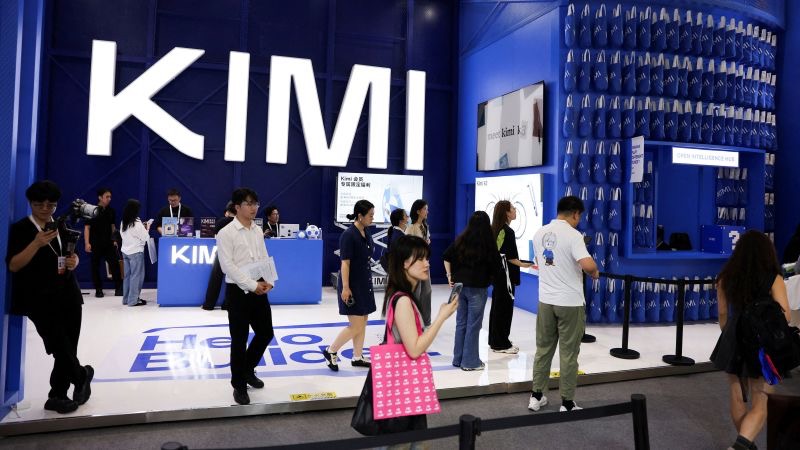
China has strongly rejected accusations from the United States that Chinese artificial intelligence startup Moonshot AI used proprietary technology from American AI company Anthropic to develop its latest large language model, Kimi K3. The allegations, made by the Trump administration, have intensified the ongoing technological rivalry between Washington and Beijing as both countries compete for leadership in artificial intelligence.
The dispute represents the latest chapter in a broader geopolitical struggle over advanced technologies, with AI emerging as one of the most strategically significant sectors. According to the Trump administration, Moonshot AI may have relied on Anthropic’s proprietary technology while developing Kimi K3, prompting US officials to consider sanctions and additional trade restrictions against the Chinese startup.
Chinese authorities have dismissed the claims as unfounded and politically motivated. Officials in Beijing argued that the accusations are another attempt by Washington to suppress China’s technological progress under the guise of protecting intellectual property and national security. They maintained that Chinese technology companies operate independently and respect intellectual property laws while pursuing innovation through their own research and development efforts.
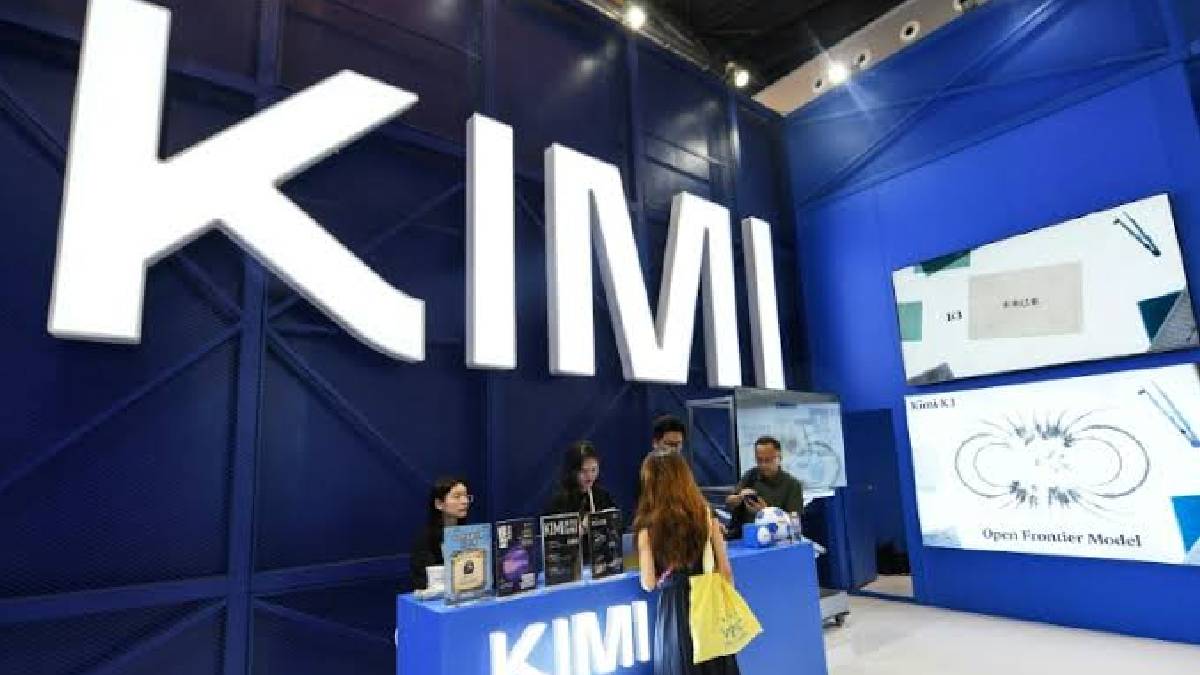)
Moonshot AI has rapidly become one of China’s most prominent AI companies, attracting significant investment and recognition for its ambitious language models. Founded as part of a new generation of Chinese AI startups, the company has positioned itself as a key player in China’s efforts to develop world-class artificial intelligence systems capable of competing with those created by leading American firms. Its Kimi series of language models has gained attention for advanced reasoning, multilingual capabilities, coding assistance, and productivity applications.
The latest version, Kimi K3, has been promoted as a major technological leap for the company. US officials reportedly believe that aspects of the model bear similarities to technologies developed by Anthropic, leading to concerns that proprietary techniques may have been improperly incorporated into Moonshot AI’s development process. However, no detailed technical evidence supporting the allegations has been made public.
The lack of publicly available evidence has fueled debate within the AI industry about the difficulty of determining whether one model has unlawfully benefited from another. Modern large language models are built using complex training processes that involve massive datasets, sophisticated algorithms, and enormous computing resources. Many developers rely on similar scientific research, making it challenging to distinguish between independent innovation and unauthorized use of proprietary methods.
The allegations also bring renewed attention to the increasingly controversial practice of model distillation. Distillation is a widely used machine learning technique in which a smaller or newer AI model learns from the outputs generated by a more advanced system. While the process is commonly employed to improve efficiency and reduce computational costs, disagreements have emerged over whether companies can legally use the outputs of proprietary commercial models without explicit authorization. The issue remains a legal and ethical gray area in many jurisdictions.
The Trump administration has taken an increasingly aggressive stance toward China’s AI sector, arguing that advanced artificial intelligence has implications that extend beyond commercial competition. US policymakers view AI as a critical technology with applications in defense, cybersecurity, intelligence analysis, scientific research, and economic competitiveness. As a result, the administration has indicated that protecting American AI leadership has become a national priority.
Reports suggest that US officials are evaluating a range of potential measures against Moonshot AI. These include possible sanctions, tighter export controls, and restrictions on the company’s ability to access advanced semiconductors, cloud computing services, and other technologies developed by American firms or allied countries. Such measures would add to an already extensive framework of technology restrictions aimed at limiting China’s access to cutting-edge computing capabilities.
Beijing has responded by criticizing what it describes as Washington’s repeated use of national security concerns to justify restrictions on Chinese companies. Chinese officials argue that the United States is attempting to hinder legitimate commercial competition by targeting firms that demonstrate rapid technological advancement. They have repeatedly stated that China’s innovation ecosystem is driven by domestic talent, research investment, and independent engineering rather than the misuse of foreign intellectual property.
Moonshot AI itself has not admitted to any wrongdoing and has continued to emphasize its commitment to original research and technological innovation. The company has invested heavily in developing its own foundation models and expanding AI applications for consumers and businesses across China. Its products have become increasingly popular in the country’s competitive AI market, where several domestic companies are racing to build alternatives to Western language models.
The dispute comes at a time when competition between American and Chinese AI developers has reached unprecedented levels. Both countries are investing billions of dollars in research, infrastructure, semiconductor manufacturing, and talent development to secure leadership in artificial intelligence. Governments increasingly view AI as a strategic resource that will influence economic growth, industrial productivity, military capabilities, and global influence over the coming decades.
Technology experts note that accusations involving AI intellectual property are likely to become more common as companies develop increasingly sophisticated models. Unlike traditional software, large language models are trained using vast amounts of data and intricate neural network architectures, making it difficult to identify whether similarities between competing systems result from shared scientific principles or unauthorized access to proprietary technologies.
Legal specialists also point out that proving AI-related intellectual property theft presents unique challenges. Investigations often require access to confidential training methods, internal documentation, and technical infrastructure that companies closely guard as trade secrets. Without direct evidence, determining whether proprietary technology has been misappropriated can be an exceptionally complex process.
Beyond the immediate dispute, the controversy reflects the broader fragmentation of the global technology landscape. As the United States tightens export controls and China accelerates efforts to develop domestic alternatives, the world’s AI ecosystem is becoming increasingly divided. Companies on both sides face growing regulatory scrutiny, while international collaboration in advanced AI research has become more complicated due to geopolitical tensions.
The allegations against Moonshot AI and China’s swift rejection of them underscore how artificial intelligence has become far more than a commercial industry. It now sits at the center of international competition involving national security, economic strategy, technological sovereignty, and global influence. Whether the dispute leads to formal sanctions or further diplomatic friction, it highlights the increasingly high stakes surrounding AI innovation and the growing challenges governments face in balancing technological advancement with intellectual property protection.