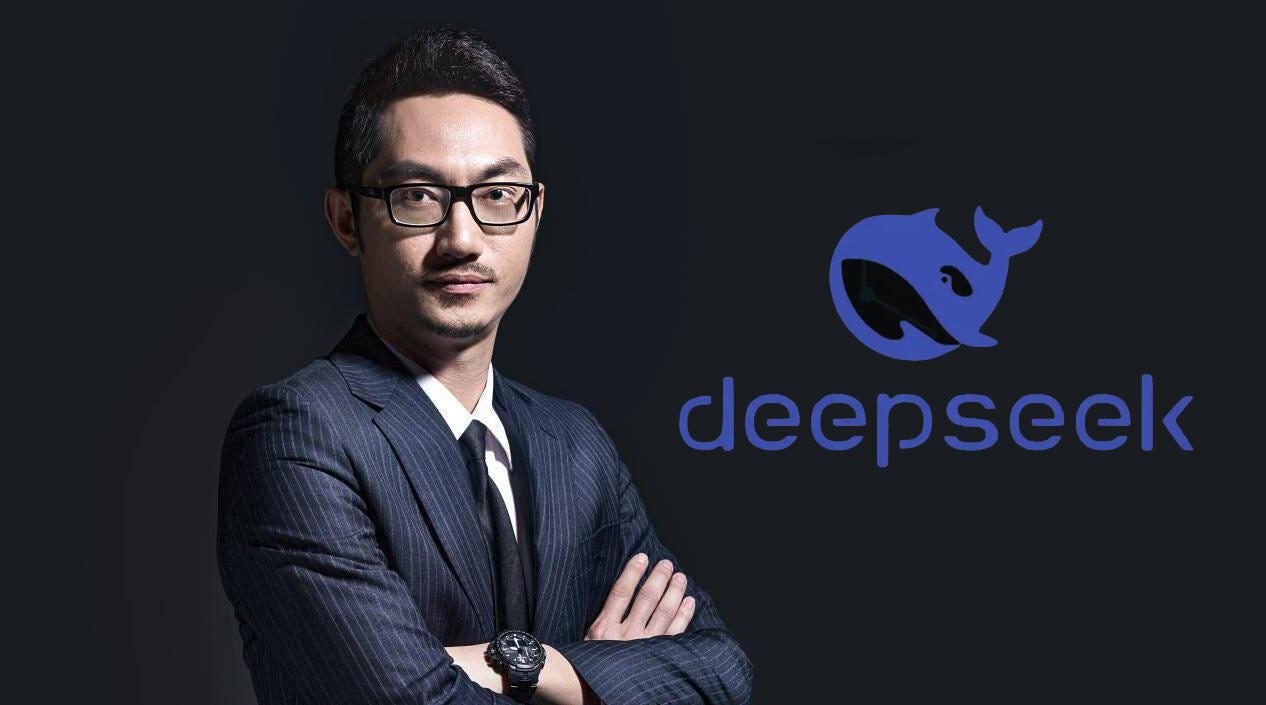
DeepSeek founder and CEO Liang Wenfeng has reiterated that his company’s primary goal is not to pursue an initial public offering (IPO) or seek short-term financial success, but to develop artificial general intelligence (AGI) that can benefit humanity. His remarks come at a time when artificial intelligence companies across the world are attracting billions of dollars in investments and facing increasing pressure from investors to commercialize their technologies rapidly. Instead of focusing on stock market listings or corporate valuations, Liang has emphasized that DeepSeek’s mission is centered on advancing AI research and building systems capable of making meaningful contributions to society.
The statement highlights a philosophy that sets DeepSeek apart from many high-profile technology startups. While numerous AI companies are racing to secure funding, expand market share, and prepare for public listings, Liang believes that the pursuit of AGI requires patience, long-term thinking, and a commitment to scientific research rather than quarterly financial targets. According to him, creating truly intelligent systems is one of the greatest scientific challenges of the modern era, and achieving that objective should remain the company’s foremost priority.
Artificial general intelligence refers to a form of AI capable of understanding, learning, and applying knowledge across a broad range of tasks with human-like flexibility. Unlike today’s artificial intelligence models, which are designed to perform specific functions such as generating text, writing computer code, recognizing images, or translating languages, AGI would be capable of reasoning, adapting to unfamiliar situations, solving diverse problems, and learning continuously without requiring specialized programming for each new task.
Although AGI remains a theoretical goal, it has become one of the most ambitious objectives in the global AI industry. Researchers believe that such systems could revolutionize healthcare, education, scientific discovery, engineering, manufacturing, and countless other sectors. At the same time, experts acknowledge that achieving AGI presents significant technical, ethical, and regulatory challenges that will require careful planning and responsible development.
DeepSeek has rapidly emerged as one of China’s leading artificial intelligence companies. Since its establishment, the company has attracted international attention for developing competitive large language models that demonstrate strong performance in reasoning, coding, mathematics, multilingual understanding, and general problem-solving. The release of its AI models has intensified competition within the global AI landscape, particularly as Chinese firms seek to narrow the technological gap with leading American companies.
Liang Wenfeng, who previously built a successful career in quantitative finance before entering the AI industry, has consistently advocated for a research-oriented approach to technological development. Rather than viewing AI solely as a commercial opportunity, he has argued that artificial intelligence should be developed with the broader goal of advancing human knowledge and improving people’s lives. This philosophy has shaped DeepSeek’s corporate culture, encouraging researchers to focus on solving difficult scientific problems instead of prioritizing immediate commercial returns.
His comments also address growing speculation about whether DeepSeek will eventually pursue an IPO. As one of China’s fastest-growing AI companies, DeepSeek has naturally become the subject of investor interest, with many market observers predicting that a public listing could significantly increase the company’s valuation. However, Liang has suggested that entering the public markets is not currently part of the company’s central mission.
Avoiding an IPO at this stage could offer several strategic advantages. Publicly traded companies often face pressure from shareholders to deliver consistent revenue growth and strong quarterly earnings. These expectations can influence corporate decision-making, sometimes encouraging businesses to prioritize short-term financial performance over long-term innovation. By remaining privately held, DeepSeek retains greater flexibility to invest heavily in fundamental research, recruit top scientific talent, and pursue ambitious projects that may take years to produce commercial results.
The AI industry has experienced extraordinary growth over the past few years. Companies around the world have invested billions of dollars into developing increasingly powerful foundation models capable of handling a wide variety of tasks. Governments have also identified artificial intelligence as a strategic technology with major implications for economic competitiveness, national security, scientific leadership, and industrial productivity.
As competition intensifies, many AI companies are balancing research ambitions with commercial expansion. While developing advanced AI models requires enormous investments in computing infrastructure, specialized semiconductor chips, data centers, and highly skilled researchers, companies must also generate revenue to sustain these efforts. This has led many firms to launch enterprise software, cloud-based AI services, developer platforms, and consumer applications that help finance continued research.
DeepSeek has likewise expanded its commercial presence by making its AI technologies available for businesses, developers, and consumers. Its language models have found applications in software development, education, research assistance, customer service, content generation, and enterprise productivity. These commercial activities provide financial support while allowing the company to continue investing in long-term AI research.
Liang has nevertheless maintained that commercial success should remain a means rather than the ultimate objective. According to his vision, the purpose of developing AGI is to create technology that can solve meaningful human problems, accelerate scientific discoveries, improve education, support healthcare innovation, and enhance productivity across society. Financial achievements, while important for sustaining research, should not become the defining measure of success.
His perspective also reflects wider discussions within the AI community regarding the responsible development of increasingly capable systems. As artificial intelligence continues to evolve, researchers, policymakers, and industry leaders are debating how advanced AI should be governed to ensure it remains safe, transparent, and beneficial. Questions surrounding bias, misinformation, privacy, security, employment, and ethical decision-making have become central to conversations about the future of AI.
Many experts argue that organizations pursuing AGI have a unique responsibility because such technology could have transformative effects on nearly every aspect of society. This has led to growing calls for international cooperation, stronger safety standards, and greater transparency in AI development. Liang’s emphasis on creating AGI for humanity aligns with the broader view that technological advancement should ultimately serve the public interest rather than purely commercial objectives.
Despite impressive advances in machine learning, experts agree that current AI systems remain far from achieving true AGI. Existing large language models excel at generating text, answering questions, writing code, and analyzing information, but they continue to face limitations in reasoning consistency, factual accuracy, long-term planning, and genuine understanding of complex real-world situations. Overcoming these limitations will likely require significant breakthroughs in algorithms, computational efficiency, model architecture, and cognitive reasoning.
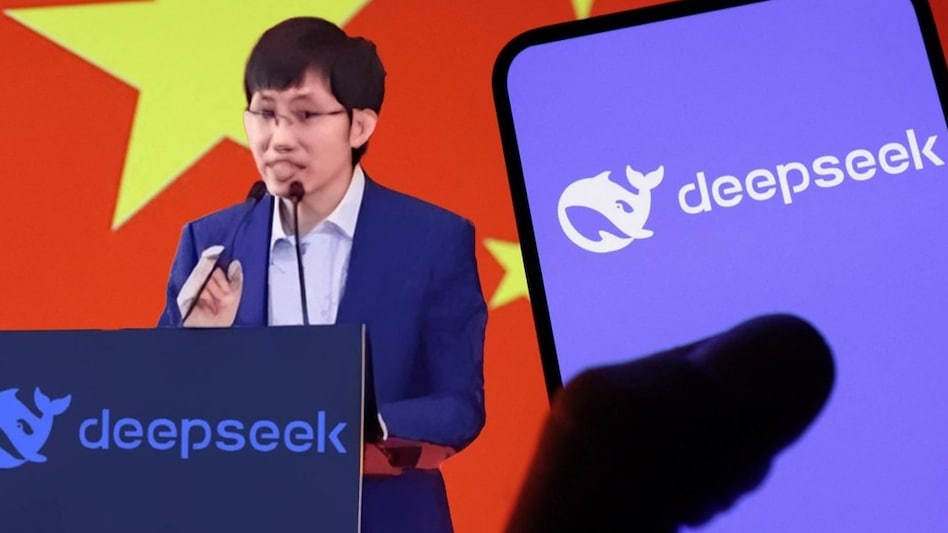
Liang has acknowledged that developing AGI is likely to be a long-term scientific endeavor rather than a near-term achievement. Progress, he believes, will depend on sustained research, interdisciplinary collaboration, and continued investment in foundational technologies. Instead of focusing on market speculation or public offerings, DeepSeek intends to concentrate on advancing the frontier of artificial intelligence through careful research and responsible innovation.
As the global AI race accelerates, Liang Wenfeng’s vision offers an alternative perspective in an industry often dominated by funding announcements, soaring valuations, and IPO expectations. By placing artificial general intelligence and its potential benefits for humanity above financial milestones, DeepSeek seeks to position itself not merely as a successful technology company, but as a research-driven organization committed to shaping the future of artificial intelligence for the greater good.