In a groundbreaking demonstration of engineering prowess, SpaceX successfully executed an unprecedented rocket recovery maneuver using mechanical arms during a test flight on Saturday. The event marks a significant milestone in the company’s ongoing efforts to revolutionize space travel and reusability.
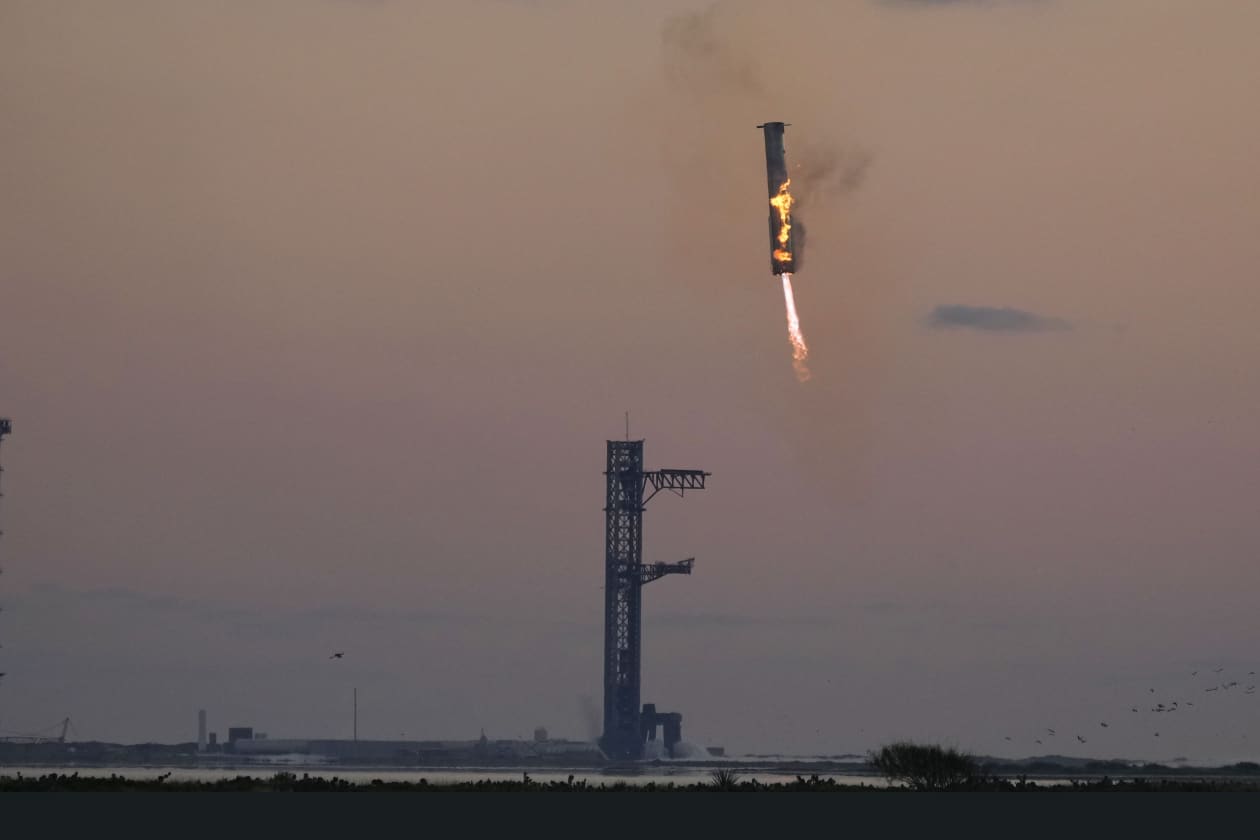
The Falcon 9 rocket, launched from Cape Canaveral Space Force Station, completed its mission by deploying a batch of satellites into orbit before executing a controlled descent back to Earth. What followed next captivated audiences worldwide: a specially designed vessel equipped with robotic arms snatched the descending rocket mid-air, a feat never before attempted in the history of space exploration.
As the rocket descended through the atmosphere, the vessel, dubbed the “Space Catcher,” positioned itself in a precise trajectory to intercept the Falcon 9. Using advanced sensors and AI algorithms, the mechanical arms extended to grasp the rocket, successfully securing it just moments before it would have landed in the ocean. This innovative technique not only showcases SpaceX’s commitment to sustainable practices but also aims to reduce recovery costs and time.

Elon Musk, SpaceX’s CEO, expressed his excitement about the achievement. “Today marks a pivotal moment in our journey toward making space travel more sustainable,” Musk said in a post-launch briefing. “This technology not only enhances our recovery methods but also sets the stage for future missions, including interplanetary exploration.”
The event was watched by thousands of enthusiasts and industry experts, both in person and via live stream. Many took to social media to express their amazement at the precision and timing of the operation, dubbing it a “daring ballet of engineering.”
Experts in the aerospace industry have lauded SpaceX for its innovative approach to rocket recovery. Dr. Linda Martinez, a space engineering professor at MIT, stated, “This method could change the game for how we think about reusability in space travel. By catching rockets mid-air, SpaceX is not only minimizing environmental impact but also enhancing the efficiency of future launches.”
While the Space Catcher is still in its early stages, SpaceX plans to refine the technology and incorporate it into regular operations. The next step will be to conduct more tests to ensure the reliability and safety of the recovery system.
The success of this operation could pave the way for more ambitious projects, including SpaceX’s planned missions to Mars. As the company continues to push the boundaries of technology and exploration, the world watches with bated breath, eager to see what other feats may be possible in the near future.