Microsoft shares surged on Tuesday after the company announced a renewed and expanded partnership with OpenAI, valuing its stake in the artificial intelligence leader at roughly $135 billion. The news sent Microsoft’s market capitalization soaring past $4 trillion, reaffirming its position as one of the most valuable companies in the world and underscoring Wall Street’s unshakable belief in the company’s dominance in the AI era.
A Strategic Renewal with Massive Implications
The new deal cements Microsoft’s role as OpenAI’s most important partner and investor. Under the revised terms, Microsoft holds approximately 27 percent of OpenAI’s equity, reflecting both its original multibillion-dollar investments and the appreciation of OpenAI’s valuation amid the explosive global demand for generative AI technologies.
OpenAI, now formally restructured as a public-benefit corporation (PBC) under the oversight of the nonprofit OpenAI Foundation, will continue to pursue its mission of ensuring that artificial general intelligence (AGI) benefits all of humanity. The restructuring allows the organization to operate more flexibly in commercial markets while maintaining a public-interest mandate—something that had been increasingly difficult to balance under its previous hybrid model.
As part of the renewal, Microsoft will maintain exclusive intellectual-property and deployment rights to OpenAI’s frontier models across its Azure cloud platform. This includes integration into flagship Microsoft products such as Copilot, Office 365, GitHub, and Windows, ensuring that OpenAI’s cutting-edge technology continues to flow through Microsoft’s vast ecosystem of enterprise and consumer applications.
In addition, OpenAI has committed to a long-term purchasing agreement estimated at $250 billion in Azure cloud services over the coming decade. That commitment not only guarantees a steady stream of cloud revenue for Microsoft but also reinforces Azure’s role as the computational backbone of OpenAI’s research and commercial applications.
Market Reaction: Investors Applaud the Move
Investors responded enthusiastically to the announcement. Microsoft’s stock jumped more than six percent in intraday trading, pushing its market capitalization above $4 trillion for the second time this year. Analysts credited the rally to renewed confidence in Microsoft’s AI growth trajectory and the clarity the new deal provides around its long-term partnership with OpenAI.
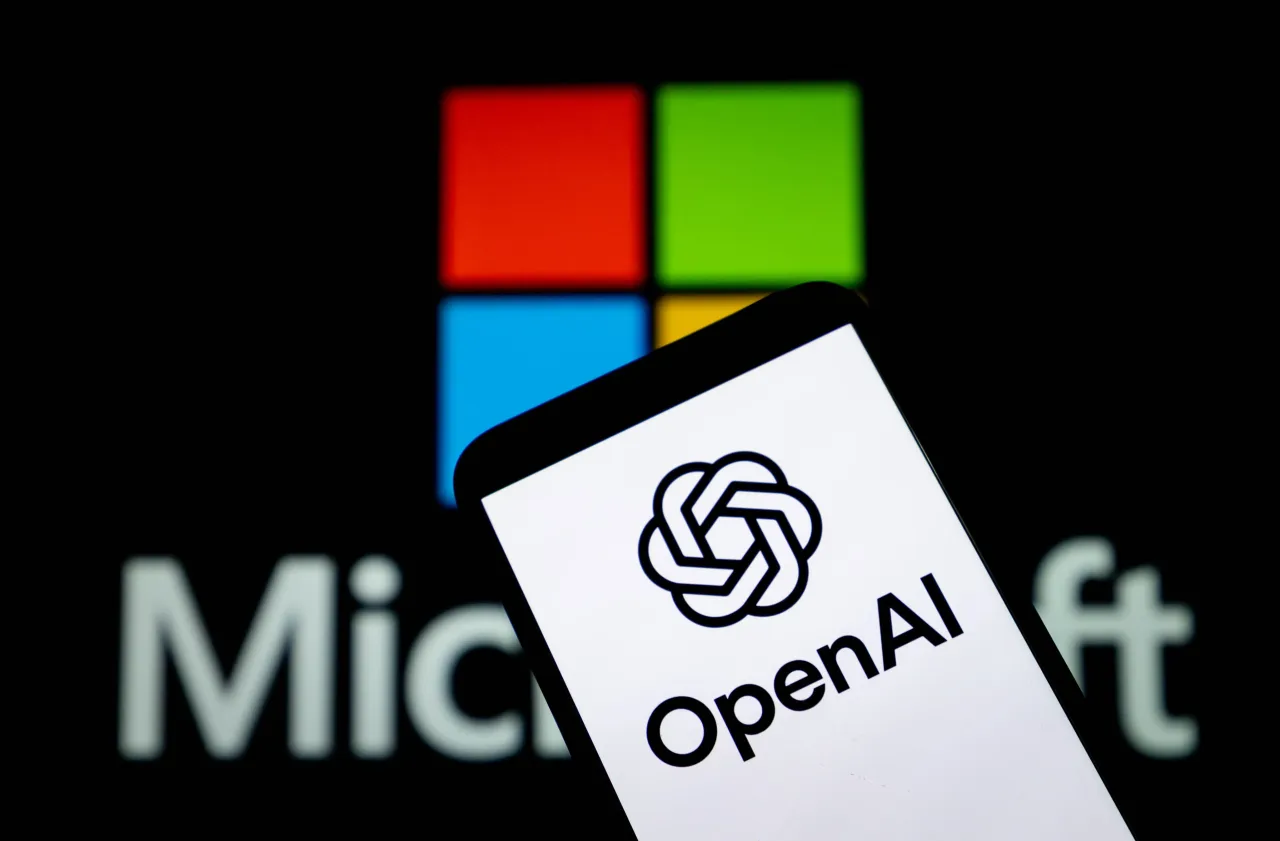
The renewed arrangement was seen as removing lingering uncertainty about OpenAI’s corporate structure and the terms of Microsoft’s involvement, both of which had been subjects of speculation since OpenAI’s board reshuffle and leadership disputes earlier in the year. With those issues resolved, investors now view the partnership as a stable, long-term pillar of Microsoft’s strategy.
Strengthening Microsoft’s AI Moat
For Microsoft, the expanded stake and partnership deepen its competitive advantage in the most transformative technology wave of the century. The company has already woven OpenAI’s technology throughout its product suite—most notably through Copilot, which is embedded in Microsoft 365, GitHub, and the Windows operating system. These integrations have begun to drive tangible productivity improvements for enterprise users, which in turn are fueling demand for cloud subscriptions and AI-powered software licenses.
By retaining exclusive access to OpenAI’s frontier models and continuing to power them on Azure, Microsoft effectively reinforces a powerful feedback loop: OpenAI’s innovations attract customers to Azure; Azure’s compute capacity powers OpenAI’s research; and the resulting breakthroughs are reinvested into Microsoft’s products.
This virtuous cycle creates a formidable moat against competitors such as Google, Amazon, and Meta—all of whom are racing to develop comparable generative-AI ecosystems.
OpenAI’s Evolution and Shared Vision
For OpenAI, the restructuring into a PBC provides much-needed flexibility. The new model allows the company to raise capital, attract new talent, and partner more widely while maintaining a governance framework that prioritizes AI safety and societal benefit. It also introduces an independent panel of experts to verify milestones in the pursuit of AGI—an important safeguard intended to balance innovation with responsibility.
The company’s leaders have emphasized that Microsoft’s continued involvement is crucial for both technological and ethical reasons. Azure’s scale and reliability enable OpenAI to experiment safely with ever-larger models, while Microsoft’s enterprise reach helps bring responsible AI to businesses and governments around the world.
A Catalyst for the Next Growth Wave
Beyond the symbolic market-cap milestone, the financial implications of the renewed partnership are significant. The $250 billion Azure commitment represents one of the largest cloud-infrastructure deals in history and could add several percentage points of revenue growth to Microsoft’s cloud segment over the next decade.
Meanwhile, Microsoft’s ownership stake in OpenAI—valued at $135 billion—further strengthens its balance sheet and gives investors indirect exposure to the broader AI economy. As OpenAI expands its suite of commercial products, from the ChatGPT platform to enterprise APIs, Microsoft will benefit both as a shareholder and as the preferred cloud provider.
Challenges and Open Questions
Despite the euphoria, analysts caution that execution risks remain. The valuation implied by Microsoft’s stake places OpenAI among the most highly valued private companies in history, setting an extremely high bar for future growth. Success will depend on whether OpenAI can sustain its rapid pace of innovation while managing regulatory scrutiny and ethical concerns surrounding advanced AI systems.
Additionally, while OpenAI’s restructuring allows for broader partnerships, it could introduce new competitive dynamics for Microsoft if OpenAI begins to collaborate more openly with other cloud providers or hardware manufacturers. Microsoft will need to maintain strategic alignment with OpenAI’s leadership to ensure their visions remain synchronized.
The Broader Context
The renewed partnership arrives at a pivotal moment in the global technology landscape. Governments are drafting AI safety regulations, businesses are rushing to integrate generative AI into daily operations, and consumers are increasingly interacting with intelligent systems in work and leisure.
In that environment, Microsoft’s deepened relationship with OpenAI sends a clear signal: the company intends to lead not just in deploying AI, but in shaping its ethical and economic foundations.

Outlook
With this new chapter, Microsoft appears poised to extend its dominance well into the AI era. The company’s blend of cloud infrastructure, enterprise reach, and direct ownership of transformative AI technology places it at the heart of one of the most consequential technological shifts in history.
As markets digest the implications of the renewed partnership, the overarching message is clear: Microsoft’s bet on OpenAI has evolved from a bold experiment into a defining pillar of its identity. With its stock once again above $4 trillion and investor optimism running high, the company’s future looks inseparable from the trajectory of artificial intelligence itself.