
Valve Corporation, the famously secretive gaming giant behind Steam, appears to be operating at a level of efficiency that few companies in the tech world can match. With an estimated workforce of around 350 employees, Valve is reportedly on track to generate roughly $17 billion in revenue this year — a figure that translates to nearly $50 million per employee. For comparison, even the world’s most influential tech companies, including Google, Amazon, and Microsoft, generate only a fraction of that amount per worker.
The numbers paint a picture of one of the most profitable and unusually lean technology companies in existence. While major corporations employ tens or even hundreds of thousands of people, Valve quietly runs one of the largest digital storefronts on Earth with a headcount roughly equivalent to a mid-sized startup. The company’s unparalleled revenue-per-employee ratio is reshaping conversations about the future of tech efficiency and the power of platform-based business models.
At the center of Valve’s success is Steam, the enormous online marketplace and social platform for PC gaming. Steam’s dominance is nearly unmatched: it operates as the primary distribution channel for the vast majority of PC game developers, hosting tens of thousands of titles and millions of daily users. Valve takes a cut of every transaction — from game purchases to downloadable content to in-platform microtransactions — and the sheer scale of global gaming ensures that those small slices add up to massive earnings.
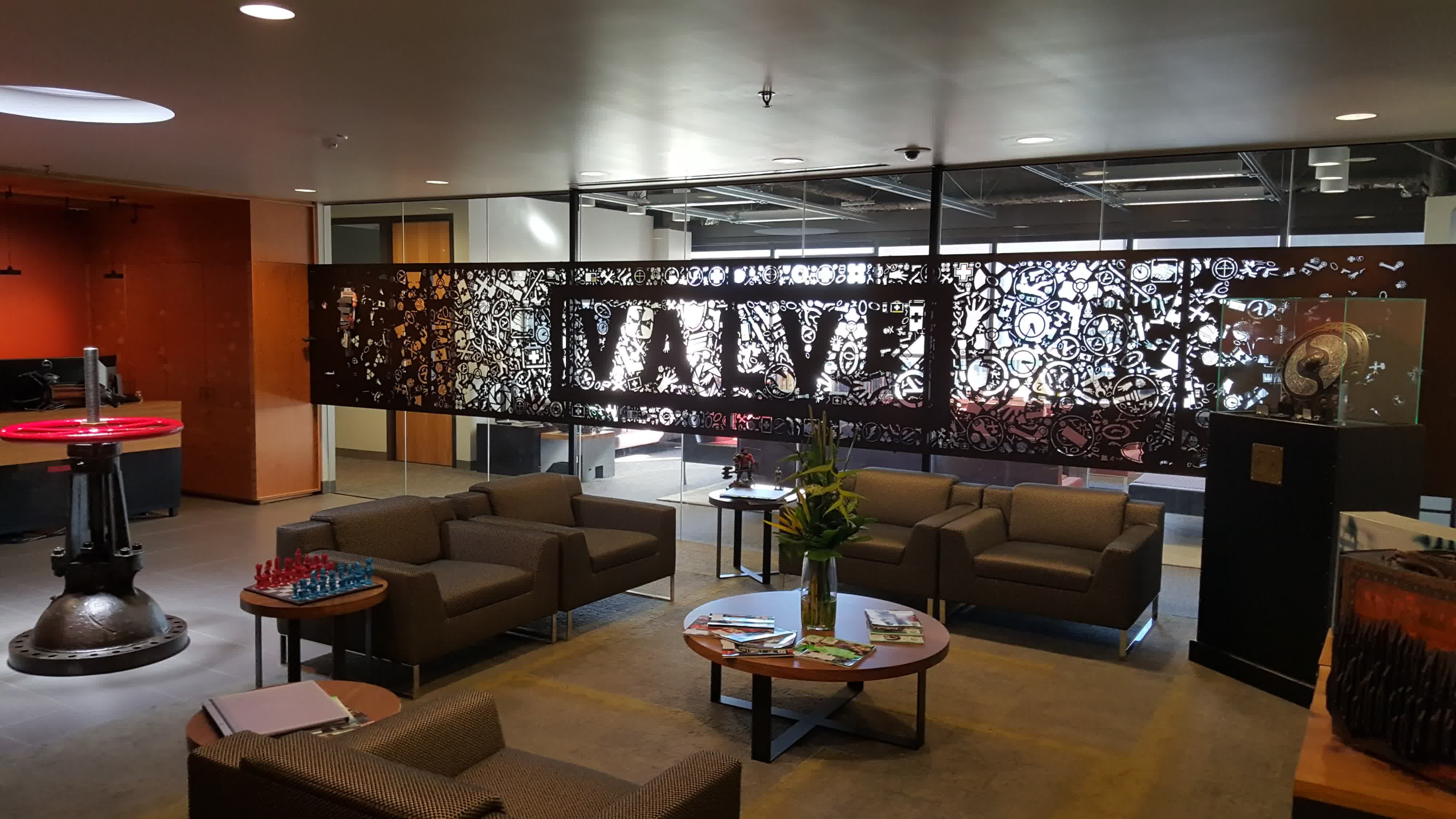
This business model fundamentally differs from the labor-intensive operations of firms like Amazon, which require vast logistics networks and large workforces, or Google, whose revenue relies heavily on maintaining massive ad operations and data centers. Valve, by contrast, benefits from the extreme scalability of digital distribution. As more users join Steam and more developers publish on the platform, revenue grows, but staffing does not need to rise at the same pace. The platform’s automated systems handle a huge portion of the workload that might otherwise require thousands of employees.
Valve’s organizational structure also plays a critical role. The company is known for its famously flat hierarchy, where employees have no formal bosses and are free to move between projects according to interest and skill. There are no traditional managers, and teams form and dissolve as needed. Supporters of this structure argue that it fosters creativity, agility, and high productivity, as workers feel more ownership over their projects and collaborate organically. Critics, however, say such a system can be chaotic or exclusionary. Regardless, the financial results suggest that Valve has found a way to make the model work at scale.
Another factor in Valve’s exceptional performance is its long-term independence. Valve is a privately held company, giving it the freedom to invest in long-term projects without the pressure of quarterly earnings reports or shareholder demands. This autonomy has allowed the company to pursue ambitious hardware experiments such as the Steam Deck, Steam Link, and virtual reality hardware in partnership with HTC. Even these projects, while not always universally adopted, have contributed to the overall strength of the ecosystem by keeping Steam relevant, competitive, and tightly integrated with the hardware many gamers use.
The company’s compensation structure also speaks volumes. Valve is known to pay some of the highest salaries in the gaming industry, reportedly well above market averages. With revenues this high and a workforce this small, Valve can afford to invest heavily in top-tier talent. Its employees are often described as a combination of engineers, designers, economists, and creative thinkers who are expected to take initiative without oversight. High compensation is not only a reward for performance but also a tool to attract the rare individuals who thrive in Valve’s unconventional environment.
Valve’s extraordinary revenue-per-employee ratio raises questions for the broader tech world. Does the future of tech truly belong to companies that can scale without ballooning headcounts? Is a platform-based business — one that earns money from user activity rather than generating it directly — the ultimate expression of digital efficiency? And what lessons should large, traditional tech giants learn from Valve’s success?
![Valve 2020 Logo [Half Life 2] [Mods], HD wallpaper | Peakpx](https://w0.peakpx.com/wallpaper/755/558/HD-wallpaper-valve-2020-logo-half-life-2-mods.jpg)
Some analysts argue that Valve’s model is unique and difficult to replicate. After all, the company benefitted from entering the gaming distribution market early and capitalizing on the shift from physical to digital game sales. Its platform has become so ingrained in PC gaming culture that it faces little direct competition. Others believe that Valve is simply a glimpse of the future: a lean company made powerful not by its size, but by the scale of the systems it builds and the loyalty of the communities that use them.
Of course, Valve’s position is not without risks. Steam’s dominance has drawn scrutiny from regulators who argue that the platform’s market power could stifle competition. Furthermore, any major disruption in PC gaming habits — such as a widespread shift to cloud gaming platforms or competing storefronts — could challenge the stability of Steam’s revenues. Still, Valve’s entrenched position and constant reinvestment suggest that the company is well aware of these challenges.
What’s undeniable is that Valve has built an economic engine unlike anything else in gaming or tech. With billions in annual revenue and only a few hundred employees, it stands as a testament to the explosive potential of digital ecosystems. In an industry where companies often grow bloated and inefficient as they expand, Valve has done the opposite — scaling to enormous financial heights while keeping its footprint remarkably small.
If current projections hold true and Valve indeed generates around $17 billion this year, the company will have once again demonstrated that innovation, autonomy, and a scalable digital platform can create one of the most profitable tech enterprises on the planet — all without ever becoming a corporate giant itself.