Rivian is taking a bold step in the autonomous-driving race, announcing that it will integrate LiDAR into its next-generation vehicles starting in 2026—a direct challenge to Tesla’s long-standing belief that cameras alone are sufficient for full autonomy. The decision marks a significant strategic divergence between two of the most closely watched electric-vehicle manufacturers, and it underscores a growing divide within the industry over how best to achieve safe, reliable self-driving technology.
For years, Tesla has insisted that a vision-based approach—using only cameras supported by neural network processing—is not just adequate, but the optimal path toward full autonomy. Elon Musk has frequently argued that because humans drive with their eyes and brains, replicating that capability with cameras and AI is the “only way” to solve self-driving at scale. As a result, Tesla removed radar from its vehicles in 2021 and later eliminated ultrasonic sensors as well, leaning fully into an increasingly pure vision-only system.
Rivian, however, sees things differently. In unveiling its updated autonomy roadmap, the company emphasized that while cameras are essential for object classification and contextual understanding, they do not offer enough redundancy or reliability across all driving environments. Adverse weather, low-light conditions, glare, and scenes requiring precise depth perception are scenarios where vision systems often struggle. According to Rivian’s engineering leads, LiDAR—short for Light Detection and Ranging—solves many of these weaknesses by providing a precise, three-dimensional map of a vehicle’s surroundings, independent of ambient lighting.
LiDAR works by firing rapid pulses of laser light and measuring how long they take to bounce back, creating a high-resolution depth profile of the environment. The technology has been widely used in robotics, aviation, and advanced autonomous-vehicle prototypes, particularly by companies pursuing high-level autonomy such as Waymo and Aurora. Rivian now joins that camp, committing to a sensor-fusion approach that combines cameras, radar, and LiDAR to deliver what it describes as a more robust and safety-first system.

The company’s revised sensor suite will debut on its upcoming generation of vehicles starting in late 2026. Rivian has already disclosed that it is developing a custom autonomy processor designed to handle the massive influx of data generated by multi-sensor arrays. This chip will power a new software stack capable of real-time sensor fusion, high-accuracy perception, and advanced predictive modeling. Together, the hardware and software platform are designed to support hands-free highway driving at launch, with a roadmap toward more capable semi-autonomous features as the system matures.
What sets Rivian’s strategy apart isn’t just the inclusion of LiDAR, but the philosophical foundation behind it. The company argues that the quest for true self-driving requires layers of redundancy—multiple types of sensors that can back each other up when one struggles. Cameras provide contextual richness, radar offers steady performance in rain and fog, and LiDAR supplies fine depth detail. By overlapping these technologies, Rivian aims to reduce edge-case failures and minimize the risk that a single sensor weakness could lead to a dangerous situation.
Tesla’s approach, by contrast, prioritizes cost efficiency, simplicity, and the potential for rapid scalability. Cameras are inexpensive, and removing additional sensors streamlines manufacturing. Tesla believes that with enough data—and Tesla collects billions of real-world driving miles from its customer fleet—its vision-based neural networks will ultimately surpass the capabilities of multi-sensor systems. The company argues that adding sensors like LiDAR introduces unnecessary complexity and cost, and that real progress will come from better software, not more hardware.
Rivian’s move implicitly challenges that position. By publicly emphasizing the limitations of vision-only systems, the company is drawing a line in the sand: safety and reliability, in its view, cannot hinge solely on a camera’s ability to see. This stance aligns with many experts in the autonomous-vehicle field, who have long argued that sensor fusion is essential for higher levels of autonomy.
The announcement also speaks to Rivian’s broader strategy as it seeks to differentiate itself in an increasingly crowded EV market. Rivian’s vehicles are already known for their premium build quality, outdoor-ready design, and strong emphasis on technology. A more advanced, multi-layered autonomy system adds another differentiator as the company competes not just with Tesla but with traditional automakers investing heavily in next-generation driver-assist technologies.
Rivian plans to pair its enhanced sensor suite with a new subscription-based autonomy package. While details on pricing and tier structures are still emerging, the company has hinted at a competitive offering aimed at undercutting Tesla’s costly Full Self-Driving package. This could attract buyers who want advanced driver assistance without committing to Tesla’s ecosystem or price point.
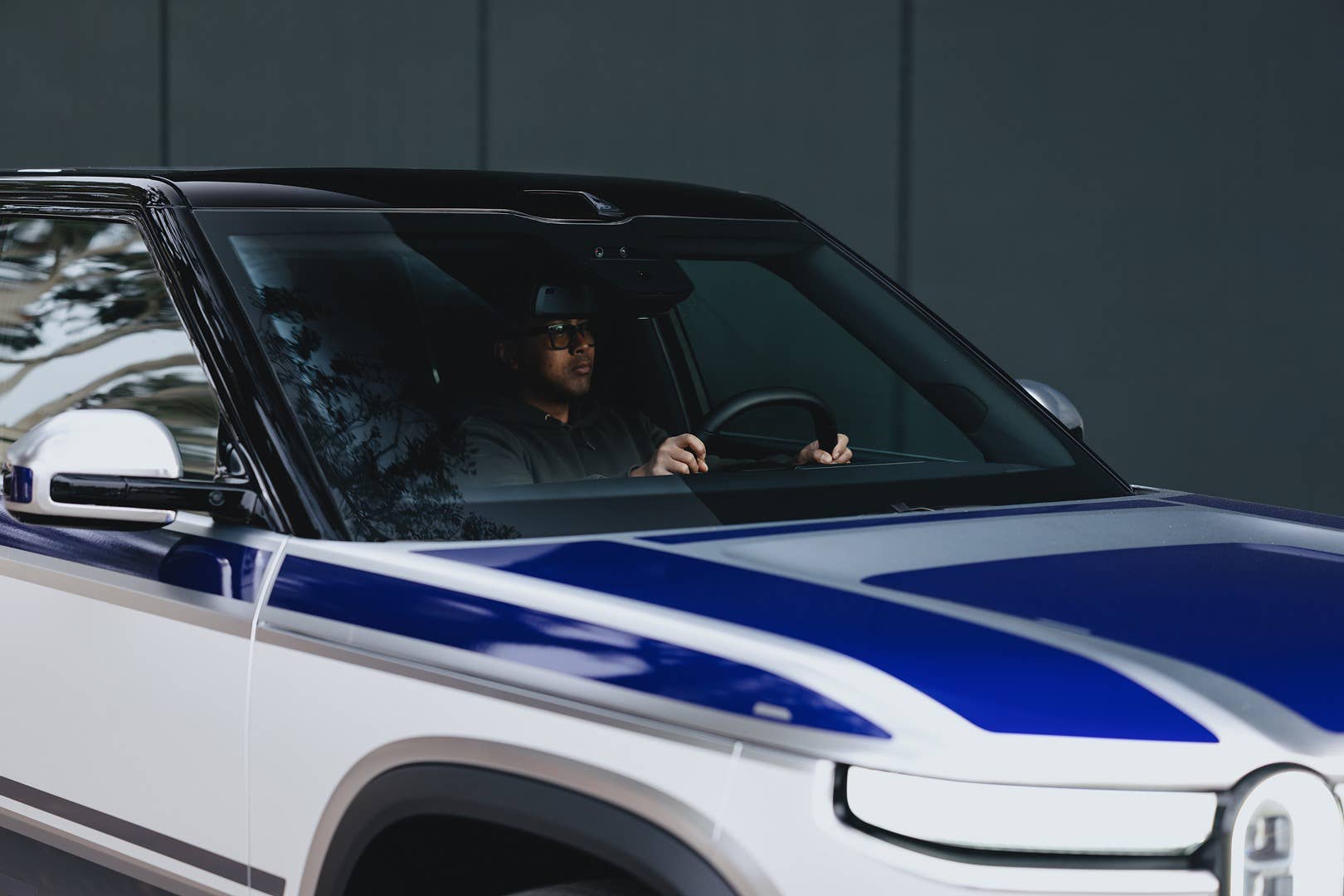
The decision to adopt LiDAR may also signal a longer-term ambition: positioning Rivian as a leader in high-level autonomy. While Level 4 autonomy—where a vehicle can drive without human supervision under specific conditions—is still years away for consumer vehicles, Rivian’s sensor-rich approach could give it a stronger foundation when regulatory and technological conditions eventually align.
For now, though, Rivian’s message is clear. Cameras may be powerful, but they are not enough. In staking its future on a blend of sensors, Rivian is betting that redundancy, reliability, and a deeper perception of the environment will ultimately win out in the race toward safer autonomous driving.
If Rivian’s vision proves correct, the company could emerge as one of the strongest challengers to Tesla’s dominance in the EV tech space. And as the industry watches closely, 2026 may mark not just the debut of Rivian’s LiDAR-equipped models, but a pivotal moment in the ongoing debate about how cars of the future should see the world.