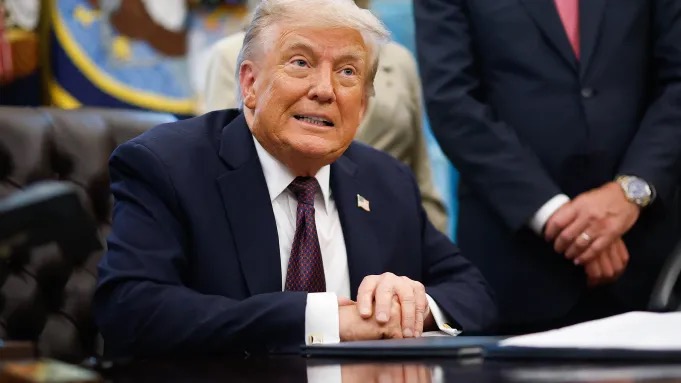
In a development that has stirred both fascination and concern across financial and political circles, the Trump family has reportedly built a cryptocurrency empire worth nearly $800 million in just six months. The speed and scale of this growth have placed them at the forefront of a rapidly evolving digital asset economy—one that continues to challenge traditional norms of wealth, transparency, and influence.
The foundation of this surge can be traced to ventures associated with Donald Trump and his immediate family, who have increasingly embraced blockchain-based opportunities. Initially entering the space through non-fungible tokens (NFTs), the family leveraged brand recognition and a loyal supporter base to generate substantial early traction. These digital collectibles, often marketed as exclusive or symbolic assets, quickly sold out, signaling strong demand and setting the stage for broader crypto ambitions.
However, what began as a seemingly limited engagement has since transformed into a multifaceted crypto strategy. The Trump family’s involvement now reportedly includes investments in decentralized finance (DeFi) platforms, token-backed ecosystems, and partnerships with blockchain startups. These ventures are said to span multiple segments of the crypto economy, from digital asset trading to infrastructure development, allowing them to capture value across a wide spectrum of activities.

Market analysts point to a combination of timing and influence as key drivers behind this success. The broader cryptocurrency market has seen renewed enthusiasm in recent months, with major assets experiencing price recoveries and increased institutional interest. Against this backdrop, the Trump name—already synonymous with media attention and political identity—has proven to be a powerful catalyst in attracting both retail and speculative investors.
Yet, alongside the financial success, a persistent and increasingly urgent question has emerged: where should the line be drawn between private enterprise and public influence? Given the continued political relevance of Donald Trump, critics argue that such deep involvement in a largely unregulated financial sector raises concerns about potential conflicts of interest. If political authority and crypto investments intersect, the implications for policymaking could be significant.
Ethics experts and advocacy groups have called for greater transparency regarding the structure and ownership of these ventures. They argue that in an industry already grappling with issues such as market manipulation, fraud, and regulatory gaps, the entry of politically influential figures adds another layer of complexity. Questions around disclosure, accountability, and oversight have become central to the broader conversation.
Supporters, however, see the situation differently. They argue that the Trump family’s crypto success reflects an understanding of emerging technologies and a willingness to innovate in a rapidly changing financial landscape. From this perspective, participation in cryptocurrency markets is no different from investing in real estate, stocks, or other asset classes. Proponents also contend that blockchain technology represents a transformative force, and early adopters stand to benefit the most.
There is also a cultural dimension to the Trump family’s crypto expansion. By aligning their ventures with themes of independence, decentralization, and financial empowerment, they have tapped into narratives that resonate with a significant portion of the crypto community. This alignment has helped them build not just financial value, but also a form of ideological support within the digital asset space.
Despite the optimism, experts caution that the cryptocurrency market remains inherently volatile. Rapid gains, such as those seen in the Trump family’s portfolio, can be followed by equally sharp declines. The lack of consistent regulation across jurisdictions further amplifies the risks, leaving investors exposed to sudden market shifts and legal uncertainties. In this context, the sustainability of such a large and fast-growing crypto empire remains an open question.
Regulators, meanwhile, are under increasing pressure to respond. Governments around the world are working to establish clearer frameworks for digital assets, addressing issues ranging from taxation to investor protection. In the United States, the debate has intensified as lawmakers seek to balance innovation with oversight. The involvement of high-profile figures like Donald Trump only adds urgency to these efforts.

As the Trump family continues to expand its presence in the crypto world, the broader implications of their success are becoming harder to ignore. The intersection of wealth, technology, and political influence presents a complex and evolving challenge—one that extends far beyond any single family or portfolio.
For now, the numbers tell a story of remarkable financial achievement. But beneath the surface lies a deeper narrative about power, regulation, and the future of money. Whether the Trump family’s crypto empire will be remembered as a case of strategic foresight or a catalyst for regulatory reform remains to be seen. What is certain, however, is that the question surrounding it is not going away anytime soon.