Nissan Motor Co. held a tense and highly charged shareholder meeting this week, where investor dissatisfaction over the company’s performance escalated to an unexpected and symbolic low point: a shareholder reportedly nominated former chairman Carlos Ghosn to return and run the company again.
The remark, while not a formal proposal and without procedural standing, captured the mood of frustration among investors who have grown increasingly impatient with Nissan’s sluggish recovery, uneven financial performance, and uncertain long-term strategy in a rapidly changing global automotive industry.
The meeting took place against a backdrop of mounting pressure on Nissan Motor Co., one of Japan’s most prominent automakers, as it struggles to maintain competitiveness in a sector undergoing a historic transition toward electrification, software-defined vehicles, and intensified global competition—particularly from Chinese electric vehicle manufacturers.
From the outset, the tone of the meeting reflected unease. Executives presented financial updates showing continued strain in key overseas markets, including weaker-than-expected sales in China and inconsistent demand recovery in other regions. While Nissan highlighted cost-cutting initiatives and restructuring efforts aimed at improving profitability, shareholders appeared unconvinced that the measures were sufficient to address deeper structural challenges.
Questions from investors quickly turned critical. Several shareholders pressed management on why the company’s turnaround efforts have not delivered stronger results, particularly given the scale of cost reductions and strategic realignments already undertaken. Others raised concerns about Nissan’s pace of innovation in electric vehicles and software integration, areas where competitors have moved aggressively ahead.
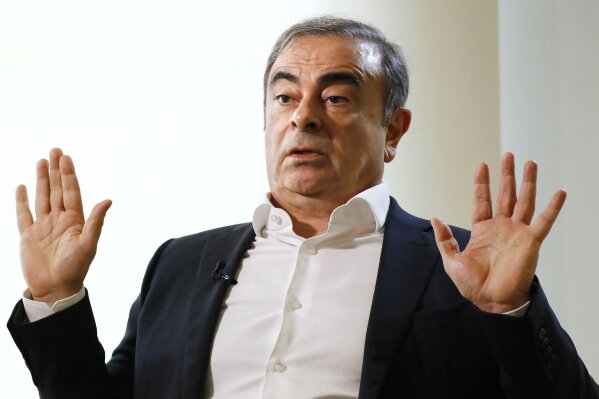
As the discussion progressed, frustration among attendees became more visible. One shareholder, speaking during the open Q&A session, made a remark that would later become the defining moment of the meeting. Expressing dissatisfaction with the company’s current trajectory, the shareholder suggested that Nissan’s performance had deteriorated to such an extent that even the return of Carlos Ghosn—who once led the company through a dramatic financial revival—might be considered a preferable alternative.
The comment immediately shifted the atmosphere in the room. While some attendees reacted with awkward laughter, others appeared stunned by the invocation of a figure who remains one of the most controversial in the company’s modern history.

Ghosn, once credited with rescuing Nissan from near-bankruptcy in the early 2000s through aggressive restructuring and cost discipline, later became the center of a global corporate scandal. Arrested in Japan in 2018 on charges related to financial misconduct, he was later released on bail and fled to Lebanon in 2019, where he continues to deny all allegations against him. His escape and ongoing legal disputes have made him a polarizing figure in corporate governance discussions worldwide.
Despite his legal status and absence from corporate leadership, Ghosn’s legacy at Nissan remains deeply embedded in investor memory. For some, he represents a period of strong operational turnaround and global expansion. For others, he symbolizes governance failures that ultimately led to a dramatic breakdown in trust within the Renault-Nissan-Mitsubishi alliance.
The shareholder’s remark, while informal and not actionable, underscored how deeply investor frustration has set in. Analysts interpret such comments not as genuine calls for reinstatement, but as expressions of dissatisfaction with current leadership and strategy.
Nissan executives at the meeting attempted to redirect attention toward the company’s ongoing transformation plans. Leadership emphasized investments in electrification, efforts to streamline global operations, and initiatives aimed at improving profitability over the medium term. The company also reiterated its commitment to strengthening its product pipeline and enhancing competitiveness in the electric vehicle market.
However, the response appeared to do little to ease investor concerns. Several shareholders continued to question whether Nissan’s current strategy is ambitious enough to keep pace with global competitors. Concerns were also raised about the company’s brand positioning, supply chain resilience, and ability to generate sustainable growth in key markets.
Market observers note that Nissan is facing a particularly difficult moment in its corporate evolution. The global automotive industry is undergoing rapid transformation, with traditional manufacturers under pressure from both established rivals and new entrants that are reshaping expectations around technology, pricing, and performance. In this environment, companies are expected to move quickly, invest heavily, and take significant strategic risks.
For Nissan, the challenge is compounded by legacy issues and historical restructuring cycles that have yet to fully resolve underlying competitiveness concerns. While the company has made progress in stabilizing operations, investors appear increasingly focused on the speed and clarity of its future roadmap.
Corporate governance experts say shareholder meetings often serve as outlets for frustration, especially when financial performance does not meet expectations. In Nissan’s case, the reference to Carlos Ghosn—despite his controversial exit and legal circumstances—reflects how past leadership eras continue to influence perceptions of present performance.
The remark also highlights a broader psychological dynamic in corporate governance: when current results disappoint, investors sometimes romanticize earlier periods of stronger growth or decisive leadership, even if those eras carried their own risks and controversies.
As the meeting concluded, Nissan’s management reaffirmed its commitment to long-term value creation and acknowledged shareholder concerns. Executives stated that they would continue to focus on execution discipline, product development, and operational efficiency in order to restore investor confidence.
Still, the overall sentiment from the meeting suggests that Nissan faces a growing challenge in convincing shareholders that its current strategy is sufficient. The unusual mention of Nissan Motor Co.’s former leadership era served as a symbolic reminder of both the company’s complex history and the heightened expectations placed on its future.
For now, the company must navigate not only competitive pressures and industry disruption, but also rising impatience from investors who are demanding faster and more decisive results. Whether Nissan can translate its restructuring efforts into sustained performance improvements will likely determine how future shareholder meetings unfold—and whether such dramatic moments remain symbolic outbursts or signals of deeper discontent.