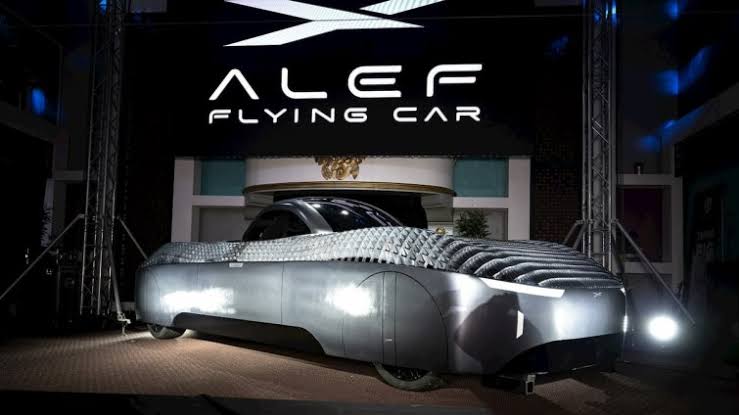
In a groundbreaking moment that has captivated the automotive world, the world’s first flying car was unveiled at the prestigious Detroit Auto Show today. This milestone achievement marks a significant leap forward in transportation technology and promises to reshape the way we commute and travel.
The vehicle, known as the “AeroFlyer,” was presented by AeroTech, a pioneering company dedicated to advancing urban mobility solutions. The AeroFlyer is a fusion of automotive and aerospace engineering, offering drivers the ability to seamlessly transition from driving on roads to flying in the skies.
Revolutionary Design and Features
The AeroFlyer boasts a sleek and futuristic design that combines the aesthetics of a high-end sports car with the functionality of an aircraft. It features vertical takeoff and landing (VTOL) capabilities, allowing it to lift off like a helicopter and then transition into forward flight mode. This revolutionary design enables users to bypass traffic congestion, making it an ideal solution for urban mobility.
Powered by advanced electric propulsion technology, the AeroFlyer is not only eco-friendly but also remarkably efficient. It has a range of 300 miles on a single charge, making it suitable for both short commutes and longer journeys. The vehicle can comfortably seat two passengers, offering a luxurious and comfortable travel experience.
Safety and Regulation
Safety has been a paramount concern in the development of the AeroFlyer. The vehicle is equipped with cutting-edge collision avoidance systems, redundant flight controls, and comprehensive autonomous navigation capabilities. AeroTech has also worked closely with aviation and transportation authorities to establish a regulatory framework for the integration of flying cars into existing airspace.
Implications for the Future
The unveiling of the AeroFlyer signals a major step towards the realization of flying cars as a viable mode of transportation in the near future. While pricing details and availability have not yet been disclosed, the buzz surrounding this historic moment suggests a high level of interest and anticipation from potential buyers.
Industry experts believe that flying cars could alleviate traffic congestion in crowded cities, reduce travel times, and open up new possibilities for urban planning and infrastructure. However, significant challenges remain, including infrastructure development, airspace management, and public acceptance.
The Detroit Auto Show has always been a platform for innovation and progress in the automotive industry, and the introduction of the world’s first flying car is a testament to its enduring legacy.

As the world eagerly awaits more information on the AeroFlyer and similar projects, it’s clear that the dawn of the flying car era has arrived, promising a future where the skies are no longer out of reach for daily commuters.