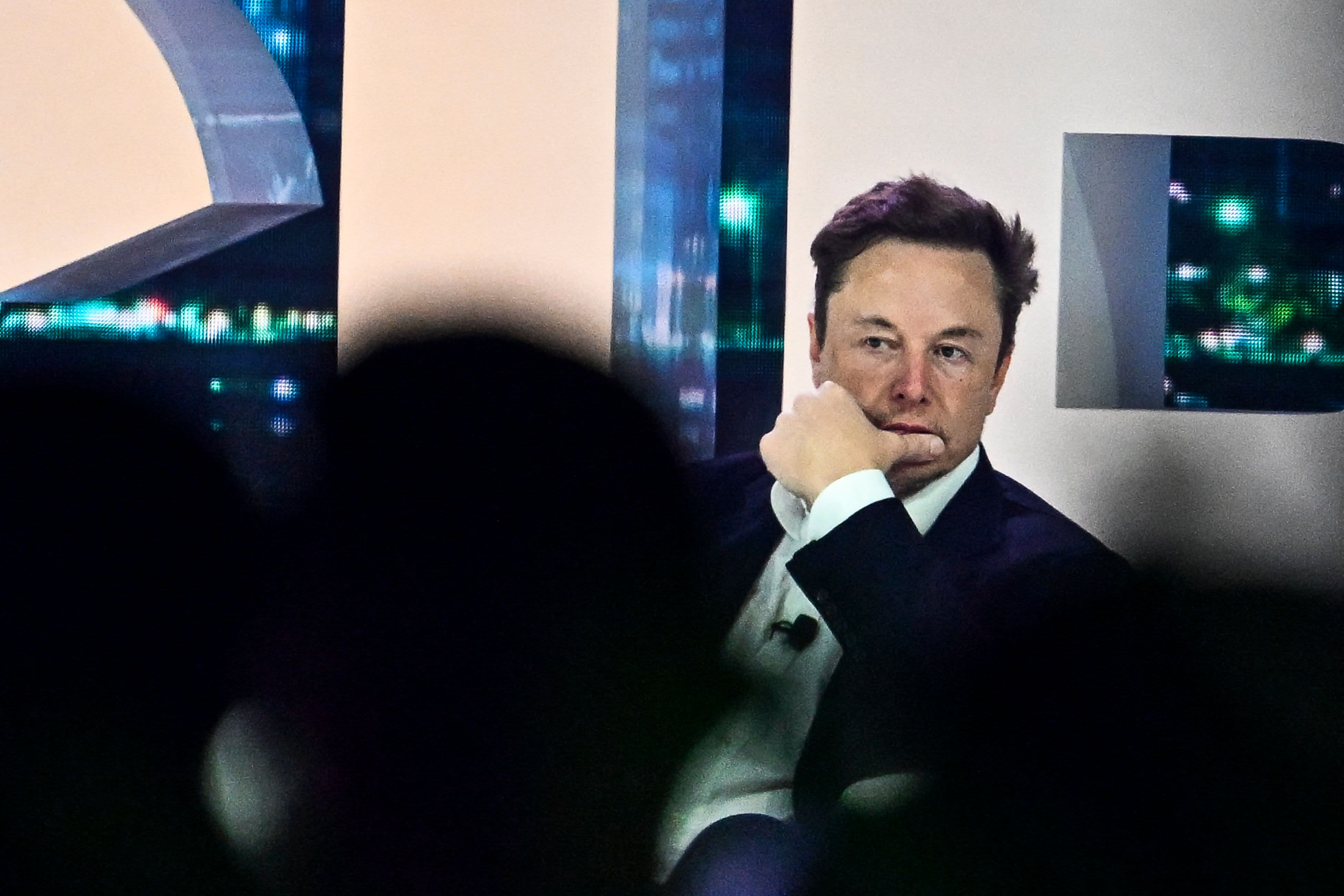
Tesla and SpaceX CEO Elon Musk sparked a lively debate on social media this week after joking about the possibility of an artificial intelligence (AI) model running for President of the United States in the 2032 elections. The comment, made during a technology conference in San Francisco, has ignited discussions about the role of AI in governance and the legal and ethical implications of non-human entities in political leadership.
Musk, known for his ambitious predictions about the future of technology and space travel, remarked, “What if an AI, with its efficiency and lack of personal agenda, could run for President? Imagine an AI candidate in 2032!” While the comment was made in jest, it resonated with the audience and quickly spread across the internet, inciting a range of reactions from amusement to concern.
Legal experts and constitutional scholars were quick to point out that the U.S. Constitution requires the President to be a natural-born citizen, at least 35 years old, and a resident of the country for at least 14 years—criteria that would automatically disqualify any AI, regardless of its capabilities or intelligence. “The notion of an AI president is fascinating but constitutionally impossible under current laws,” explained Professor Helena Roberts of the University of California, Berkeley School of Law.
However, the idea of integrating AI into government decision-making is not entirely far-fetched. Many governments and international organizations already use AI tools to improve efficiency in various administrative functions. AI systems are used for everything from optimizing traffic flow in cities to making predictions about economic trends and managing critical infrastructure.
Tech industry analysts believe Musk’s comment, while humorous, could be a subtle nudge toward more serious consideration of AI’s potential in governance. “Elon Musk’s statement, although playful, might actually push us to think more critically about how AI can be ethically and effectively integrated into leadership roles,” said tech analyst Jasmine Lin. “There’s potential for AI to assist in data-driven decision-making, reducing bias and increasing efficiency in certain areas.”

The conversation has also raised ethical questions about the potential power and influence of AI. Critics argue that depending on AI for political decisions could lead to issues of accountability, transparency, and manipulation. “The dependency on an AI system for critical decision-making in governance poses risks of power concentration in whoever designs and operates the AI,” noted Dr. Eric Olson, a researcher at the Institute for Ethical AI.
While an AI president remains firmly in the realm of science fiction, Elon Musk’s comment has successfully prompted a broader dialogue on the future integration of AI in society, exploring both its vast potentials and its limitations. As AI technology advances, the discussions about its role in leadership and governance are sure to continue, reflecting the evolving relationship between technology and society.