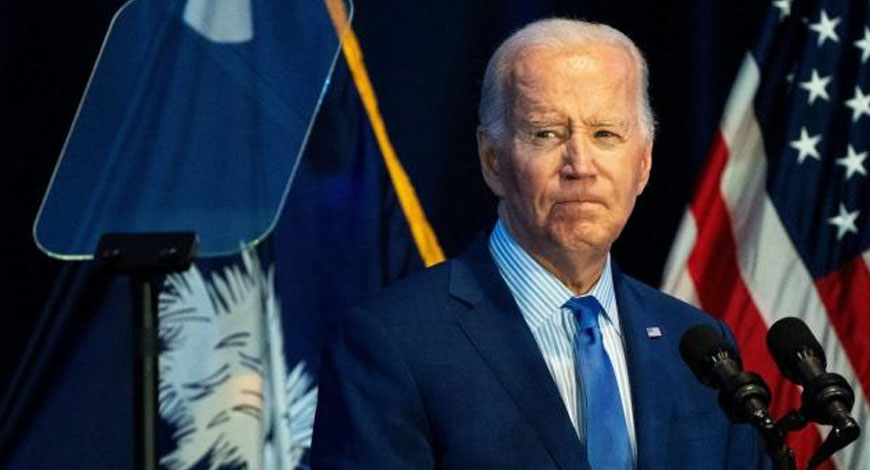
In a dramatic move against illegal robocalls, the Federal Communications Commission (FCC) slapped a $1 million fine on a mobile service provider who was found to have enabled a series of fake helper automated telephone calls pretending as US President Joe Biden. The ruling under scores the FCC’s continuous fight against the rising tide of fake calls which usually deceive and annoy millions of Americans daily. The Robocall Scheme Findings from the probe showed that these robocalls started circulating earlier this year with a voice imitating President Biden. The calls were mean spiritedly composed to sound official by the use of doctored recordings of the president in order to perpetuate fraudulent programmed including offering grants from government sources, debt settlement offers and even counterfeit COVID-19 relief funds. The targets of these calls are often weak individuals such as old people; they are urged through it to tender private information or pay money so as to claim their alleged money. When a sitting president is impersonated in this manner, it was especially effective—a tough one for several receivers to identify as fraudsters; thus it was believed that it was just another horrible telephone call among many others.
The wireless provider under investigation did not put sufficient safeguards against robocalls on its network, according to the FCC, whose name has not been disclosed. Moreover, it was discovered that despite signs such as a high number of outbound calls and the use of caller ID spoofing methods by the company, it allowed robocalls to pass through its network.

With this, the FCC found that the failure of the provider to take action was directly responsible for facilitating the flow of these spurious calls and led to the imposition of a penalty of $1 million on it. They emphasized with their ruling that telecommunication companies should always monitor and prevent illegal activities from taking place within their networks.
Overall this case confirms FCC’s unchanged stand against all types of illegal robocalls which remain to be among most persistent complaints from consumers. Recently, it has stepped up its enforcement activities enforcing tough penalties towards those companies that don’t adhere into regulations set in place primarily aimed at stopping proliferation behind such calls.
“Illegal robocalls pose significant risks to consumers; this case shows us why we must demand accountability from firms serving customers who fail to defend them against these deceptive schemes,” said FCC Chairwoman Jessica Rosen worcel after announcing her decision.
“The FCC will keep taking decisive actions to stop these operations and also penalize those who support it.”
Industry Response and Possible Future Directions
The wireless industry has been under increasing scrutiny for its role in the prevention of robocalls, with the FCC and other regulating bodies urging firms to strengthen their measures which may include adopting the STIR/SHAKEN caller ID authentication framework. This technology aims at reducing the effectiveness of caller ID spoofing which is a tactic frequently employed by robocall schemes.
In response to the FCC’s decision, organizations representing industry have reiterated their commitment to fighting robocalls but asked for further collaboration among telecom companies, regulators, and law enforcement agencies. They argue that although individual penalties are vital, there is a need for more coordinated efforts to tackle the root causes of the issue.

For consumers, the FCC’s move should serve as a wake-up call to remain aware of robocalls even those that appear genuine or come from trusted persons or official sources. The Biden impersonation scam is just one of the ways fraudsters can use current affairs or high-profile figures to mislead people.
The FCC tells consumers that they should be careful with unwanted phone calls, especially those that ask for private data or money. It also suggests blocking unwanted calls and keeping updated on current scams as well as reporting doubtful voicemail.
This means that by dealing with the wireless operator who got fined one million dollars, the Federal Communication Commission has won against illegal robocalls. The telecom companies will have to build more robust defenses against these syndicates as regulators increase their enforcement of laws on robocalls. On the other hand robocalls continue to update their methods so as not to disappoint themselves in their endeavors of outwitting the regulators and to exploit new chances.