

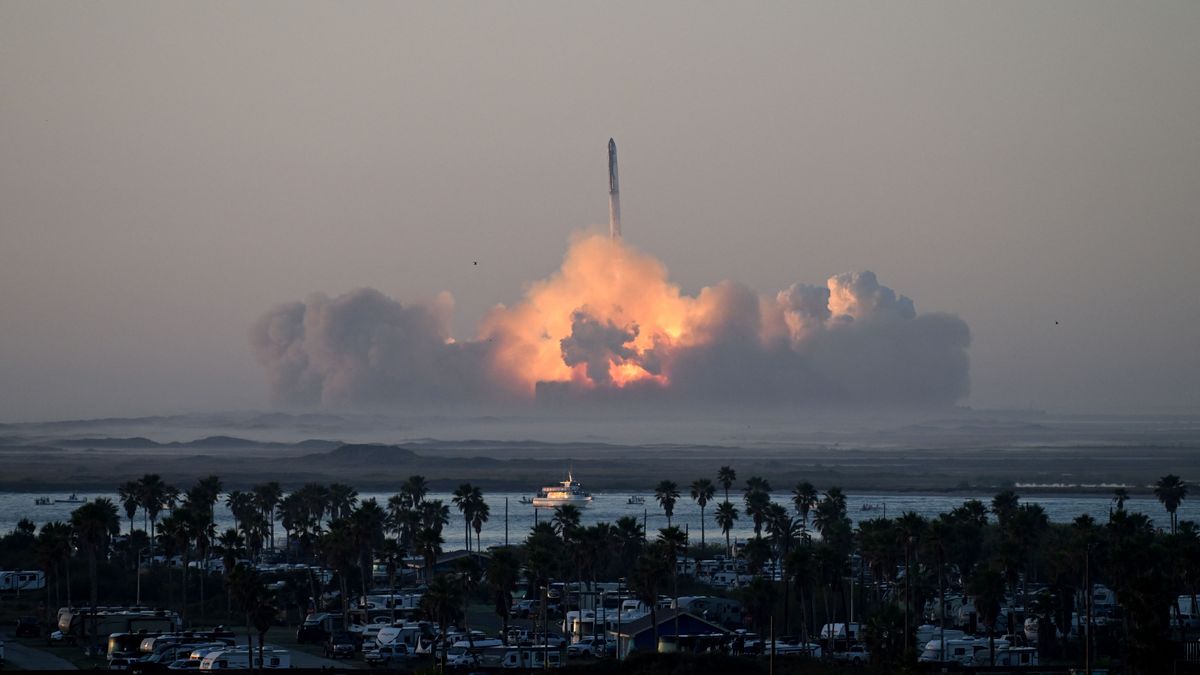
A “catastrophic” explosion of SpaceX’s Starship rocket last year has been linked to a previously undocumented atmospheric disturbance, according to a groundbreaking study by Russian scientists. The research reveals that the explosion created a temporary hole in Earth’s mesosphere, marking the first time such an event has been observed.
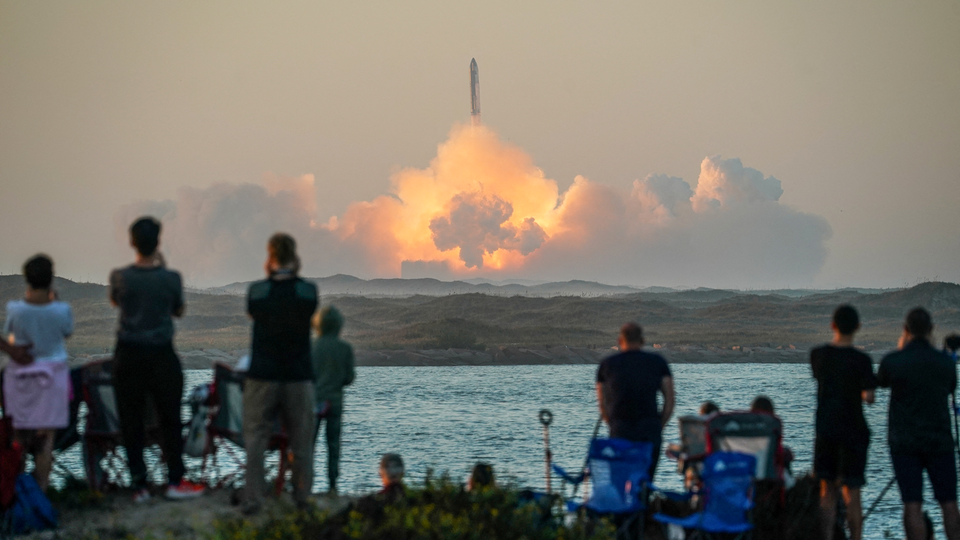
The explosion, which occurred in April 2023 during a test flight of SpaceX’s Starship—a spacecraft designed for deep-space missions—sent shockwaves through both the aerospace community and the Earth’s atmosphere. While the incident was initially seen as a significant setback for SpaceX, new findings suggest that its impact was far greater than initially understood.
Russian atmospheric scientists, using a combination of satellite data and advanced atmospheric modeling, discovered that the explosion generated an immense shockwave that tore through the mesosphere, a layer of the atmosphere located between 50 and 85 kilometers (31 to 53 miles) above the Earth’s surface. This shockwave temporarily displaced atmospheric particles, creating a hole in the normally stable mesosphere.
“The energy released by the explosion was so intense that it disrupted the mesosphere, something we have never observed before from an artificial event,” said Dr. Alexei Sokolov, the lead researcher from the Russian Academy of Sciences. “This is a first-of-its-kind phenomenon, and it underscores the potential environmental consequences of large-scale rocket launches.”
The mesosphere, often referred to as the “ignorosphere” due to its relative inaccessibility and lack of detailed study, plays a crucial role in atmospheric chemistry and meteorology. The hole caused by the explosion, although short-lived, raises concerns about the potential for such events to affect atmospheric processes, including the depletion of ozone or disruption of atmospheric circulation patterns.
According to the study, the hole in the mesosphere lasted only a few hours before atmospheric forces rebalanced the displaced particles. However, the researchers caution that repeated disturbances of this magnitude could have cumulative effects, potentially influencing climate patterns or leading to more severe atmospheric consequences.
SpaceX, led by CEO Elon Musk, has not publicly responded to the findings, but the report is likely to spark renewed debate over the environmental impact of space exploration. The company’s Starship program, which aims to enable human colonization of Mars and beyond, is central to Musk’s vision for the future of humanity. However, the environmental footprint of such ambitious projects is becoming an increasingly contentious issue.
The Russian scientists’ discovery also highlights the need for more comprehensive monitoring of the upper atmosphere, particularly as the frequency of large-scale rocket launches increases. “As space exploration advances, we must consider the broader environmental implications,” said Dr. Sokolov. “Our study shows that the impact of these activities can extend far beyond what we currently understand.”

The findings are expected to prompt further research into the effects of rocket launches on the Earth’s atmosphere, as well as discussions on potential regulations to mitigate these impacts. As the space race heats up, with multiple private and governmental entities planning more frequent and larger-scale missions, understanding the full range of environmental consequences will be crucial to ensuring the sustainability of both space exploration and Earth’s delicate atmospheric systems.









