


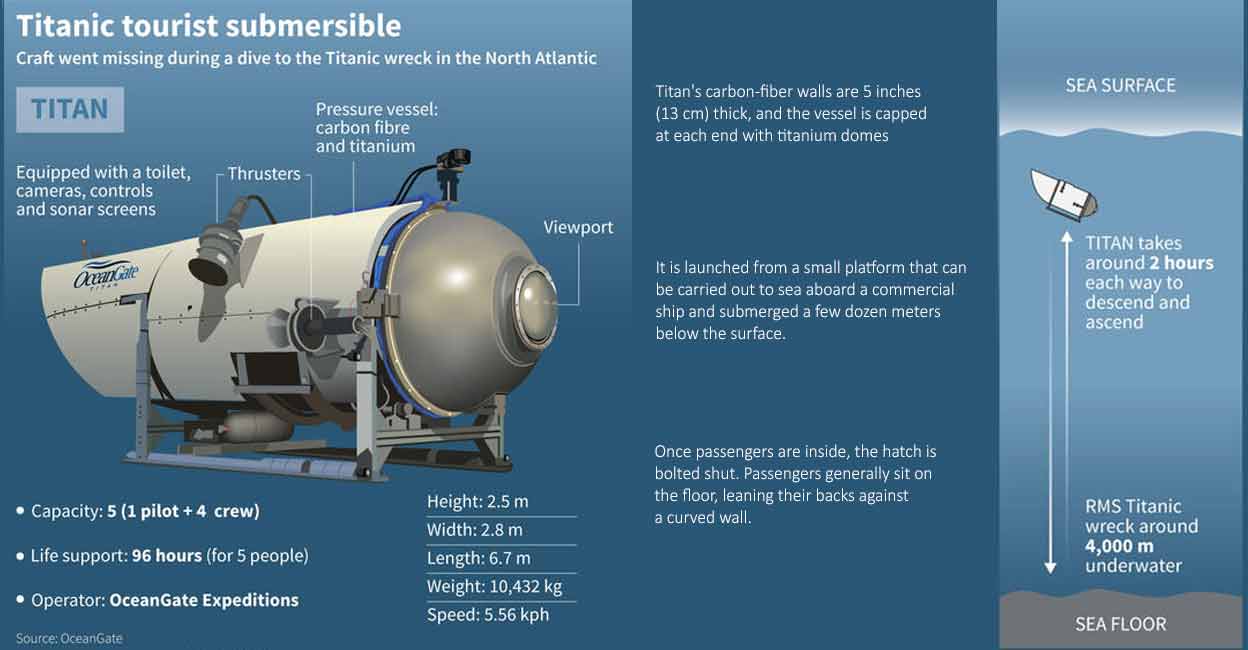
In a shocking development following the tragic implosion of OceanGate’s Titan submersible during its ill-fated expedition to the Titanic wreck site, investigators have revealed that the vessel’s critical safety calculations were based on a hand-typed Excel spreadsheet. This finding raises serious questions about the engineering practices and safety protocols employed by the company.
The Titan, which tragically imploded in June 2023, resulted in the loss of all five passengers aboard. An extensive investigation led by the National Transportation Safety Board (NTSB) has since focused on the submersible’s design and operational procedures, revealing troubling details about its reliance on outdated and potentially error-prone methods.
:max_bytes(150000):strip_icc():focal(724x466:726x468)/oceangate-submersible-titan-062023-3-b5ad9a0a57304210aec4dd91f831d4bf.jpg)
Key Findings
According to sources close to the investigation, the spreadsheet in question was not subjected to the rigorous validation processes typically required for high-stakes engineering projects. Rather, it appears to have been created by a single technician, raising concerns about its accuracy and reliability. The spreadsheet was reportedly used to calculate the structural integrity of the submersible and its ability to withstand the extreme pressures of deep-sea exploration.
“The reliance on a hand-typed spreadsheet for such critical calculations is alarming,” said Dr. Emily Carter, a marine engineering expert. “It highlights a significant lapse in engineering rigor and safety standards that are essential in high-risk environments.”
Safety Protocols Under Scrutiny
OceanGate, a private company known for its deep-sea exploration efforts, has faced criticism in the past regarding its safety practices. Reports suggest that the company prioritized innovation and rapid development over established safety protocols, potentially compromising passenger safety.
The NTSB’s investigation has also revealed that some of Titan’s safety features were either untested or inadequately implemented. Testimonies from former employees indicate a culture of secrecy and pressure to meet deadlines, further complicating the issue.
Industry Response
The maritime industry is now calling for increased regulatory oversight of deep-sea exploration technologies. Several experts have urged the creation of comprehensive safety standards to prevent future tragedies. “We need to learn from this incident,” said John Mitchell, a maritime safety consultant. “Establishing rigorous testing and documentation processes is vital for the future of deep-sea exploration.”
As the investigation continues, the findings surrounding OceanGate’s Titan submersible underscore the need for improved safety measures in extreme engineering fields. With questions lingering about the company’s practices and the future of deep-sea exploration, many are left wondering how such a tragedy could occur in an age of advanced technology.
The NTSB is expected to release a detailed report in the coming months, which may include recommendations aimed at enhancing safety protocols and preventing similar incidents in the future. As the ocean depths remain both a frontier and a challenge, ensuring the safety of those who dare to explore them has never been more critical.









