In a curious twist of political and economic developments, former President Donald Trump’s recent proposal for a new set of tariffs on foreign goods has raised eyebrows due to its striking resemblance to the logic used by artificial intelligence systems, particularly OpenAI’s language model, ChatGPT. The unconventional tariff structure introduced by Trump shares some surprising similarities with the mathematical patterns and decision-making processes seen in AI models like ChatGPT, leading experts to ask whether this approach could reshape global trade dynamics.
Trump, who has long advocated for aggressive trade policies, including tariffs as a means of protecting American industries, unveiled a set of new economic measures this week that involve imposing tariffs on a variety of foreign imports. The announced tariffs are meant to counterbalance what Trump claims is unfair competition by foreign manufacturers benefiting from low wages and lax regulations. However, the manner in which these tariffs are calculated has sparked debate for its reliance on seemingly arbitrary, yet strangely consistent, algorithms.
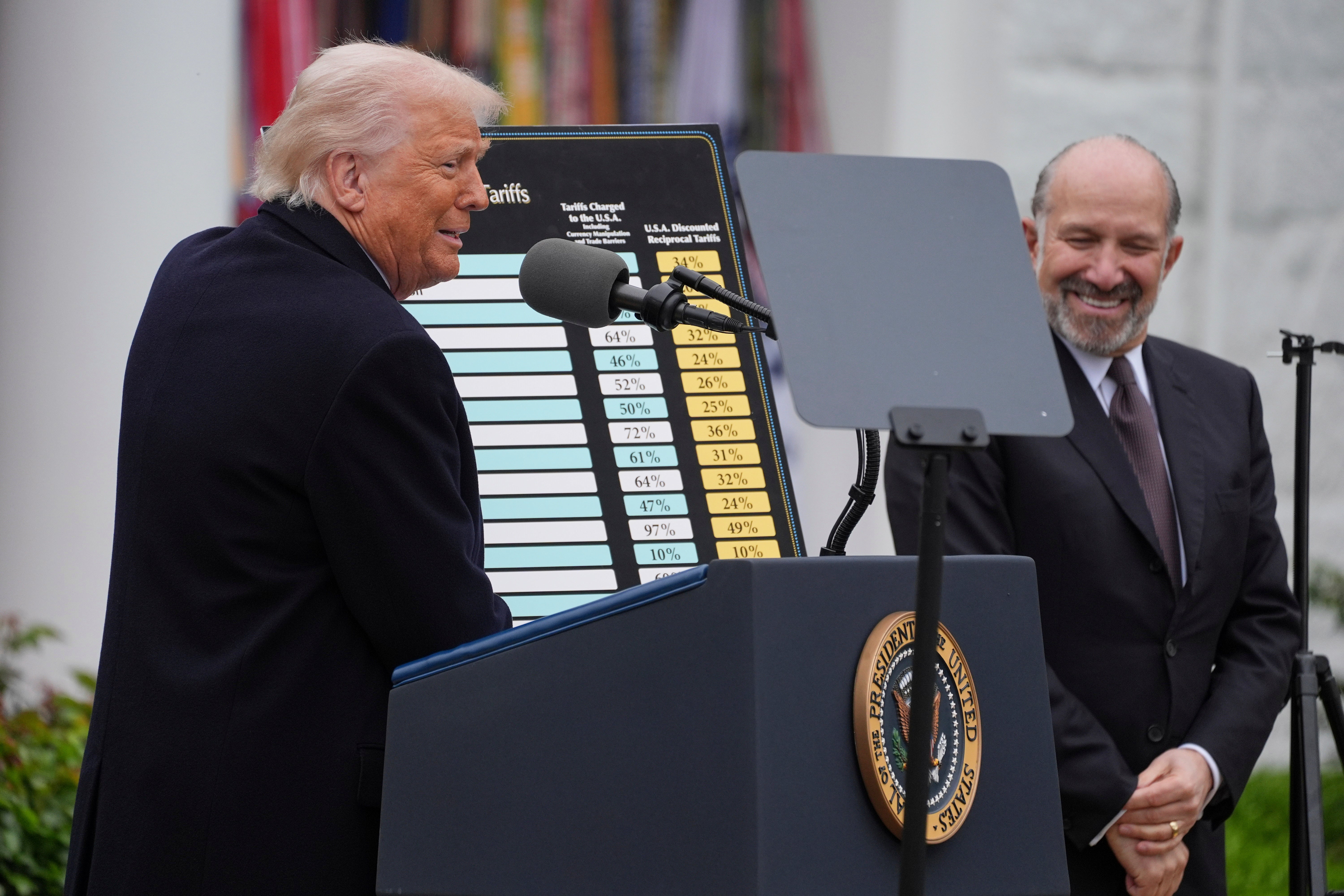
Several economists and trade analysts have pointed out that the method behind Trump’s new tariff structure bears a striking resemblance to the way AI like ChatGPT processes data—balancing variables in a way that seems to be based on pattern recognition rather than traditional economic principles. Much like how AI models process vast amounts of text data to generate responses, Trump’s tariff calculations appear to focus on a mix of factors such as trade imbalances, geopolitical dynamics, and even personal sentiment toward certain countries.
How the Tariff Math Mirrors AI Models
One of the core similarities between Trump’s tariff strategy and the logic behind ChatGPT lies in the approach to assigning values to variables without always relying on historical economic data or precise forecasting models. Just as ChatGPT predicts the next word in a sentence based on patterns and contextual clues, Trump’s tariff logic appears to follow a pattern of escalation that reacts to recent trade disputes or policy standoffs, rather than a long-term analysis of global trade flows.
For example, in his latest announcement, Trump proposed a 15% tariff on electronics from certain countries, based on what his office described as “unfair trade practices.” However, the decision wasn’t rooted in the typical measures like production costs or trade agreements. Instead, the tariff percentage seemed to adjust dynamically depending on recent political events or diplomatic confrontations with those countries—an approach that some have likened to the “predictive” nature of AI models.
Predictive Algorithms in Economic Policy?
In a striking parallel, AI models like ChatGPT use deep learning algorithms that are trained on massive datasets to anticipate user needs or conversational context. Similarly, Trump’s new tariff plan seems to anticipate shifts in international relations, applying tariffs in real time based on the political landscape. This suggests an intuitive or reactionary pattern that AI systems, too, are designed to emulate—responding to inputs (such as geopolitical tensions or trade deficits) in ways that are more flexible and less anchored in traditional economic theory.
This method, while unconventional, has led to some interesting results. Critics argue that this approach could destabilize global markets, as it introduces uncertainty by creating tariffs that may appear erratic or disproportionately based on non-economic factors. On the other hand, proponents claim it offers a much-needed shake-up to the traditional economic models that have long governed international trade, much like how AI challenges conventional approaches to data and communication.
AI-Driven Policies in the Real World
While AI has been used increasingly in the private sector for tasks ranging from financial forecasting to customer service automation, the application of AI-style reasoning to public policy is still a controversial topic. Trump’s new tariff strategy has raised concerns about whether policymakers are becoming too reliant on non-traditional methods of decision-making that may be influenced by personal biases or fleeting geopolitical events.
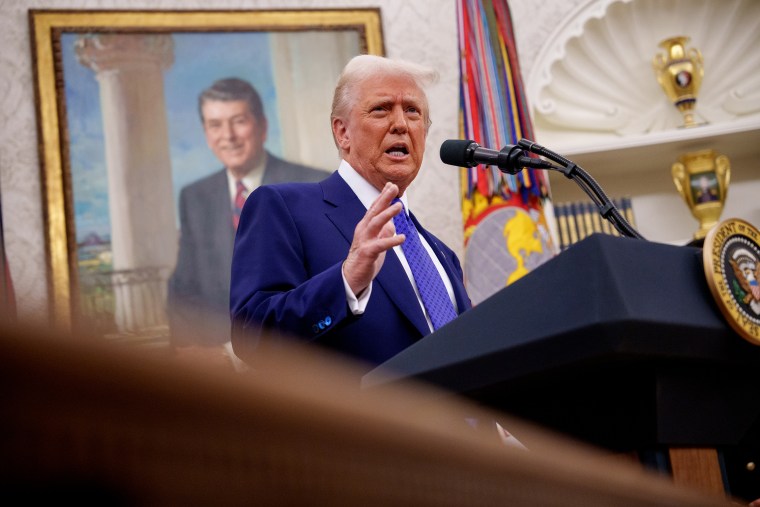
“Trump’s tariff math seems to mimic the predictive, pattern-based approach of AI, but without the structured and transparent processes that make such systems reliable in other areas,” said Dr. Elaine Marx, a political economist at the University of Chicago. “It’s not that the math doesn’t work in theory—AI can predict patterns with impressive accuracy—but we need a better understanding of how these decisions are made and whether they can truly benefit the broader economy.”
Looking Ahead: The Future of Trade in the Age of AI
As AI continues to shape various sectors, from healthcare to entertainment, it’s becoming clear that its influence could expand into the realm of global trade. The blending of AI-inspired decision-making with economic policies, as seen in Trump’s new tariffs, could be a sign of things to come. Whether this approach will lead to more efficient trade negotiations or economic instability remains to be seen.
For now, experts are watching closely as Trump’s new tariffs unfold, examining whether this “AI-esque” approach to international trade could spark a shift toward a new era of policy-making—or if it will be quickly replaced by more conventional economic thinking as the consequences of these decisions become clearer. Only time will tell if tariffs will continue to follow this unpredictable mathematical model or if a more traditional, data-driven approach will ultimately prevail.