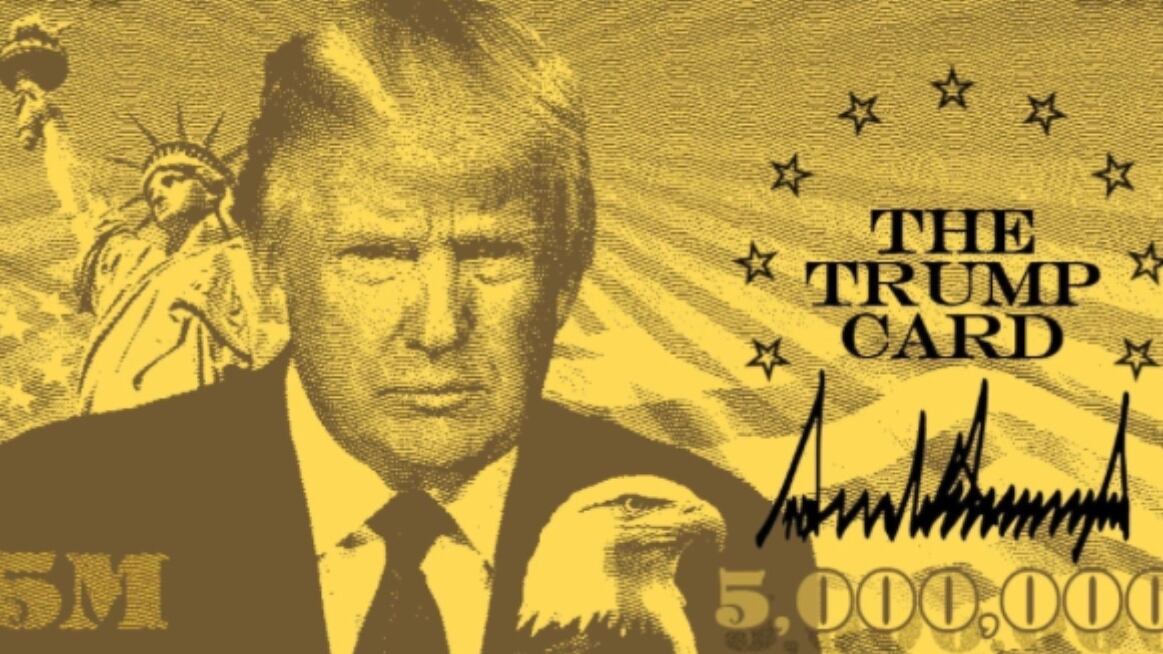
Former President Donald Trump has unveiled a new immigration initiative that’s turning heads across the globe — and not just because of its $5 million price tag. Dubbed the “Trump Card,” the program offers wealthy foreigners a fast track to U.S. permanent residency, provided they can afford the hefty buy-in. But just as attention-grabbing as the visa itself is the website promoting it: a single-page site that looks more like a rushed school project than a government portal.
The Trump Card is being pitched as a bold alternative to the long-standing EB-5 visa program, which grants green cards to foreigners who invest a minimum of $800,000 into U.S. businesses that create American jobs. Trump’s version tosses out the job creation requirement and replaces it with pure capital injection — pay $5 million, and you’re in line for a green card.
Launched with fanfare on Trump’s social media platform, the program’s rollout has been anything but conventional. The official website — reportedly developed with government backing — features a bare black background, bold white text reading “Trump Card Is Coming,” and a simple form inviting users to “join the waiting list.” There’s no detailed policy, no terms, no FAQs. Just a logo, a line, and a sense of mystery.
The simplicity of the site has sparked widespread ridicule. Critics have called it “the cheapest-looking government site ever,” with memes comparing it to early-2000s Geocities pages or fan-made crypto token scams. Despite its amateur design, a small government-issued disclaimer at the bottom of the page labels it an “official U.S. government website.”
Supporters of the initiative, including figures in Trump’s inner circle, argue that the program could bring substantial benefits to the U.S. economy. By targeting ultra-wealthy individuals looking to invest in the U.S., the Trump Card aims to attract capital at a scale never seen in immigration policy. Advocates have floated projections suggesting that if 200,000 people sign up, the program could generate as much as $1 trillion in new revenue — a staggering figure that backers claim could help pay down the national debt.
But immigration experts and civil rights groups are far less enthusiastic. Many have pointed out that the Trump Card further shifts U.S. immigration priorities from merit and need to wealth and privilege. Critics argue that it essentially turns U.S. residency into a commodity, one only accessible to the global elite.
For immigrants from countries like India and China, where green card backlogs can stretch decades for skilled workers, the Trump Card adds a new layer of frustration. Many of these applicants possess high-demand skills in tech, medicine, and engineering but are stuck in limbo due to bureaucratic caps. To them, the Trump Card is a slap in the face — a sign that their contributions are less valued than a billionaire’s bank transfer.

The program also raises legal and logistical questions. It remains unclear how the Trump Card would interact with existing immigration law or whether it requires congressional approval. So far, the administration has offered few specifics, other than promising that details are “coming soon.”
In typical Trump fashion, the launch has been both headline-grabbing and divisive. It plays to his base’s preference for bold, simple solutions while also sparking outrage among policy wonks and immigration advocates. Whether the Trump Card becomes a serious part of U.S. immigration infrastructure or fizzles out like many of Trump’s more unconventional ideas remains to be seen.
For now, one thing is clear: a $5 million green card offered through a bare-bones website is peak Trump — part showmanship, part controversy, and entirely designed to grab the world’s attention.