Former President Donald Trump announced this week that a U.S.-based group of investors is prepared to acquire TikTok’s American operations, a move that could resolve longstanding national security concerns and potentially prevent the app from being banned in the United States.
Speaking to reporters on Tuesday, Trump stated that a deal is “very close” and that “a group of very wealthy individuals” is prepared to take over the U.S. arm of the social media giant. Though the names of the investors were not disclosed, sources familiar with the discussions say the buyer group includes major tech and financial industry players with significant influence and capital.
The announcement comes as TikTok continues to face pressure from U.S. lawmakers and regulators, who have for years expressed concern about the app’s Chinese ownership through parent company ByteDance. Critics argue that TikTok, which has over 170 million users in the United States, poses a national security threat due to the potential for the Chinese government to access user data or influence American public opinion through content algorithms.
In 2024, Congress passed legislation mandating that TikTok divest its U.S. operations or face an outright ban. The law gave ByteDance a set timeline to sell off its American assets to an approved U.S. buyer, although several legal challenges have delayed full implementation. Now, with pressure mounting and the clock ticking, Trump’s announcement signals a potential breakthrough in the standoff between Washington and Beijing.
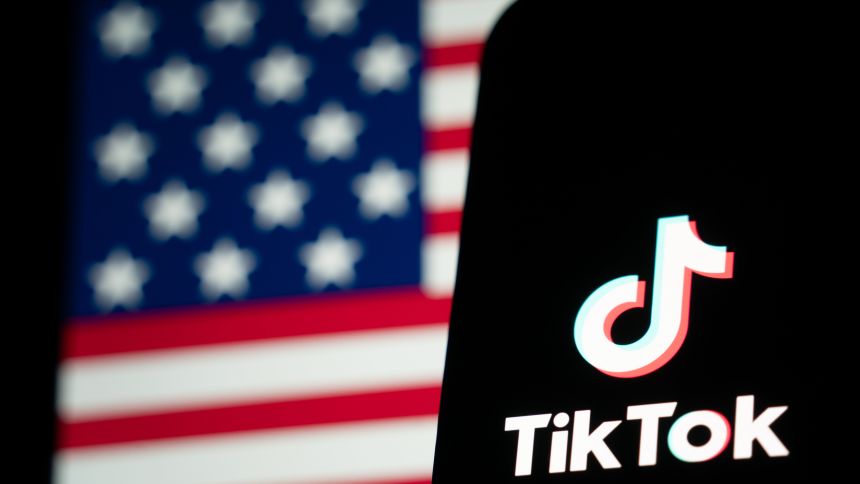
According to Trump, the buyer group has already outlined a structure for the transaction, which would involve transferring ownership and control of TikTok’s U.S. operations, including its infrastructure, user data, and software operations. “We have a buyer, and they’re ready to go,” Trump said. “This deal will ensure that Americans’ data stays in America, and it will keep this very popular app in the hands of U.S. companies.”
The former president also indicated that negotiations with the Chinese government are ongoing, suggesting that Beijing’s approval is still needed before the sale can be finalized. Although China has not made any official statement, past transactions involving technology companies with sensitive algorithms or user data have required regulatory clearance from Chinese authorities.
ByteDance has previously resisted calls to divest its U.S. assets, arguing that the app is independently managed and that all U.S. user data is stored domestically under American oversight. However, critics say this arrangement does not go far enough to ensure independence from foreign influence.
In response to the growing scrutiny, TikTok has made several attempts to reassure both U.S. regulators and the public. The company invested billions into a program dubbed “Project Texas,” which involved relocating data servers and operations to American soil, under the management of U.S.-based tech firm Oracle. However, that initiative has not been enough to satisfy lawmakers, who continue to push for a full separation from ByteDance.
The current deal, if finalized, would represent a major shift in TikTok’s ownership structure and could serve as a model for how the U.S. handles foreign-owned tech platforms operating domestically. National security experts have long warned that companies operating under the jurisdiction of authoritarian governments, like China, could be compelled to share user data or censor content on demand.
Despite concerns, TikTok remains immensely popular in the U.S., especially among younger demographics. It has become a central platform for entertainment, politics, commerce, and cultural exchange. A full ban, as proposed under current law if the sale does not go through, could disrupt the social media landscape and spark backlash among users, content creators, and advertisers.
The deal also carries significant political weight. Trump has made his stance on TikTok a central part of his broader critique of U.S.-China relations, portraying the sale as a win for American sovereignty and economic independence. “We’re not going to let China spy on our kids or control what they see,” he said during a campaign-style event following the announcement. “This deal puts America back in control.”
However, questions remain about the details of the agreement, including how much of TikTok’s underlying technology will be transferred, whether ByteDance will retain any influence or revenue rights, and how the U.S. government will verify compliance. Cybersecurity and legal experts have cautioned that unless the algorithm—the core of TikTok’s content delivery system—is included in the sale, U.S. ownership may not address the root of the security concerns.
There are also diplomatic implications. Any transaction involving a major Chinese tech firm will be scrutinized in Beijing, where officials are sensitive to perceptions of forced divestitures. China has in the past blocked similar deals by invoking export controls over software and artificial intelligence technologies. Whether Chinese regulators will approve the sale remains a key unknown.
Despite the uncertainties, the announcement has injected fresh momentum into the debate over TikTok’s future in the U.S. market. Analysts say that if a sale is approved by both governments, it could pave the way for a new chapter in U.S.-China tech relations, while providing a precedent for handling similar cases in the future.
For now, TikTok users in the U.S. are left waiting to see whether their favorite platform will change hands—or disappear from app stores altogether. With the proposed buyer ready, the next steps depend on regulatory review, final negotiations, and international diplomacy. But Trump, never one to shy from bold predictions, remains confident.
“It’s going to be a great deal,” he said. “And it’s going to be done very soon.”