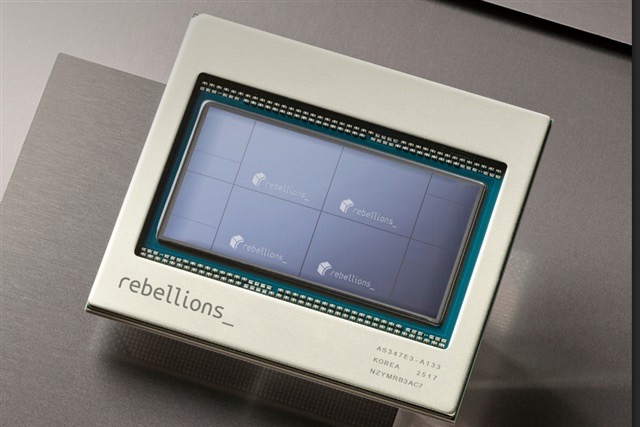
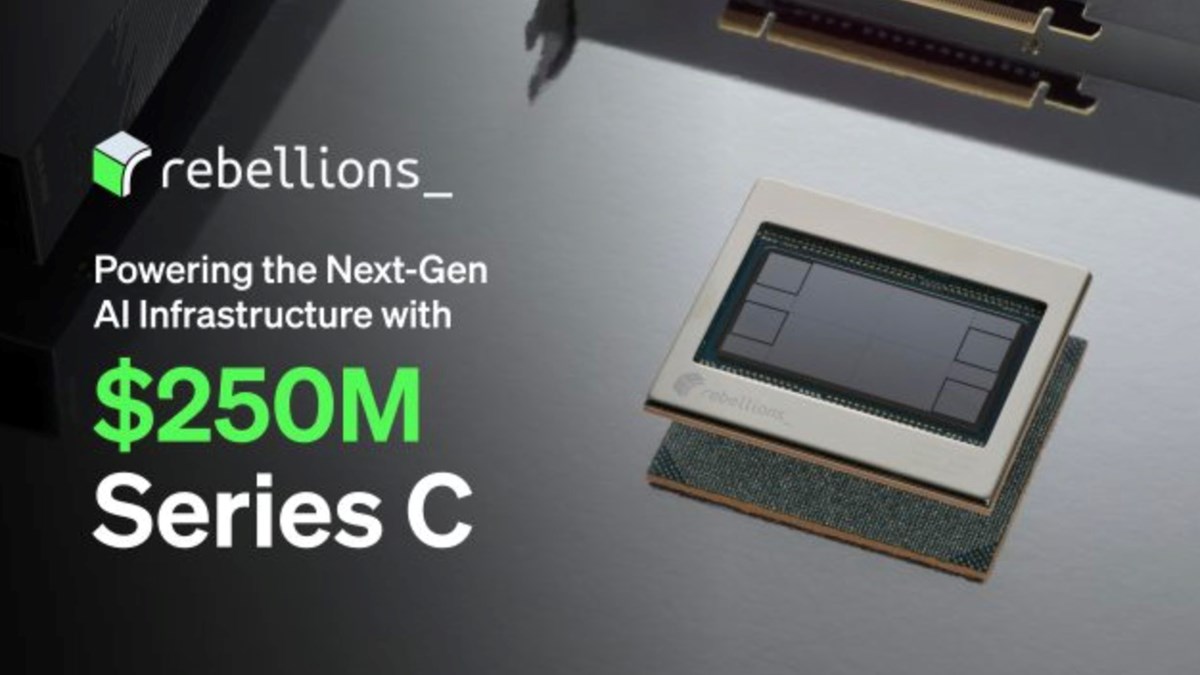
In a bold step toward expanding its influence in the fast-evolving AI semiconductor industry, Arm has joined a $250 million Series C funding round for South Korean AI chipmaker Rebellions. The investment marks a strategic alignment between one of the world’s most prominent chip architecture firms and one of Asia’s most ambitious AI hardware startups.
Rebellions, founded in 2020, has quickly emerged as a key player in the AI chip space, developing custom accelerators optimized for inference tasks — the process of running trained AI models in real-time applications. With demand for high-efficiency, high-performance chips surging due to the global boom in generative AI, edge computing, and large language models, the startup’s innovative architecture has attracted major investors and industry partners.
The latest round, which values Rebellions at approximately $1.4 billion, is intended to fund the mass production of its next-generation chip, Rebel-Quad, as well as support international expansion and accelerate research into future chiplet-based architectures. Arm’s participation, as both a financial and strategic investor, signals confidence in Rebellions’ vision of building AI accelerators that rival global incumbents.
A Strategic Bet on AI Infrastructure
For Arm, the move represents more than a simple investment. It is a strategic bet on the future of AI infrastructure. While Arm’s low-power architecture dominates the mobile and embedded markets, the company has increasingly turned its attention to data center and AI workloads.
By aligning with Rebellions, Arm positions itself closer to the edge of AI development, particularly in the realm of inference — the stage where AI models are deployed in real-world scenarios, from chatbots to autonomous vehicles and recommendation engines.
The collaboration is expected to yield synergies in chip design, architecture compatibility, and ecosystem development. As Rebellions builds chips tailored for efficiency and scalability, Arm’s experience with low-power, high-performance architectures could help guide future designs that meet the power and latency demands of modern AI systems.
Rebellions, for its part, gains access to Arm’s vast ecosystem, including tools, licensing models, and potential co-design opportunities. The partnership may also ease Rebellions’ entry into international markets where Arm’s name carries significant weight.
Rebel-Quad: Rebellions’ Flagship Accelerator
At the heart of the funding round is Rebel-Quad, Rebellions’ newest AI inference chip. Designed for data centers and enterprise AI workloads, Rebel-Quad utilizes a chiplet-based architecture that allows for modular upgrades, scalability, and better thermal efficiency. The chip is intended to serve large-scale inference tasks — such as LLM deployments, multimodal AI, and real-time analytics — where energy efficiency and latency are critical.
The design emphasizes high throughput with low power consumption, aiming to outperform traditional GPUs in specific inference workloads. Rebellions believes Rebel-Quad will appeal to cloud providers, AI labs, and enterprise clients seeking alternatives to GPU-heavy architectures that can be expensive, energy-intensive, and less specialized for inference tasks.
The company has already begun initial pilot programs with customers in Asia and the Middle East and plans to begin full-scale production by mid-2026.
South Korea’s Role in the Global AI Race
Rebellions’ rapid growth is also reflective of South Korea’s larger ambitions in the semiconductor space. Long known for its dominance in memory chips and display technologies, the country is now pushing to lead in the next frontier: AI semiconductors.
Government backing, public-private partnerships, and a strong base of engineering talent have all contributed to the emergence of local players like Rebellions. The success of the company also signals South Korea’s growing relevance in a field traditionally dominated by U.S., Chinese, and European firms.
This funding round adds further momentum to that trajectory. Rebellions plans to use part of the new capital to establish operations in North America and Europe, with the goal of becoming a truly global AI chip supplier. The company is also hiring aggressively in fields such as compiler design, systems integration, and neural network optimization.
Global Competition in AI Hardware
The AI chip market has become one of the most competitive and strategically important sectors in tech. Industry giants like NVIDIA, Intel, AMD, and a growing list of startups around the world are racing to produce hardware capable of powering the next generation of AI applications.
What sets Rebellions apart is its focus on inference, rather than training. While training chips are essential for building massive models, inference chips power the day-to-day operation of those models at scale — from answering search queries to running AI-powered assistants on devices.
By designing accelerators that can perform these tasks more efficiently than general-purpose GPUs, Rebellions is betting on a shift in customer priorities: from maximum raw compute to optimal cost-performance balance in deployment.
With Arm now backing the company, Rebellions gains additional technical validation and potential pathways to integrate more deeply with global AI infrastructure stacks. This could include partnerships with cloud platforms, hardware integrators, and even original equipment manufacturers (OEMs) building AI-capable servers and edge devices.
Challenges Ahead
Despite its promising trajectory, Rebellions faces considerable challenges. Chip manufacturing remains capital-intensive and risky, especially when scaling up new designs. Yield issues, component shortages, and global supply chain disruptions can slow production timelines and impact margins.
Additionally, software compatibility is a major hurdle. While Rebellions is developing its own toolchains and working on framework support, convincing developers and enterprises to adopt a new platform over established ecosystems can be difficult.
Competing with industry titans also requires sustained investment in both R&D and customer acquisition. The $250 million raised in this round provides a strong runway, but long-term success will depend on Rebellions’ ability to convert interest into large-scale deployments and repeat customers.
A Partnership That Signals More to Come
The partnership between Arm and Rebellions marks a notable moment in the evolution of the AI chip industry. It blends the strengths of an established architecture leader with the agility of a next-generation AI startup.
As demand for efficient, specialized AI chips continues to grow, collaborations like this may become more common — signaling a shift from monolithic hardware solutions to more flexible, modular, and energy-conscious architectures.
For Rebellions, the future hinges on execution. For Arm, it represents a stake in that future.