Meta Plans $600 Billion U.S. Spend as AI Data Centers Expand
Meta Platforms, the parent company of Facebook, Instagram, and WhatsApp, has unveiled plans to invest $600 billion in the United States over the coming years, primarily to expand its artificial intelligence (AI) infrastructure. This unprecedented commitment is aimed at building next-generation AI data centers and scaling the company’s computing capacity to meet surging demand for AI-driven services.
The investment will cover the construction of ultra-large, AI-optimized data centers across multiple U.S. locations. These facilities will incorporate advanced power and cooling systems, renewable energy sourcing, and highly specialized hardware capable of running massive AI workloads. Meta is effectively creating “AI superclusters” that can support cutting-edge research, model training, and AI product deployment at scale.
Beyond the technology, the plan is expected to generate significant employment opportunities in local communities, spanning skilled trades, data center operations, and long-term technical roles. Meta sees these centers not just as infrastructure, but as strategic assets that provide a competitive edge in the global AI race. By front-loading capacity, the company aims to ensure it can meet peak demand and maintain leadership in AI computing.

However, the scale of the investment carries inherent risks. The return on such massive capital expenditure depends on continued rapid growth in AI workloads and market adoption. Slower-than-expected demand could result in costly underutilized infrastructure.
For the broader technology ecosystem, Meta’s move underscores an ongoing shift: AI competition is increasingly defined by control over physical compute capacity, energy-efficient infrastructure, and data pipelines, not just model development. As other tech giants ramp up their own AI investments, the U.S. is poised to become the epicenter of AI infrastructure expansion.
Meta’s $600 billion plan signals a transformative era where large-scale AI capabilities are tightly linked to the physical resources that power them, shaping the next decade of computing and enterprise AI services.
Nvidia CEO Sees Strong Demand for Blackwell Chips
Nvidia CEO Jensen Huang has confirmed that demand for the company’s next-generation Blackwell chip architecture is extremely strong, signaling robust growth for the company and the broader AI hardware market. Blackwell, designed for large-scale AI training and inference, represents Nvidia’s most advanced platform, incorporating GPUs, CPUs, networking components, and switches to handle demanding AI workloads.
Huang highlighted that the surge in demand is outpacing supply in several areas, particularly around memory and supporting components. Nvidia relies heavily on partners such as TSMC for chip production and leading memory manufacturers to meet the rising orders. The company is working to scale manufacturing and supply chains, but potential bottlenecks could challenge its ability to deliver all units immediately.
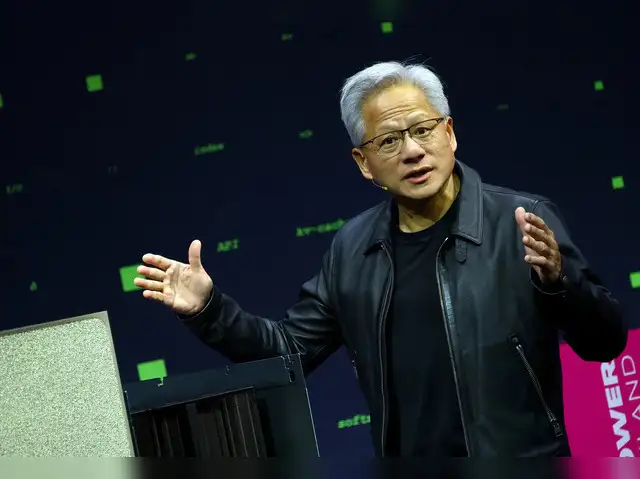
The high demand reflects the broader AI arms race, as organizations worldwide accelerate investments in computing infrastructure to power generative AI, large language models, and other advanced machine learning applications. Blackwell’s capabilities are particularly attractive to enterprises and cloud providers seeking to scale AI operations efficiently, making it a strategic asset in a competitive market.
Nvidia’s position as a leading supplier of high-performance AI chips gives it leverage in pricing and customer relationships. The surge in orders also underscores the importance of physical compute infrastructure in AI deployment, as software alone cannot meet the growing computational needs.
Despite the strong demand, risks remain. Supply constraints, geopolitical export controls, and potential cyclical fluctuations in hardware adoption could affect delivery timelines and market dynamics. Nvidia’s challenge will be balancing production ramp-up with maintaining quality and customer satisfaction.
In summary, the Blackwell architecture is a cornerstone of Nvidia’s AI strategy. The unprecedented demand for these chips highlights the increasing centrality of high-performance hardware in AI innovation and underscores Nvidia’s role at the forefront of the rapidly evolving AI ecosystem.
Some Nexperia Chip Shipments Resume as Germany Welcomes ‘De‑Escalation’
Some shipments of Nexperia semiconductor chips have resumed after a period of disruption that threatened Europe’s automotive and electronics supply chains. The Dutch-owned, China-backed chipmaker had faced export restrictions, raising concerns over potential production slowdowns in key markets, particularly Germany, where automotive manufacturing is highly dependent on a steady supply of semiconductors.
The partial resumption of shipments has been welcomed by German officials and industry players as a positive step toward stabilizing supply chains. Automotive manufacturers and suppliers that rely on Nexperia chips have started receiving limited deliveries, allowing them to continue production and mitigate immediate bottlenecks. This development is especially critical for Europe’s car industry, where modern vehicles require billions of semiconductors for everything from safety systems to infotainment.

While shipments have restarted, the situation remains fragile. Access is still regulated under export permits, and a fully normalized supply chain has not yet been restored. Industry experts caution that any disruption in permits or regulatory approvals could quickly affect production timelines, leaving manufacturers vulnerable.
The broader context of this disruption highlights ongoing tensions in global semiconductor governance and trade. The temporary easing signals a willingness by involved parties to de-escalate, but underlying issues regarding ownership, export controls, and geopolitical considerations remain unresolved. Companies are advised to maintain contingency plans and monitor developments closely.
For Germany and Europe, even partial relief is significant, providing temporary stability for manufacturers while giving governments time to negotiate longer-term solutions. Although the immediate risk of halted production has eased, stakeholders are aware that the semiconductor supply chain remains sensitive to political, regulatory, and logistical factors.
In summary, the resumption of Nexperia chip shipments represents a welcome but cautious step toward supply-chain stability. The industry can breathe a momentary sigh of relief, yet vigilance is required until a durable, predictable framework for exports and production is established.
OpenAI’s Altman Urges U.S. to Expand Chips Act Tax Credit for AI Growth
OpenAI CEO Sam Altman is calling on the U.S. government to broaden the tax incentives under the CHIPS Act to include AI infrastructure, not just semiconductor manufacturing. Altman argues that expanding the Advanced Manufacturing Investment Credit to cover AI servers, data centers, and supporting hardware such as power components and networking equipment would accelerate the development of critical AI infrastructure across the country.
Altman emphasized that the goal is to reduce capital costs and attract private investment to address growing bottlenecks in AI computing capacity. While OpenAI is planning to spend billions over the next several years on data centers, compute hardware, and related infrastructure, the company is not seeking direct government loan guarantees or subsidies for itself. Instead, Altman frames the proposal as a broader policy measure that would benefit the U.S. technology ecosystem as a whole, helping maintain leadership in AI and advanced computing.

The push comes amid a rapid expansion of AI capabilities, with compute-intensive models driving unprecedented demand for high-performance servers and supporting infrastructure. Altman highlighted that the tax credit could incentivize domestic production of both AI-specific hardware and related components, supporting economic growth, job creation, and industrial competitiveness.
By extending the tax credit beyond traditional semiconductor fabrication, the government could help unlock private-sector investment, reduce reliance on foreign supply chains, and accelerate the deployment of large-scale AI systems. Altman stressed that the policy change would enable faster infrastructure scale-up while avoiding taxpayer risk, aligning private incentives with public goals for technological leadership.
In summary, Altman’s proposal seeks to broaden the CHIPS Act’s impact to encompass the full AI hardware ecosystem. Expanding tax incentives to cover data centers, AI servers, and critical supporting infrastructure could play a pivotal role in sustaining U.S. competitiveness in AI, accelerating innovation, and ensuring the country remains at the forefront of the rapidly evolving AI industry.
DeepSeek Researcher Sounds Caution on AI in Startup’s First Public Appearance
Chinese AI startup DeepSeek made its first major public appearance since its breakout success earlier this year, with a senior researcher delivering a stark warning about the future impact of artificial intelligence. While the company has gained recognition for its low-cost, high-performance AI models, the researcher emphasized that the technology carries significant societal risks that extend beyond immediate productivity gains.
In his remarks, the researcher highlighted that AI could increasingly replace human labor across industries in the next five to ten years, eventually automating much of the work currently performed by humans. He described this as a “massive challenge” for society and urged both companies and policymakers to adopt a mindset of responsibility and caution when deploying AI at scale. The researcher framed the role of tech companies as “defenders,” tasked with mitigating potential negative consequences while pursuing innovation.
The public warning is notable because it contrasts with the usual celebratory tone of startup announcements. DeepSeek’s choice to discuss risks alongside its achievements signals a growing awareness in the tech sector that AI advancement carries complex social and economic implications. Industry observers note that such candid reflections are unusual for companies seeking investment and growth, as they often focus exclusively on potential market opportunities.

By addressing these concerns publicly, DeepSeek is acknowledging that scaling AI is not solely a technical endeavor but also a societal one. The startup’s message underscores the tension between innovation and responsibility, highlighting that breakthroughs in AI may have ripple effects far beyond technology labs, impacting employment, regulation, and the broader social fabric.
In summary, DeepSeek’s first public appearance since its rise to prominence paired its technical achievements with a cautionary outlook. The company’s emphasis on the potential disruptive effects of AI reflects a broader trend in the industry: recognizing that the benefits of advanced AI must be weighed against significant challenges for society.