


Samsung has never been shy about pushing the boundaries of smartphone design, and its first trifold phone is the company’s boldest experiment yet. With a screen that folds twice to transform from a conventional phone into a tablet-sized display, the device is meant to signal Samsung’s continued leadership in foldable technology. Instead, its debut has sparked a more complicated conversation—one centered on its eye-watering price, uneven user experience, and a sense that the technology arrived before it was fully ready.
At first glance, the trifold phone is an engineering marvel. When fully unfolded, it offers a large, immersive display that approaches the size of a small tablet, promising productivity, multitasking, and entertainment in a single device. Fold it once, and it becomes something akin to a book-style foldable. Fold it again, and it slips into a pocketable form factor. On paper, this flexibility sounds like the logical next step after years of incremental improvements to foldable phones.
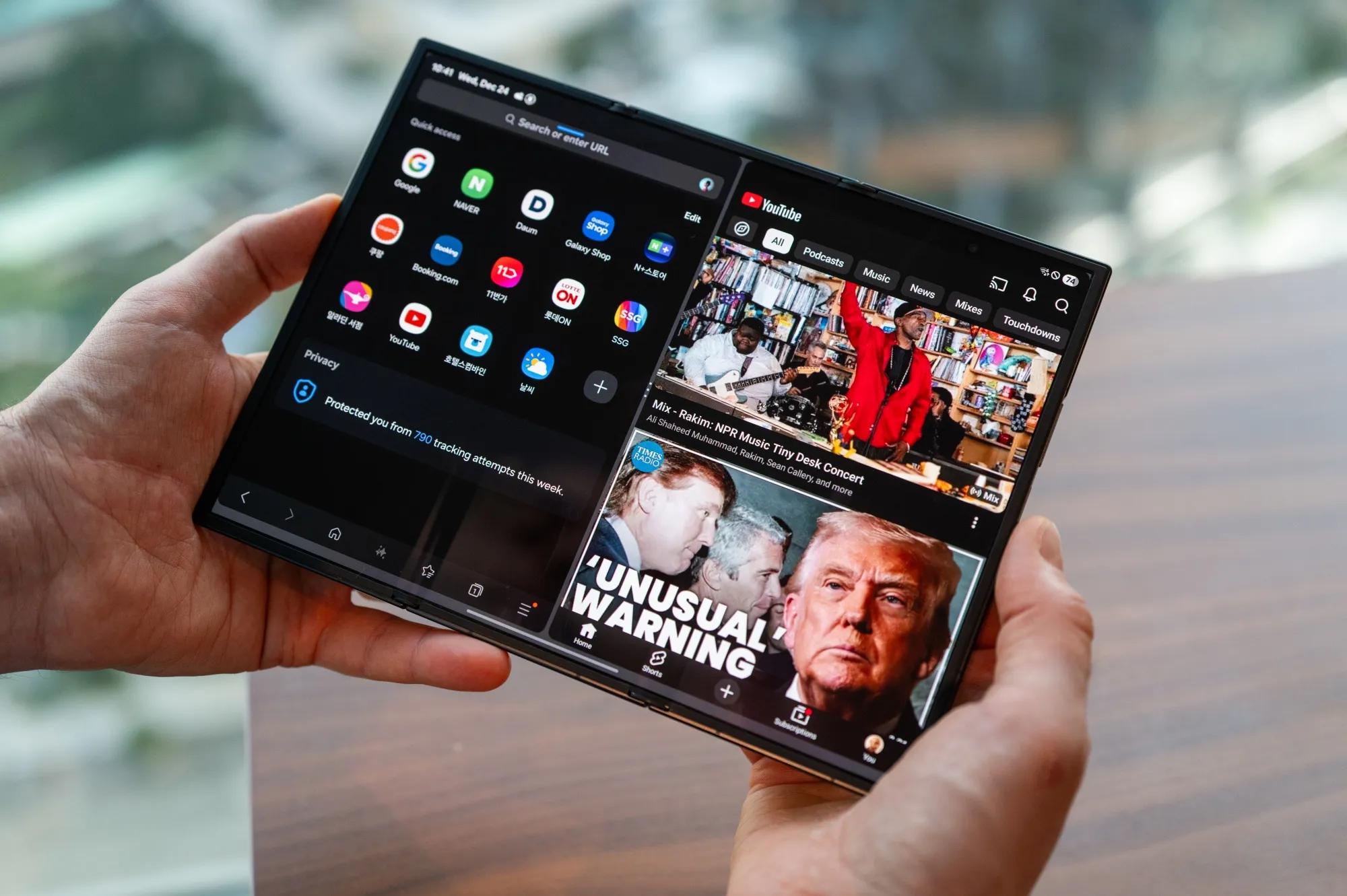
But that ambition comes at a steep cost. Samsung’s trifold enters the market at a price point far above even its premium foldable lineup. For many consumers, the cost rivals that of a high-end laptop or a smartphone-tablet combo, forcing an uncomfortable question: why buy one experimental device when the same money can deliver multiple proven products? Samsung itself appears aware of this tension, positioning the trifold less as a mass-market phone and more as a showcase for what is technically possible.
The problem is that a showcase device still needs to feel complete. Early impressions suggest the trifold struggles to justify its price because the experience often feels unfinished. While the hardware is undeniably impressive, the software has not fully caught up with the complexity of a triple-folding display. Apps frequently fail to scale smoothly across the different screen configurations, leading to awkward transitions and inconsistent layouts. Multitasking, one of the phone’s key selling points, works well in some scenarios but feels clunky in others, undermining the promise of seamless productivity.
Even basic interactions can feel unintuitive. Moving between folded and unfolded states does not always preserve what the user was doing, breaking the illusion of continuity that modern foldables aim to provide. For a device designed to be fluid and adaptable, these interruptions are jarring, especially at a price that implies refinement and polish.
Durability is another area where the trifold raises concerns. Folding phones already demand more careful handling than traditional slab smartphones, and adding an extra hinge only increases the risk. The trifold’s complex hinge mechanism is impressive but delicate, and the large flexible display is more exposed to wear and tear. While Samsung has made strides in improving foldable durability over the years, the trifold’s design pushes the limits of what current materials can reliably support in everyday use.
Battery life also highlights the trade-offs of such an ambitious form factor. Powering a massive display spread across multiple panels requires creative engineering, and while Samsung has included a sizable battery, real-world performance is constrained by physics. Heavy multitasking, video streaming, or productivity use on the full screen can drain the battery faster than users might expect, forcing compromises between enjoying the large display and preserving battery life.
Camera performance, traditionally a strength of Samsung’s flagship devices, is solid but not groundbreaking. For a phone at this price, expectations are sky-high, yet the trifold’s camera system feels more like a slightly upgraded version of existing foldables rather than a leap forward. It gets the job done, but it does not redefine mobile photography in the way buyers might hope.
Despite these shortcomings, the trifold phone has generated strong interest, particularly among tech enthusiasts and early adopters. Limited availability and the novelty factor have driven initial demand, suggesting there is still excitement around radical new form factors. However, enthusiasm does not necessarily translate into long-term success. History shows that experimental devices often pave the way for better, more refined successors rather than becoming mainstream hits themselves.
In that sense, Samsung’s first trifold phone may be less about immediate commercial success and more about strategic positioning. By releasing it now, Samsung sends a clear message to competitors that it remains at the forefront of foldable innovation. The device serves as a testing ground, offering valuable insights into how consumers actually use a triple-folding phone and where the technology falls short.
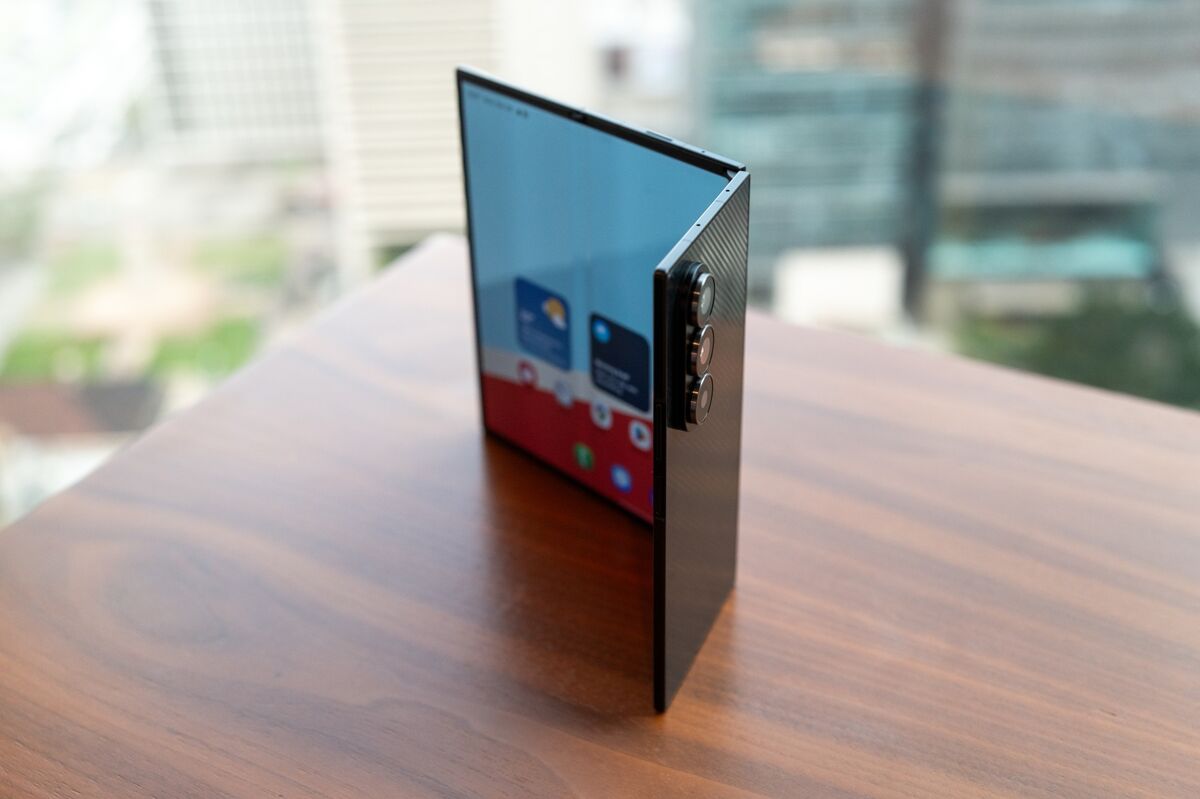
Still, for consumers considering whether to buy one, the verdict is harder to ignore. The trifold phone is undeniably impressive, but it asks buyers to pay a premium for a product that feels more like a prototype than a polished flagship. Its high price magnifies every flaw, making the rough edges harder to excuse.
Samsung deserves credit for taking risks in a market that often feels stagnant. Yet innovation alone is not enough. Until the software matures, durability improves, and the price becomes more justifiable, the company’s first trifold phone stands as a fascinating glimpse of the future—one that arrived a little too early, and at a cost few are willing to pay.






