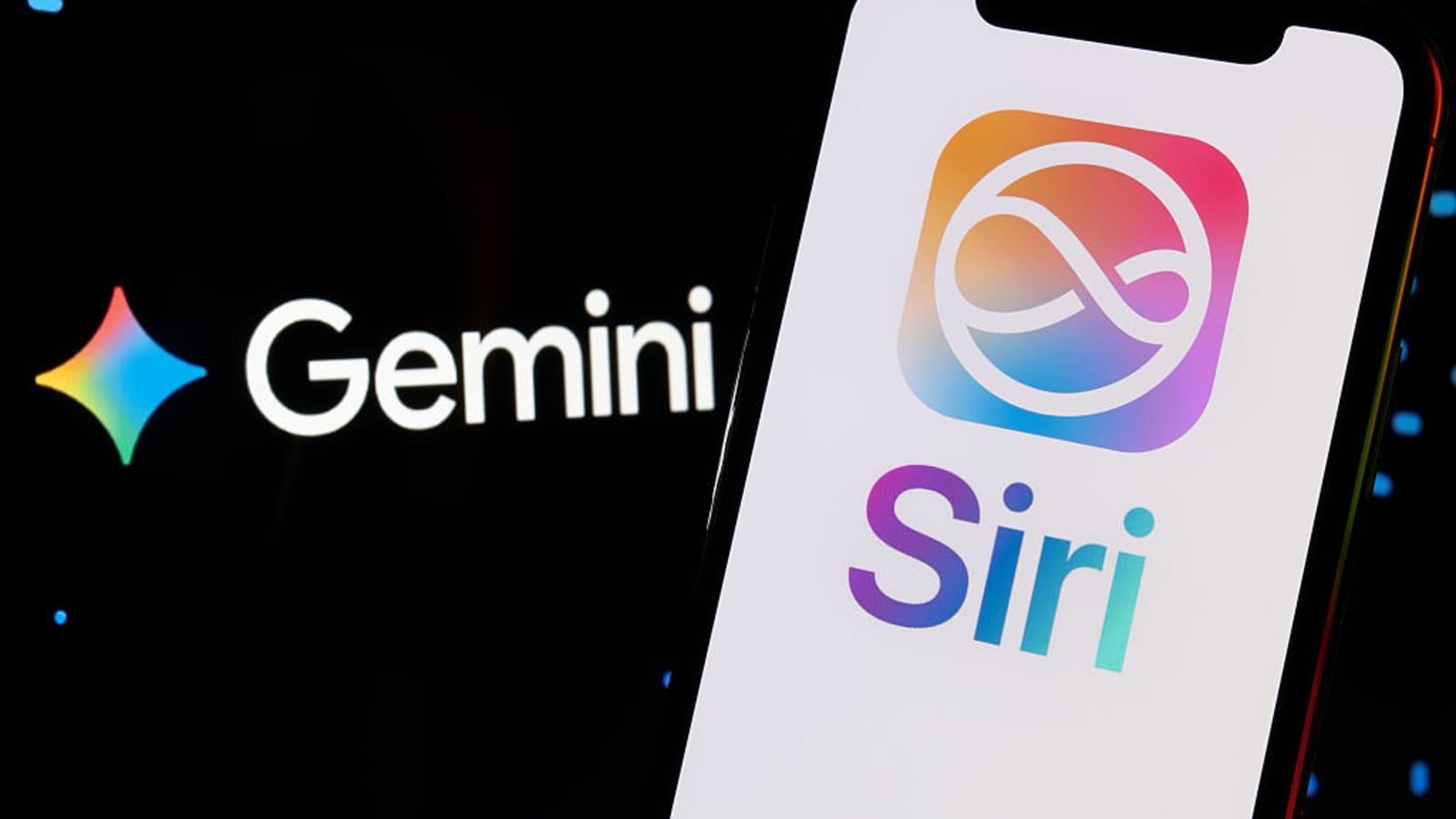
Apple is set to give Siri its most significant upgrade in more than a decade, announcing that the next generation of its voice assistant will be powered by Google’s Gemini artificial intelligence models. The move marks a major shift in Apple’s AI strategy and underscores the growing urgency among Big Tech companies to deliver smarter, more conversational digital assistants as generative AI reshapes consumer expectations.
The revamped Siri, expected to roll out later this year as part of Apple’s upcoming software updates, will leverage Gemini’s advanced language capabilities to offer more natural conversations, deeper contextual understanding, and improved task execution. For users, this could mean Siri that finally feels less like a command-based tool and more like an intelligent digital companion capable of understanding nuance, follow-up questions, and complex requests.
For Apple, the partnership is notable not just for what it brings to Siri, but for who it brings on board. Apple and Google have long been fierce rivals, competing across smartphones, operating systems, cloud services, and AI. While the two companies already have business ties — most prominently Google’s search engine being the default on Apple devices — choosing Google’s Gemini to underpin Siri’s AI represents an unusually deep collaboration between the tech giants.

A Long-Awaited Siri Overhaul
Since its debut in 2011, Siri has struggled to keep pace with rivals such as Google Assistant and, more recently, AI chatbots built on large language models. Users often criticized Siri for misunderstanding queries, offering limited responses, or failing at tasks that competing assistants handled with ease. The explosive rise of generative AI over the past few years only made these shortcomings more visible.
Apple’s decision to integrate Gemini is widely seen as an attempt to close that gap quickly. Rather than waiting for its own in-house models to mature to the same level as competitors, Apple has opted for a pragmatic approach: partnering with a company that already has some of the most advanced AI models in production.
Under the new setup, Siri will be able to handle more conversational requests, understand context across multiple interactions, and assist with tasks that previously required multiple apps or manual steps. Apple has indicated that the upgraded assistant will work more seamlessly across its ecosystem, from iPhone and iPad to Mac and other connected devices.
Why Gemini?
Google’s Gemini models have emerged as a central pillar of its AI strategy, powering everything from search enhancements to productivity tools. Known for strong reasoning, multimodal capabilities, and rapid development cycles, Gemini offers the scale and sophistication Apple needs to modernize Siri at speed.
Choosing Gemini also reflects Apple’s recognition that AI development has become a race of resources and data. Training and running state-of-the-art models requires enormous computing power and expertise, areas where Google has invested aggressively for years. By tapping into Gemini, Apple gains access to cutting-edge AI without shouldering the full cost and time of building an equivalent system from scratch.
Privacy Still Front and Center
Despite relying on Google’s AI models, Apple has emphasized that user privacy remains a core priority. The company says the new Siri will continue to process many requests directly on devices, while more complex queries will be handled through Apple’s private cloud infrastructure. Apple has stressed that user data will not be used by Google for advertising or unrelated purposes, a key reassurance for customers wary of data sharing.
This focus on privacy is likely to be a defining feature of Apple’s AI pitch. While competitors often prioritize speed and scale, Apple aims to differentiate by combining powerful AI with tight controls over personal data, positioning the new Siri as both smart and secure.
Implications for the AI Race
The Apple-Google deal highlights a broader shift in the tech industry, where competition and collaboration increasingly coexist. As AI becomes foundational to consumer technology, even rivals are finding it advantageous to work together in certain areas to stay competitive against fast-moving challengers.
For Google, powering Siri with Gemini is a significant validation of its AI capabilities and extends Gemini’s reach to hundreds of millions of Apple users worldwide. For Apple, the partnership buys time — allowing it to deliver a dramatically improved Siri now, while continuing to develop its own AI models for the future.
Industry analysts see the move as a turning point. Rather than insisting on full vertical integration at all costs, Apple appears willing to selectively partner where it makes strategic sense, especially in fast-evolving fields like generative AI.
What Users Can Expect
When the AI-powered Siri arrives later this year, users can expect noticeable changes in how they interact with their devices. Conversations should feel more fluid, responses more informative, and tasks more intuitive. Siri is expected to better understand personal context, manage more complex requests, and integrate more deeply with apps and services.
While Apple has not shared every detail, the message is clear: Siri is finally getting the intelligence upgrade users have been waiting for. By choosing Google’s Gemini, Apple is betting that collaboration, not isolation, is the fastest path to delivering a smarter, more capable assistant — and staying relevant in an AI-first era.