


The Transportation Security Administration’s growing use of facial recognition technology at U.S. airports is intensifying a national debate over privacy, consent, and the balance between security efficiency and civil liberties. While federal officials frame the technology as a modern upgrade designed to streamline airport screening, critics argue it risks eroding traveler rights in ways that are poorly understood by the public.
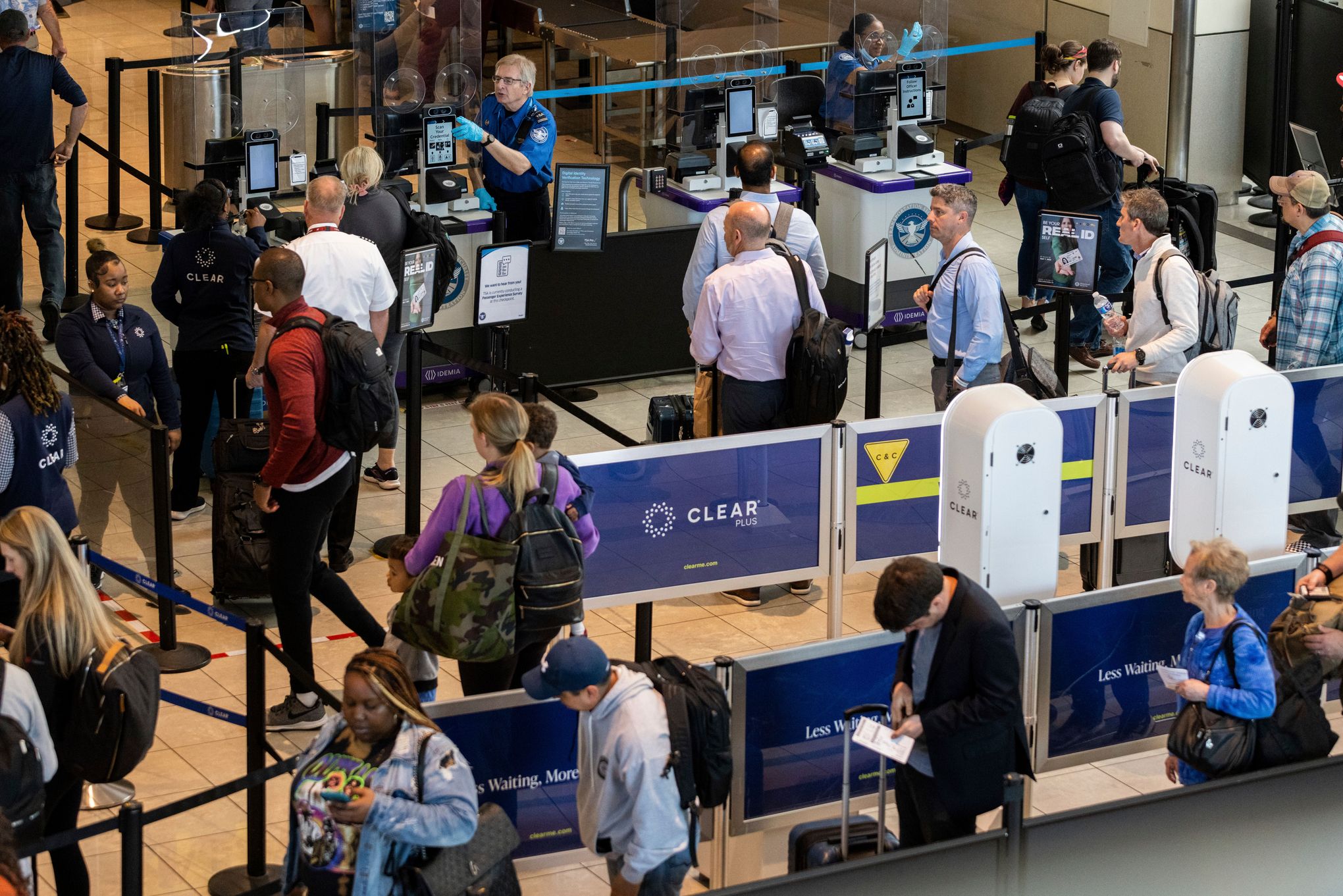
Facial recognition systems are now deployed at dozens of major airports, where travelers’ faces are scanned and compared against the image stored on a government-issued ID such as a driver’s license or passport. TSA officials say the process can reduce manual identity checks, shorten lines, and improve accuracy during peak travel periods. The agency maintains that participation is voluntary and that passengers may opt out without penalty.
Yet privacy advocates, legal scholars, and some lawmakers say the reality on the ground often tells a different story.
Consent in Question
One of the most significant concerns centers on informed consent. Travelers frequently report that facial recognition scans appear to be the default option at checkpoints, with limited or unclear information about the ability to decline. Signs explaining the technology may be small, placed out of sight, or written in technical language that fails to communicate what is happening to a passenger’s biometric data.
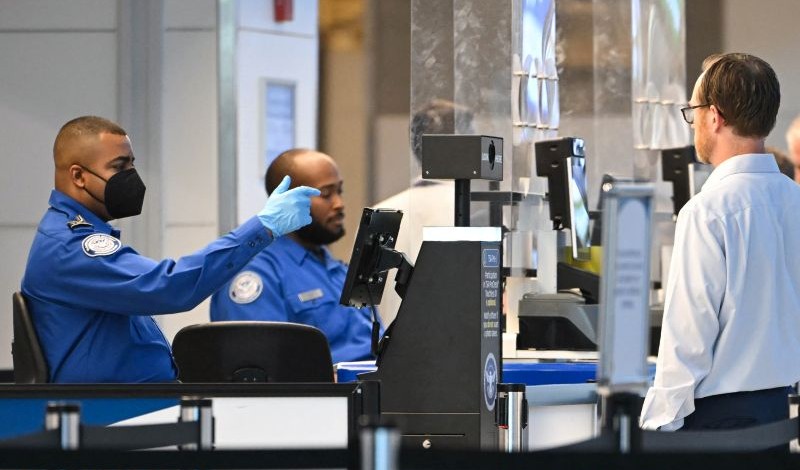
In some cases, passengers say TSA officers do not proactively inform them of alternatives, leaving travelers to assume that facial scanning is mandatory. Critics argue that consent obtained under these conditions cannot reasonably be considered voluntary—particularly in a high-pressure environment where missing a flight carries real consequences.
Civil liberties groups warn that this normalization of biometric scanning risks conditioning travelers to accept facial recognition as a routine requirement of movement, rather than a choice.
Data Use and Retention Concerns
Another area of contention involves what happens to facial images once they are captured. TSA has stated that images are deleted shortly after identity verification and are not used for surveillance or shared broadly. However, skeptics point to the lack of independent oversight and limited transparency surrounding data handling practices.
Biometric data is fundamentally different from other forms of identification. Unlike a password or ID number, a face cannot be changed if compromised. Privacy experts argue that even short-term storage or limited retention policies carry risks, particularly if systems are expanded, integrated with other databases, or repurposed in the future.
There are also concerns about function creep—the gradual expansion of a system beyond its original intent. What begins as an identity verification tool at airport checkpoints could, critics fear, eventually support broader tracking or monitoring capabilities without clear public debate.
Accuracy and Bias Issues
Questions about accuracy and bias remain unresolved for many critics. Facial recognition technologies have been shown in various studies to perform unevenly across different demographic groups, including variations based on skin tone, age, and gender. While TSA asserts that its systems meet high accuracy standards, independent audits and publicly available performance data remain limited.
Misidentification at an airport checkpoint can have serious consequences, ranging from delays and missed flights to heightened scrutiny by security personnel. Advocates argue that travelers should not bear these risks—particularly when participation in biometric screening is not always clearly optional.
Legislative and Political Debate
The expansion of facial recognition has drawn attention on Capitol Hill, where lawmakers are divided over how—or whether—the program should be constrained. Some legislators argue that biometric identity checks should be strictly opt-in, with traditional ID verification remaining the default. Others push for clear statutory limits on data collection, retention, and sharing.
Supporters of TSA’s approach counter that facial recognition is an inevitable part of modern travel infrastructure and that restricting it could undermine efficiency at already strained airports. Airlines and airport operators have largely welcomed biometric systems, citing faster throughput and reduced staffing pressures.
The debate reflects a broader national tension over the role of surveillance technologies in everyday life and the pace at which they are being introduced.
Traveler Awareness Gap
Despite the growing controversy, public awareness of TSA facial recognition remains uneven. Many travelers report encountering the technology without fully understanding what it is, how it works, or what rights they have regarding participation. This knowledge gap, critics argue, undermines meaningful choice.
Consumer advocates say clearer signage, standardized officer training, and simple verbal explanations at checkpoints could go a long way toward addressing these concerns. Without such measures, travelers may continue to feel pressured to comply with biometric screening even if they would prefer not to.
A Precedent for the Future
Beyond airports, privacy experts warn that TSA’s facial recognition program could set a precedent for biometric identity checks in other public spaces. If widely accepted in air travel—a context where security concerns are already high—it may become easier to justify similar systems in train stations, stadiums, or city streets.
For critics, the issue is not merely about convenience versus delay, but about defining boundaries before technologies become entrenched. They argue that once biometric systems are normalized, rolling them back becomes politically and practically difficult.
An Unsettled Balance
As TSA continues to expand facial recognition capabilities, the question of how to balance efficiency, security, and individual rights remains unresolved. For now, travelers are navigating a system in transition—one that promises speed and modernization, but also raises fundamental questions about privacy, consent, and the future of personal data.
Whether facial recognition becomes an accepted feature of air travel or faces tighter restrictions will likely depend on public scrutiny, legislative action, and how transparently the technology is implemented. Until then, the debate over traveler rights at the airport checkpoint is far from settled.






