

OpenAI has officially elevated co-founder Greg Brockman into a permanent leadership role overseeing the company’s product division, a major organizational shift that signals the AI giant’s ambitions to unify its rapidly expanding ecosystem of consumer and developer tools.
The restructuring places Brockman in charge of a consolidated product strategy that merges teams behind ChatGPT, Codex, enterprise AI services, and future autonomous AI initiatives. The move is being viewed as one of the most significant internal changes at OpenAI since the company emerged as a global leader in generative artificial intelligence.
The decision comes at a crucial moment for OpenAI, which has been racing to maintain its lead in the increasingly competitive AI industry while balancing explosive user growth, enterprise demand, and intensifying pressure from rivals such as Google, Anthropic, and Meta.
Under the new structure, Brockman will oversee the integration of ChatGPT and Codex into a more unified platform. While ChatGPT became globally popular as a conversational AI assistant capable of writing, reasoning, and answering questions, Codex developed into OpenAI’s coding-focused system designed to help software engineers write, debug, and automate programming tasks.

The merger reflects a broader strategic vision inside OpenAI: the belief that future AI systems will not remain limited to chat-based interactions but will evolve into fully capable digital agents that can execute tasks across work, productivity, software development, and online environments.
By combining conversational AI with advanced coding and execution tools, OpenAI appears to be positioning itself for a future in which users interact with a single AI assistant capable of handling everything from communication and research to software engineering and workflow automation.
The leadership shift also highlights Brockman’s increasing influence within the company. As one of OpenAI’s original co-founders alongside Sam Altman, Elon Musk, Ilya Sutskever, and others, Brockman has long played a central role in the company’s technical and operational direction. He has often worked behind the scenes on infrastructure, product coordination, and scaling efforts while Altman became the public face of the company.
Over the past year, however, Brockman’s role has become more visible as OpenAI navigated a period of intense transition. The company experienced executive departures, governance controversies, and mounting legal and competitive pressures while simultaneously expanding into new markets and product categories.
The new product structure reportedly aims to reduce fragmentation across OpenAI’s rapidly growing portfolio. Previously, teams responsible for ChatGPT, APIs, enterprise offerings, and coding tools operated with significant independence. As the company expanded, maintaining separate product tracks reportedly created duplication, slower coordination, and overlapping development priorities.
Executives now want a more centralized approach capable of accelerating innovation while ensuring that future AI systems work seamlessly across different applications and user environments.
Industry observers say the restructuring aligns with the next major phase of AI development: agentic AI systems. Unlike traditional chatbots that simply generate responses, AI agents are designed to independently complete actions, use software tools, perform multi-step reasoning, and carry out complex workflows with limited human supervision.
OpenAI has already introduced early versions of such capabilities through features that allow ChatGPT to browse the web, analyze files, write code, and interact with external tools. Integrating Codex more deeply into the company’s core products could further expand those abilities, particularly in technical and enterprise settings.
The coding market has become especially important in the AI race. AI-assisted software development tools are now among the fastest-growing segments in the technology industry, with companies competing to build systems that can significantly reduce development time and automate routine programming tasks.
Codex, originally introduced as a code-generation model, has evolved far beyond simple autocomplete functionality. OpenAI has increasingly positioned it as an intelligent engineering assistant capable of handling larger workflows such as debugging, documentation, testing, and infrastructure support.
The consolidation under Brockman may also help OpenAI streamline commercialization efforts. ChatGPT’s consumer success brought the company hundreds of millions of users, but enterprise subscriptions, developer tools, and API integrations are expected to generate a substantial portion of long-term revenue.
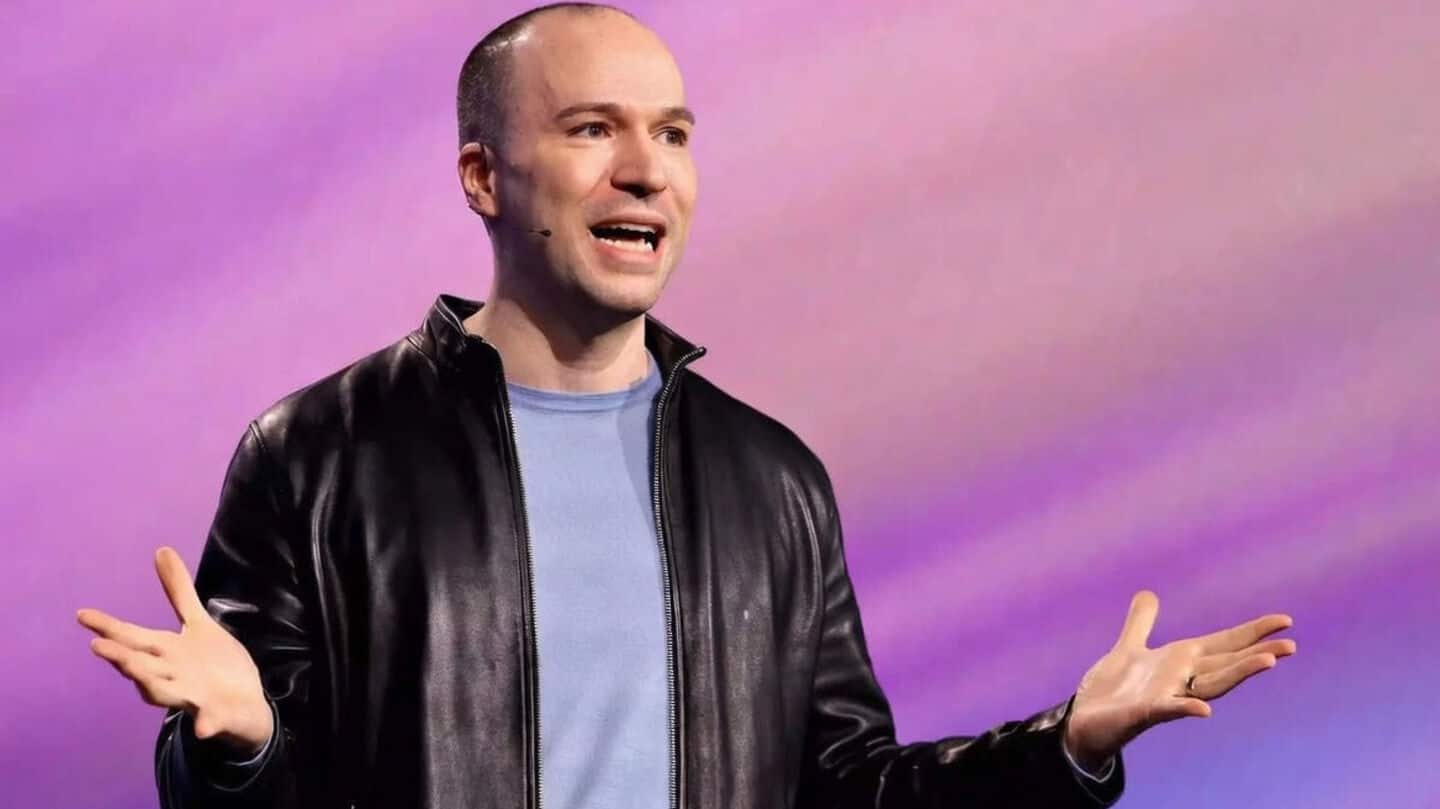
Businesses are increasingly adopting AI systems not just for customer support or content generation but for software operations, internal automation, analytics, and workplace productivity. A unified product organization could allow OpenAI to build integrated enterprise solutions more efficiently.
The restructuring comes amid broader speculation about OpenAI’s future business plans, including continued partnerships, infrastructure expansion, and possible long-term public market ambitions. Although the company has not publicly confirmed any plans for an initial public offering, analysts believe operational consolidation is often a key step for firms preparing for larger-scale corporate growth.
Internally, the changes are also seen as an effort to create clearer leadership responsibilities after months of uncertainty surrounding executive roles. Several senior OpenAI figures have shifted positions over the past year as the company adapted to extraordinary growth and increasing global scrutiny.
Despite the turbulence, OpenAI continues to dominate much of the public conversation around artificial intelligence. ChatGPT remains one of the world’s most widely used AI platforms, and the company continues releasing increasingly advanced models for text, coding, reasoning, and multimodal interaction.
The appointment of Brockman as permanent product chief reinforces OpenAI’s intention to move aggressively toward building more capable and integrated AI systems. Rather than treating chatbots, coding assistants, and enterprise tools as separate products, the company now appears focused on creating a single ecosystem where AI can assist users across nearly every digital activity.
As competition intensifies and AI capabilities advance, the success of that strategy could determine whether OpenAI maintains its leadership position in the next era of artificial intelligence.






