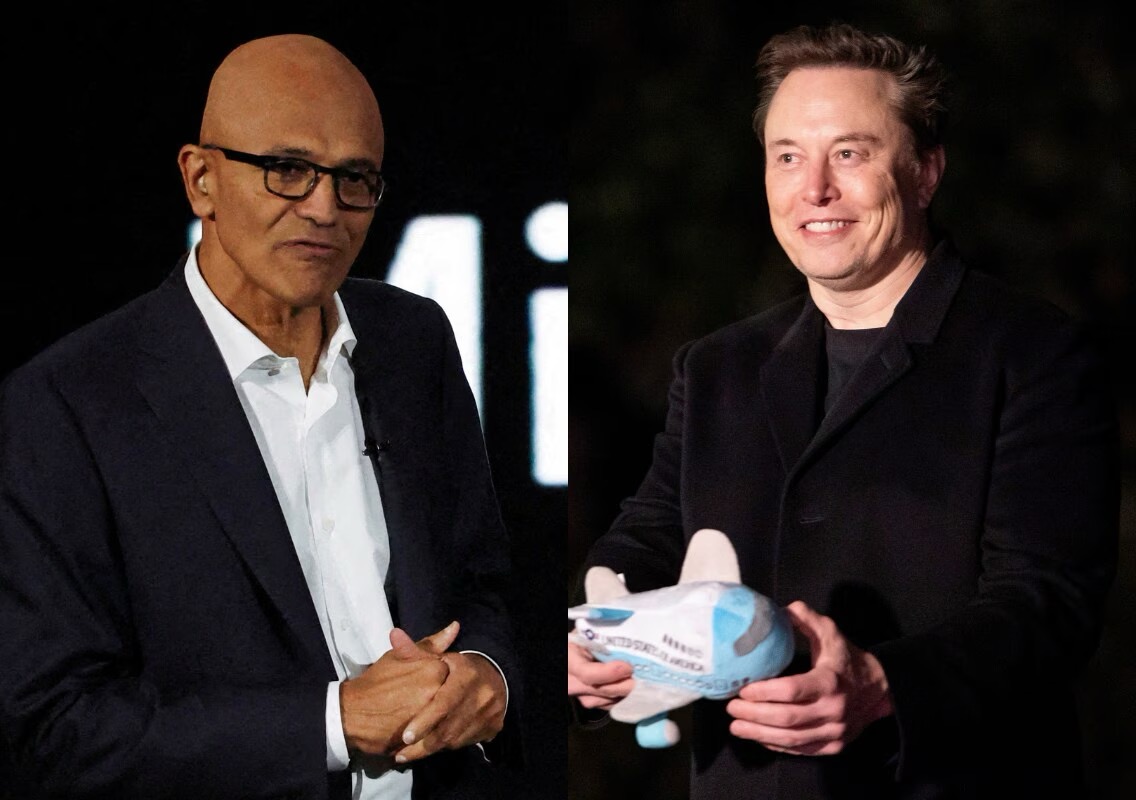
Microsoft CEO Satya Nadella is set to testify in a high-profile legal battle between Elon Musk and OpenAI, a case that has rapidly become one of the most closely watched disputes in the technology industry. The lawsuit centers on Musk’s allegations that OpenAI abandoned the nonprofit mission on which it was founded and transformed itself into a commercial powerhouse driven by corporate interests and profit.
Nadella’s testimony is expected to provide key insight into Microsoft’s multibillion-dollar partnership with OpenAI and why the tech giant chose to invest heavily in the artificial intelligence company. Internal communications referenced in court filings reportedly suggest Microsoft only intensified its interest in OpenAI after the company’s technology demonstrated significant commercial potential.
The testimony could reveal how Microsoft viewed OpenAI during the early stages of the relationship and whether executives saw the organization primarily as a research institution or as a future business opportunity capable of reshaping the global technology market.
OpenAI was founded in 2015 as a nonprofit artificial intelligence research organization with the stated goal of ensuring that advanced AI technologies would benefit humanity as a whole. Elon Musk was one of the organization’s earliest backers and contributed significant financial support during its formation. The project was initially presented as an alternative to large technology corporations that were aggressively developing AI systems behind closed doors.

At the time, OpenAI promoted itself as an organization committed to transparency, openness, and the responsible development of artificial intelligence. Its founders argued that AI should not be controlled exclusively by powerful corporations seeking profits or competitive dominance.
However, as AI research became increasingly expensive and computationally demanding, OpenAI began exploring new funding models. Developing advanced AI systems required vast amounts of computing power, engineering talent, and infrastructure investment, creating financial pressures that nonprofit funding alone could not sustain.
In 2019, OpenAI introduced a “capped-profit” structure that allowed outside investors to receive limited financial returns while maintaining that the organization’s broader mission remained intact. The restructuring marked a turning point for the company and paved the way for major corporate partnerships.
Microsoft quickly emerged as OpenAI’s most significant backer. Under Nadella’s leadership, Microsoft invested billions of dollars into the company and integrated OpenAI technology into products and services across its business ecosystem. The partnership eventually became one of the defining alliances in the global artificial intelligence race.
Musk’s lawsuit argues that OpenAI’s transformation fundamentally betrayed its original purpose. According to the complaint, the organization used approximately $38 million in donations and nonprofit support to develop technologies that later became part of a highly profitable corporate partnership. Musk claims the company shifted away from its public-interest mission and instead prioritized commercial growth and market dominance.
The lawsuit also alleges that OpenAI abandoned its early commitment to openness by increasingly restricting access to its most advanced AI systems. Critics of the company have argued that the organization moved toward a more secretive and proprietary approach as its technology gained commercial value.
OpenAI has strongly denied the allegations and defended its restructuring as necessary for survival in an intensely competitive industry. Company leaders have argued that the scale of investment required to build cutting-edge AI systems made partnerships with major technology firms unavoidable.
Executives have repeatedly stated that artificial intelligence development requires billions of dollars in infrastructure spending, particularly in areas such as cloud computing, data centers, and specialized chips. OpenAI maintains that its collaboration with Microsoft enabled it to continue advancing AI research while still pursuing its broader mission.
Nadella’s testimony is expected to focus on Microsoft’s decision-making process and how the company evaluated OpenAI’s technology and business potential. Legal observers believe the court may closely examine whether Microsoft viewed OpenAI as a nonprofit research organization or as an emerging commercial asset from the outset.
The case has attracted enormous interest because it raises broader questions about the future governance of artificial intelligence companies. As AI technologies become more powerful and economically valuable, concerns are growing over who controls these systems and whether organizations founded for public benefit can remain independent once massive corporate investment enters the picture.
Many analysts see the lawsuit as symbolic of a larger struggle within the technology industry. Artificial intelligence research often begins within academic or mission-driven environments, but the enormous costs associated with developing advanced models increasingly push organizations toward partnerships with powerful corporations.
The legal battle also comes during a period of intense global competition in artificial intelligence. Technology companies around the world are racing to dominate the rapidly expanding AI market, which is expected to influence industries ranging from healthcare and education to finance, media, and defense.
Microsoft has positioned itself as one of the leading players in this transformation. Under Nadella, the company aggressively expanded its AI strategy and integrated generative AI tools into nearly every major product line, including Office software, cloud computing services, search platforms, and enterprise applications.
For Musk, the case reflects his long-standing concerns about the concentration of AI power among a small number of corporations. The billionaire entrepreneur has repeatedly warned about the risks associated with advanced artificial intelligence and has criticized what he sees as a lack of transparency and accountability within the industry.
The lawsuit could ultimately have far-reaching consequences beyond OpenAI and Microsoft. Legal experts say the outcome may shape future rules governing nonprofit technology organizations, corporate partnerships, and the commercialization of emerging technologies.
Regulators and policymakers around the world are already debating how to oversee artificial intelligence development, particularly as AI systems become more capable and influential. The case may intensify calls for stronger regulation and clearer standards regarding transparency, governance, and public accountability in the AI sector.
As Satya Nadella prepares to testify, the proceedings are expected to attract close attention from investors, regulators, and technology leaders worldwide. The outcome could influence not only the future of OpenAI and Microsoft’s partnership, but also the broader direction of the artificial intelligence industry itself.