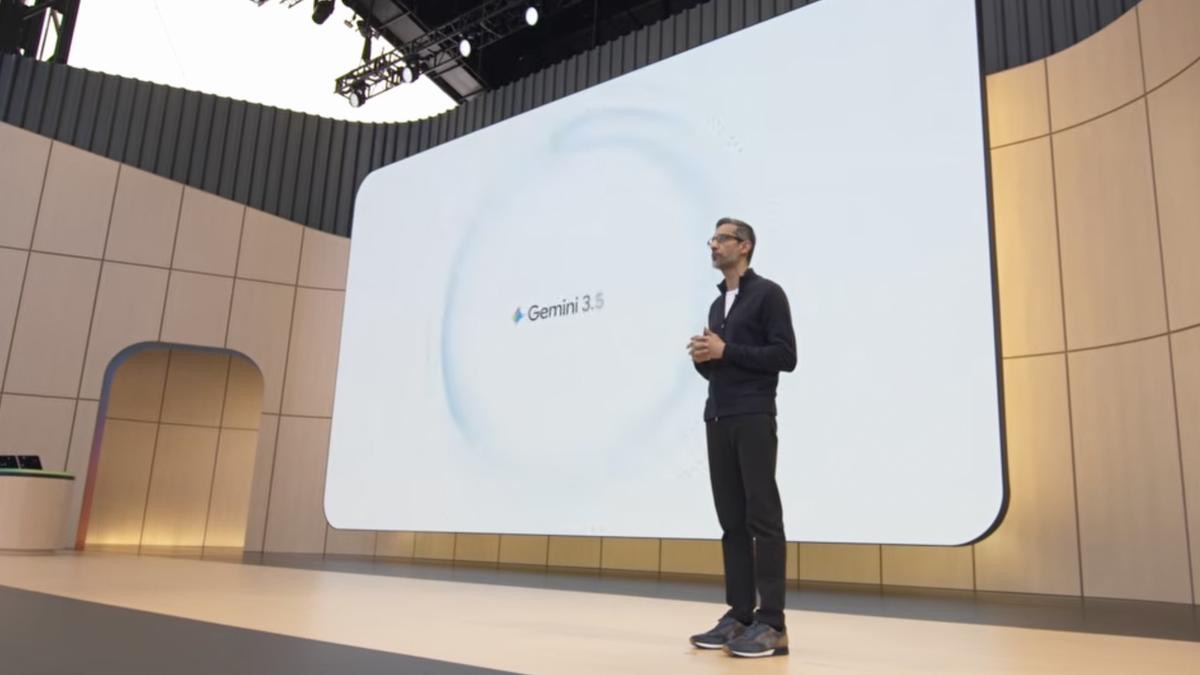
Google I/O 2026 marked a decisive turning point in the company’s evolution, signaling a future where artificial intelligence is no longer an added layer but the foundational architecture of every product. The event showcased sweeping changes across Google Search, the introduction of the next-generation Gemini 3.5 Flash model, a powerful upgrade to its developer platform Antigravity 2.0, and the long-anticipated debut of Android XR smart glasses. Together, these announcements revealed Google’s ambition to redefine how people interact with information, software, and the physical world itself.
The most dramatic announcement of the keynote was the complete AI transformation of Google Search. For decades, Search has been based on indexing and ranking web pages in response to keyword queries. At Google I/O 2026, this model was fundamentally reimagined. The new AI-powered Search introduces an immersive conversational experience where users no longer receive a simple list of links but instead interact with a dynamic, intelligent assistant.
In this new system, users can ask complex, multi-layered questions and receive synthesized responses that are continuously refined through follow-up dialogue. Search is no longer a static results page; it has become an evolving conversation. Users can plan trips, compare products, summarize documents, and even complete tasks directly within the search interface. The redesigned system supports text, voice, images, and file inputs, making Search a multimodal assistant rather than a traditional query engine. This shift represents one of the most significant changes in the history of Google Search since its inception.
At the heart of this transformation is Gemini 3.5 Flash, the newest iteration of Google’s flagship AI model family. Built for speed, efficiency, and adaptability, Gemini 3.5 Flash is designed to power real-time interactions across billions of users. Unlike earlier models that focused primarily on generating text or answering prompts, this version is optimized for agentic behavior—meaning it can independently plan, execute, and refine multi-step tasks.

Gemini 3.5 Flash enables systems to break down complex instructions into smaller actionable steps, execute them across applications, and adjust based on outcomes. This makes it especially powerful for Search, where it can interpret user intent and deliver structured, context-aware results instantly. It also enhances coding, reasoning, and productivity tasks, allowing it to function as a general-purpose intelligence layer across Google’s ecosystem. A more advanced version, Gemini 3.5 Pro, is expected to target even more demanding professional and enterprise workloads, but Flash is positioned as the everyday engine of Google’s AI strategy.
Another major highlight of the event was Antigravity 2.0, Google’s upgraded AI-driven development platform. Antigravity has evolved from a developer assistant into a full-fledged agentic coding environment. With version 2.0, developers can delegate entire software tasks to AI systems powered by Gemini 3.5 Flash.
Instead of writing every line of code manually, developers can now describe what they want to build, and Antigravity’s AI agents handle planning, coding, debugging, and optimization. The system can simulate software behavior, test outputs, and refine results iteratively without constant human intervention. This dramatically reduces development time and shifts the role of engineers toward supervision, architecture, and creative direction rather than repetitive coding.
Antigravity 2.0 also introduces tighter integration with cloud infrastructure, allowing AI agents to deploy applications, scale services, and manage backend systems autonomously. It represents a future where software development becomes increasingly collaborative between humans and AI agents, fundamentally reshaping the tech industry’s workflow.
Perhaps the most futuristic announcement was Android XR smart glasses, marking Google’s renewed entry into augmented reality hardware. These lightweight glasses are designed to bring AI into the physical world, blending digital information seamlessly with real-world environments.
Powered by Gemini AI, the smart glasses can provide real-time translations, navigation guidance, contextual notifications, and object recognition directly within the user’s field of vision. Instead of pulling out a phone, users can simply look at something and receive instant information or assistance. The glasses also support voice interaction, allowing hands-free control for tasks such as messaging, searching, or scheduling.
Google emphasized that Android XR is not just about hardware but about creating an “ambient computing” experience, where AI is continuously available in the background, adapting to the user’s surroundings and needs. Partner manufacturers are expected to release multiple versions of these glasses, making XR computing more accessible and mainstream over time.
Across all these announcements, a clear theme emerged: Google is moving toward an AI-native ecosystem where intelligence is embedded into every layer of technology. Search becomes conversational, software development becomes agent-driven, and everyday reality becomes augmented with digital intelligence.
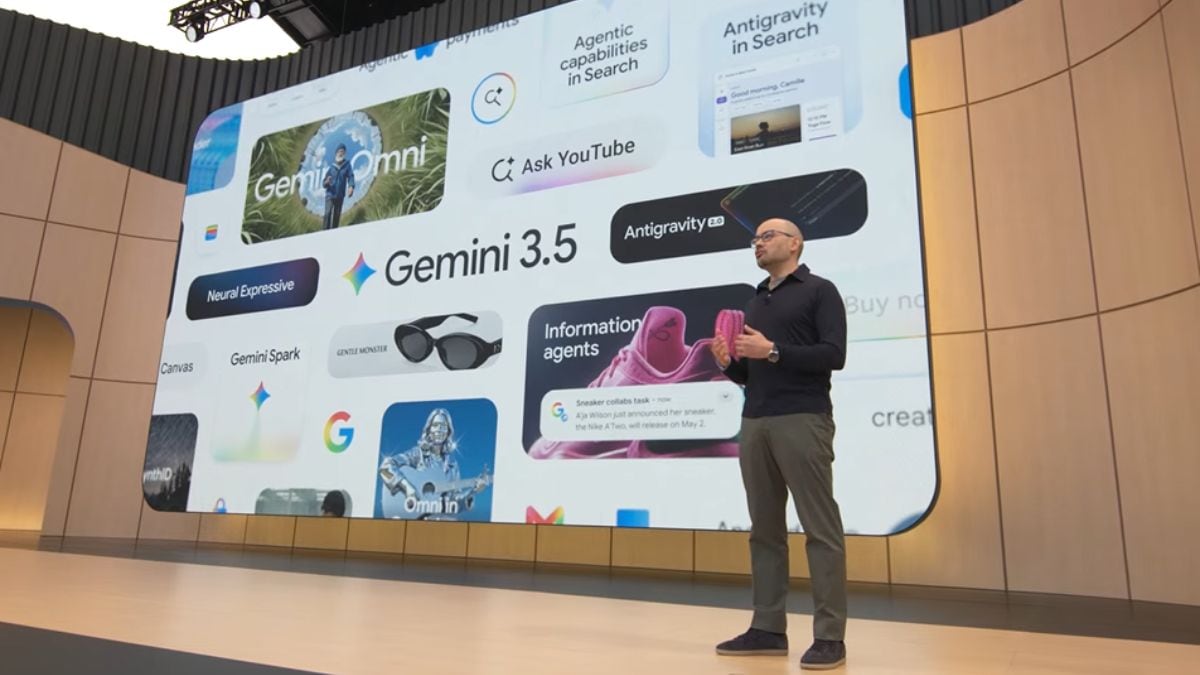
The company’s vision is no longer centered around isolated tools or applications but around a unified system of AI agents working across devices and environments. Whether through Gemini models, Search, developer platforms, or wearable devices, Google is building an interconnected intelligence layer designed to anticipate user needs and execute tasks proactively.
Google I/O 2026 ultimately showcased a future where computing is no longer about finding information but about delegating intent. Instead of users searching, clicking, and navigating, AI systems will understand goals and complete actions on their behalf. This shift marks a profound change in how humans will interact with technology in the years ahead, positioning Google at the center of the emerging era of agentic computing.