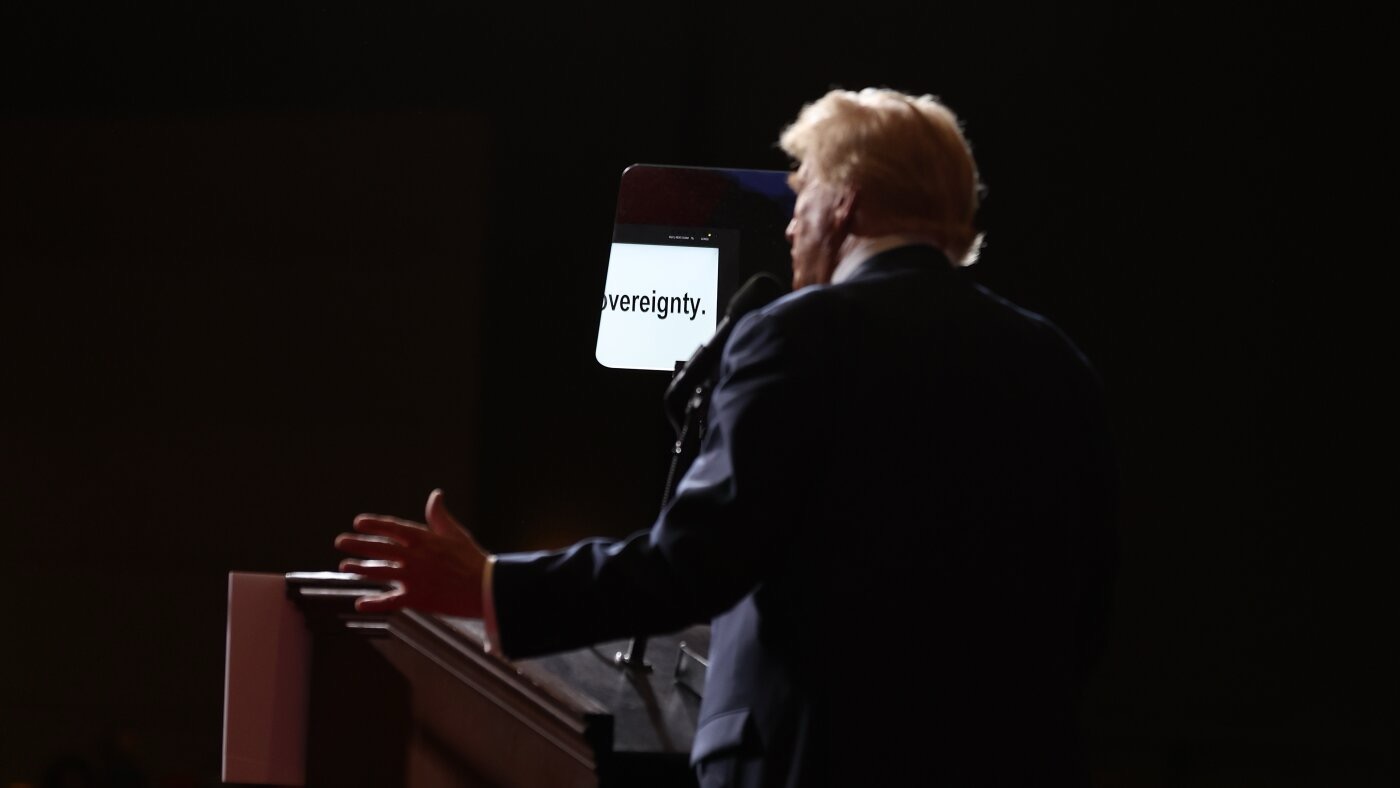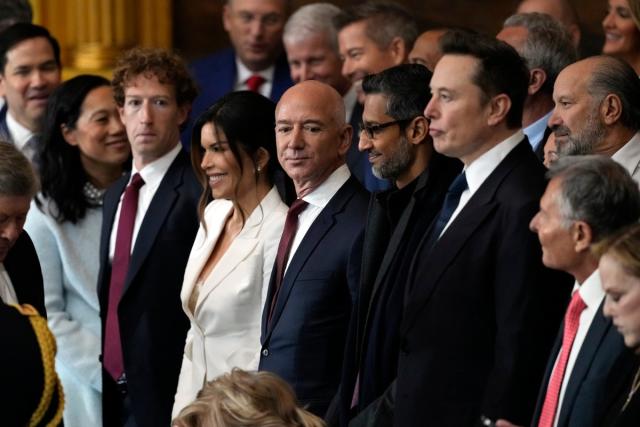
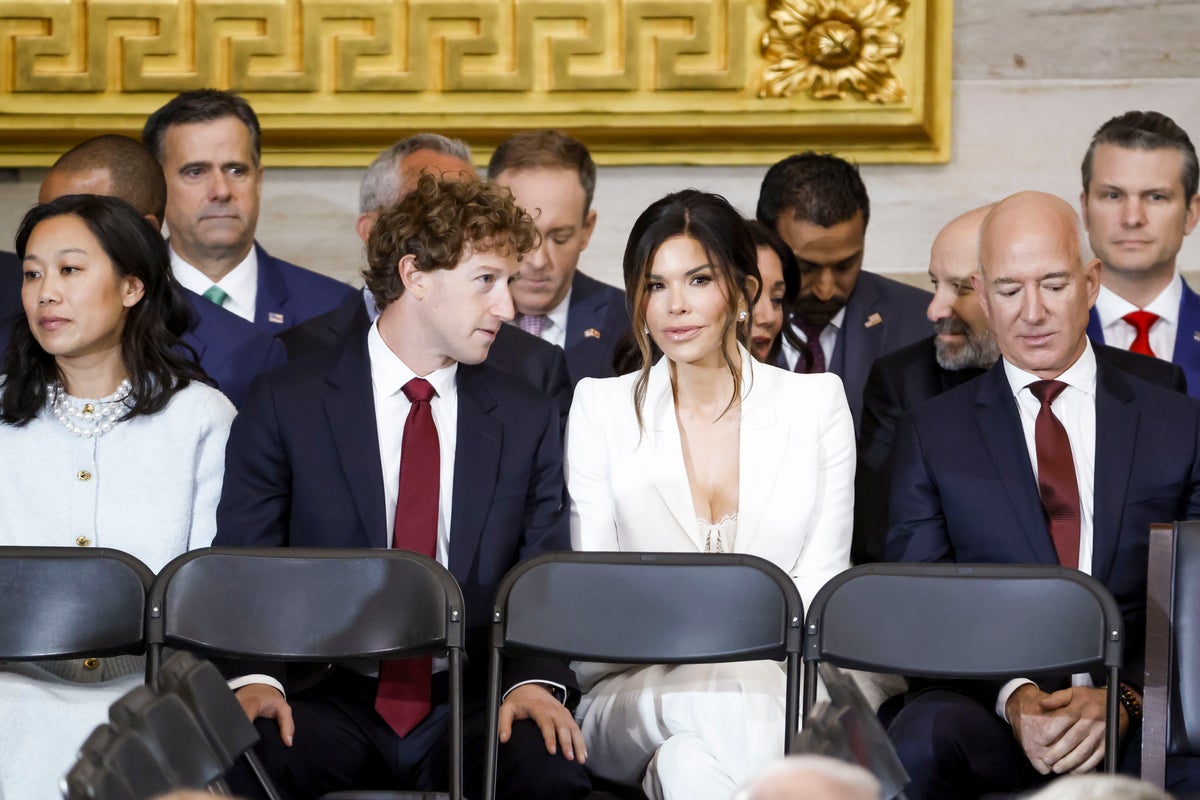
In the aftermath of President Donald Trump’s 2017 inauguration, a select group of technology moguls shared the spotlight with the newly sworn-in leader, appearing in the backdrop as he made sweeping promises for economic change. Back then, as Trump stood before the nation’s capital to lay out his vision for America, a handful of Silicon Valley giants smiled proudly behind him, their faith in the incoming administration clear. Now, nearly eight years later, many of these tech leaders are facing staggering financial losses as Trump’s legacy continues to echo in the form of trade policies and tariffs.
Recent reports reveal that several prominent tech billionaires, who were once seen as powerful allies of the Trump administration, have collectively lost billions in the wake of Trump’s ongoing tariff policies. These decisions, largely focused on China and other international trading partners, are beginning to take a toll on the tech sector, causing sharp declines in stock prices and hurting the global supply chain that Silicon Valley relies upon.
The Billion-Dollar Fallout
For many tech moguls, the losses have been swift and severe. Notable figures like Apple’s Tim Cook, Tesla’s Elon Musk, and Amazon’s Jeff Bezos have all seen significant drops in their net worth since the introduction of Trump’s tariffs. In the past few weeks alone, these figures have lost an estimated combined total of $30 billion, according to financial analysts.
Apple, which relies heavily on Chinese manufacturing for its devices, has been particularly hard-hit. Tim Cook, whose public admiration of Trump was no secret, now finds himself at the center of a political and financial storm. The company’s stock has seen a sharp decline, falling nearly 15% over the last quarter as Trump’s tariff hikes made Apple’s imported goods more expensive for American consumers.
Tesla, another major player in the tech world, has also taken a significant hit. Elon Musk’s fortune has dropped by over $10 billion as tariffs on Chinese-made components have raised production costs for the electric vehicle manufacturer. Despite Tesla’s growing influence in global markets, the company is facing a rising wave of uncertainty as the tariffs have disrupted supply chains and increased prices for both components and finished products.
Amazon, the behemoth of e-commerce, has not been spared either. Jeff Bezos has seen his wealth decrease by $7 billion, as the tariffs have made imports of consumer goods more expensive and strained relationships with foreign suppliers. Amazon, known for its focus on low-cost goods and services, is grappling with rising expenses as the impact of Trump’s tariff policies ripples through the retail and tech sectors.
A Shift in Perspective
Many of these tech moguls were initially optimistic about the Trump administration’s pro-business stance, especially in the early days of the presidency. Trump’s tax cuts and deregulatory actions were seen as a boon for Silicon Valley, with many tech companies benefiting from tax relief and a less burdensome regulatory environment.
However, the introduction of trade tariffs and the escalating trade war with China have fundamentally changed the outlook. Initially touted as a way to level the playing field for American workers, Trump’s tariffs have put Silicon Valley at odds with the very principles that once made the region a global powerhouse. For tech companies that rely on global supply chains, access to cheap labor, and open trade routes, the effects have been profoundly negative.
As the situation evolves, some tech leaders are shifting their allegiances. Tim Cook, for example, has become a vocal critic of tariffs, noting their harmful effects on consumers and the economy. Similarly, Elon Musk, who once expressed support for Trump’s policies, has begun to call for a more nuanced approach to trade that balances both domestic and international concerns.
A Broader Tech Backlash
The impact of Trump’s trade policies isn’t limited to a few individuals. Entire sectors of the tech industry are grappling with the fallout. The semiconductor industry, which relies on a complex web of international suppliers, has found itself caught in the crossfire of a trade war. Companies like Intel and Qualcomm have been forced to raise prices and reassess their business strategies, adding to the mounting pressure on the tech sector.

Internationally, foreign governments have imposed retaliatory tariffs on American goods, further complicating the global landscape for tech companies. The ripple effect has been felt across the board, from small startups to the industry giants who once stood by Trump’s side.
Looking Forward
As the tech industry continues to grapple with the lasting consequences of Trump’s tariffs, many wonder whether the relationship between Silicon Valley and the political world will ever return to what it once was. For now, the smiling faces of tech moguls who once stood behind Trump are nowhere to be found on Capitol Hill, replaced instead by a sense of uncertainty about the future of trade, innovation, and the global economy.
Despite their immense wealth and influence, these moguls are finding that even the most carefully crafted alliances can’t shield them from the unpredictable winds of global politics. Whether these losses will have long-lasting consequences on their fortunes or prompt a shift in political engagement remains to be seen, but one thing is clear: the relationship between tech giants and the Trump administration has left a lasting scar on both sides.
In the end, the story of these tech moguls isn’t just one of financial loss, but a cautionary tale about the fragility of success in the complex world of global politics.