
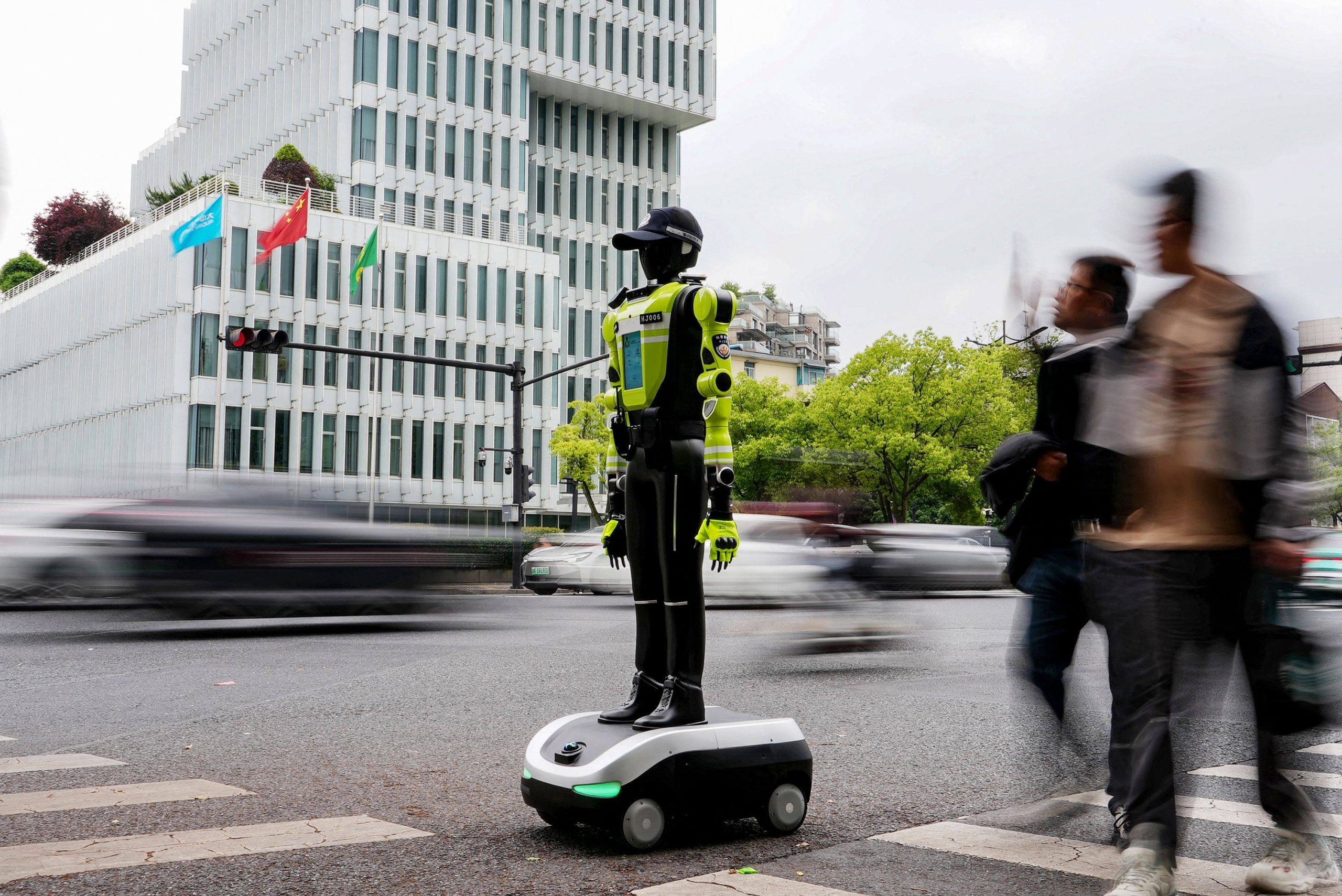
China has launched an ambitious digital identification programme for humanoid robots, becoming one of the first countries to establish a nationwide system designed to make advanced robots traceable and accountable throughout their operational lives. The move reflects growing efforts by governments worldwide to regulate emerging technologies as artificial intelligence and robotics become increasingly integrated into daily life.
The new programme assigns a unique digital identity to each humanoid robot, creating what officials describe as a comprehensive framework for tracking, monitoring, and managing intelligent machines. As the robotics industry expands rapidly and humanoid robots move from research laboratories into factories, offices, public spaces, and homes, policymakers are seeking ways to ensure that these systems operate safely and responsibly.
The digital ID functions similarly to a registration number for a vehicle or a digital identity for a citizen. Each robot receives a unique identifier that remains attached to it throughout its lifespan. This identifier can store and link information related to the robot’s manufacturer, ownership history, maintenance records, software versions, safety certifications, and operational status.
Authorities say the initiative is intended to strengthen governance in a sector expected to play a major role in the country’s economic future. China has invested heavily in robotics and artificial intelligence in recent years, positioning itself as a global leader in the development and deployment of advanced machines. Humanoid robots, in particular, are viewed as a strategic technology capable of transforming industries ranging from manufacturing and logistics to healthcare and retail.
The introduction of digital identities comes as concerns grow about the challenges associated with increasingly autonomous machines. As robots become capable of making decisions, interacting with humans, and performing complex tasks independently, questions regarding responsibility and accountability have become more significant. Regulators are seeking ways to determine who is responsible when a robot malfunctions, causes damage, or behaves unexpectedly.
Under the new framework, investigators and authorities will be able to trace a robot’s history through its digital identity. If an accident occurs, the identification system can help determine whether the issue resulted from hardware defects, software errors, improper maintenance, unauthorized modifications, or operator mistakes. Supporters of the initiative argue that this level of transparency will improve public trust in robotic technologies and encourage more responsible deployment.
Industry experts believe the programme represents an important step toward creating a mature regulatory environment for robotics. While many countries have introduced ethical principles and policy guidelines for artificial intelligence, relatively few have established concrete systems specifically focused on the governance of physical AI-powered machines. China’s approach emphasizes traceability and oversight, aiming to create a practical foundation for future regulations.
Manufacturers are expected to incorporate digital identity capabilities into robots during production. This will allow regulators to verify compliance with safety standards and technical requirements before robots are released into the market. The system may also help authorities monitor product recalls, software updates, and cybersecurity vulnerabilities more effectively.
The initiative is particularly significant given the rapid growth of China’s robotics sector. The country has become one of the world’s largest producers and consumers of industrial robots, while domestic companies are increasingly developing sophisticated humanoid models capable of walking, lifting objects, interacting with people, and performing specialized tasks. Several Chinese firms have recently showcased humanoid robots designed for use in factories, warehouses, healthcare facilities, and customer service environments.

As deployment accelerates, the need for clear governance mechanisms has become more urgent. Analysts note that a future in which thousands or even millions of humanoid robots operate alongside humans will require systems capable of identifying and monitoring individual machines. A digital identity programme provides the infrastructure necessary to support such oversight while allowing innovation to continue.
Beyond safety and accountability, the system may also offer practical benefits for businesses and robot operators. Companies managing large fleets of robots could use digital identities to track performance, schedule maintenance, monitor software updates, and maintain operational records. This could improve efficiency while reducing the likelihood of technical failures.
The programme may also play a role in addressing cybersecurity concerns. As robots become connected to networks and cloud-based systems, they face many of the same security risks as other digital devices. Unique digital identities could help authenticate robots, detect unauthorized access, and improve the overall security of robotic ecosystems.
However, the initiative is also expected to raise questions about data governance and privacy. Stakeholders will likely seek assurances regarding what information is collected, how long it is stored, and who has access to it. Policymakers may need to establish additional safeguards to ensure that the system balances accountability with appropriate protections for businesses and users.
The launch of the digital identity programme highlights China’s broader strategy of combining technological advancement with regulatory oversight. Rather than waiting for challenges to emerge after widespread adoption, authorities are attempting to create governance structures alongside the development of new technologies.
As humanoid robots become more common around the world, other countries may closely watch the results of China’s experiment. If successful, the programme could influence international discussions on robotics regulation and inspire similar initiatives elsewhere. The concept of assigning unique identities to intelligent machines may eventually become a standard feature of future robotic ecosystems.
For now, the initiative represents a landmark moment in the evolution of robotics governance. By giving humanoid robots unique digital identities, China is laying the groundwork for a future in which intelligent machines can be tracked, managed, and held accountable, helping ensure that technological progress proceeds in a safe and transparent manner.