

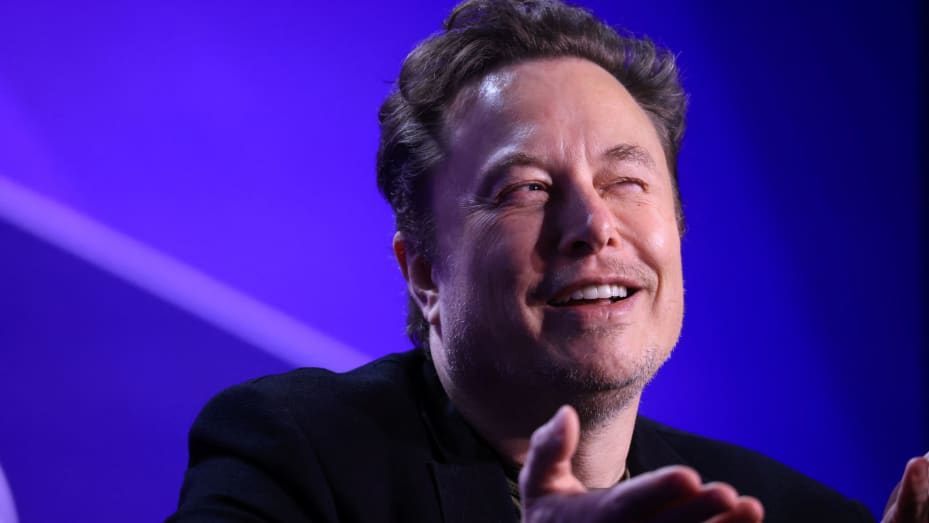
Elon Musk’s artificial intelligence company xAI has taken another major step in scaling its computing ambitions by acquiring a new building to expand its flagship “Colossus” data center. The move underscores Musk’s determination to build one of the most powerful AI computing infrastructures in the world and signals an intensifying race among AI companies to secure vast amounts of processing power.
The newly acquired property marks xAI’s third major facility in the Memphis region, an area that has rapidly emerged as the physical backbone of the company’s AI operations. The building, previously used as an industrial warehouse, will be converted into a high-capacity data center designed to support the training and deployment of large-scale AI models. Construction and retrofitting work is expected to begin in 2026, according to people familiar with the company’s plans.
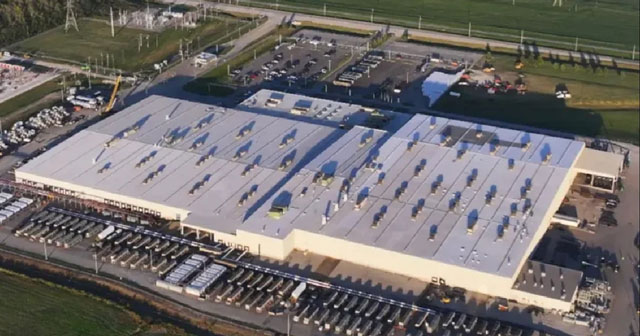
At the heart of the expansion is Colossus, xAI’s supercomputer platform built to train increasingly complex AI systems. Colossus is already among the largest AI compute clusters in operation, housing hundreds of thousands of advanced graphics processing units (GPUs). With the addition of the new facility, xAI aims to significantly increase its total computing capacity, potentially scaling toward a configuration capable of supporting close to a million GPUs over time.
Musk has repeatedly argued that control over computing infrastructure is critical to winning the AI race. Unlike many rivals that rely heavily on third-party cloud providers, xAI has adopted a strategy of owning and operating its own data centers. This approach gives the company tighter control over performance, cost, and long-term scalability, but it also requires massive upfront investment and careful coordination with power suppliers, local authorities, and hardware vendors.
The Colossus expansion reflects a broader trend in the AI industry, where access to compute has become just as important as talent or algorithms. Training state-of-the-art AI models demands enormous amounts of electricity, specialized chips, and high-speed networking. As a result, companies with the deepest pockets and strongest infrastructure strategies are gaining a decisive advantage.
For xAI, the Memphis region offers a combination of industrial space, logistical connectivity, and access to large-scale power infrastructure. The company’s first Colossus site was built by repurposing an old manufacturing facility, a move that allowed xAI to accelerate deployment while keeping construction timelines relatively short. The second site followed quickly, and the acquisition of a third building now creates a sprawling multi-facility campus dedicated to AI computation.
The expansion also highlights Musk’s willingness to move aggressively and unconventionally. While xAI is a relatively young company compared to some of its competitors, its infrastructure build-out has been unusually rapid. By prioritizing physical assets and compute capacity early, Musk appears to be betting that future breakthroughs in AI will depend less on incremental software improvements and more on the ability to train ever-larger models at unprecedented scale.
Industry analysts say the move could help xAI narrow the gap with established leaders in the AI space. Large language models, image generators, and autonomous systems all benefit from more data and more compute, and the ability to iterate faster often determines which models achieve superior performance. With Colossus, xAI is positioning itself to run massive training cycles in-house, potentially accelerating development timelines.
However, the expansion is not without challenges. Data centers of this scale place enormous demands on local power grids and raise concerns about energy consumption and environmental impact. High-density AI computing requires advanced cooling systems and continuous electricity supply, often rivaling the energy usage of small cities. Balancing growth with sustainability will be a key test for xAI as Colossus continues to expand.
There are also broader economic and social implications. The growth of AI data centers can bring investment and infrastructure upgrades to local communities, but it can also strain resources and prompt questions about land use, emissions, and long-term benefits. How xAI navigates these issues may influence public and regulatory perceptions of large-scale AI infrastructure projects.
Despite these concerns, Musk has made it clear that he sees infrastructure as the foundation of xAI’s mission. The company aims to develop AI systems that are competitive with — and eventually surpass — those of its rivals. To achieve that goal, Musk believes xAI must control its own destiny at the hardware level, even if that means committing billions of dollars to buildings, power, and chips.

The acquisition of the new building to expand Colossus is a concrete expression of that philosophy. It signals that xAI is not merely experimenting with AI but is building for the long term, with ambitions measured in decades rather than quarters. As the global AI race accelerates, the success of Musk’s infrastructure-heavy strategy will be closely watched by investors, competitors, and policymakers alike.
For now, the Colossus expansion cements xAI’s place among the most aggressive players in the AI industry. By doubling down on physical scale and computing muscle, Musk is making a clear statement: in the future of artificial intelligence, power — both computational and electric — will be everything.






