Former U.S. President Donald Trump has filed a sweeping lawsuit seeking $5 billion in damages against JPMorgan Chase & Co. and its chief executive Jamie Dimon, accusing the banking giant of unlawfully cutting him and his businesses off from financial services for political reasons, a practice he describes as “debanking.”
The lawsuit, filed in a Florida state court, claims that JPMorgan terminated Trump’s personal and corporate banking relationships in early 2021 following the storming of the U.S. Capitol, not due to financial or regulatory concerns but because of what Trump alleges was political discrimination. The legal action marks a dramatic escalation in Trump’s long-running confrontation with major financial institutions and has reignited debate over the role of politics in corporate decision-making.
According to the complaint, JPMorgan abruptly closed multiple accounts linked to Trump, the Trump Organization, and members of his family, leaving them without access to routine banking services including payments, payroll, and credit facilities. Trump’s legal team argues that these actions caused severe financial and reputational harm, disrupting business operations and forcing his companies to scramble for alternative banking arrangements.
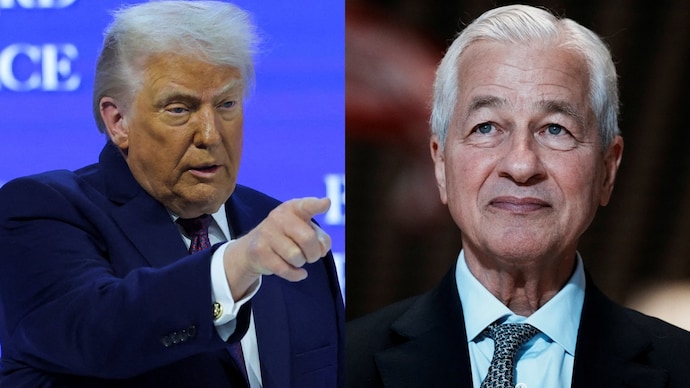
At the heart of Trump’s claim is the accusation that JPMorgan acted not as a neutral financial institution managing risk, but as a political actor seeking to distance itself from him and his supporters. The lawsuit alleges that the bank, under the leadership of Jamie Dimon, sought to “deplatform” Trump from the financial system in the wake of heightened political tensions, effectively punishing him for his political identity rather than any breach of banking rules.
The suit further asserts that JPMorgan went beyond simply closing accounts, accusing the bank of discouraging other financial institutions from doing business with Trump and his affiliated companies. This, Trump argues, amounted to an informal blacklist that restricted his ability to operate in the financial marketplace, a move his lawyers describe as malicious and anti-competitive.
Trump is seeking $5 billion in damages, citing lost business opportunities, reputational injury, and what he describes as a deliberate effort to harm him economically. His legal team has framed the case as not merely about a contractual dispute, but as a broader fight against what they view as the growing power of large financial institutions to exclude individuals based on ideological grounds.
JPMorgan Chase has strongly denied the allegations. In response to the lawsuit, the bank reiterated that it does not close accounts based on political views, religion, or personal beliefs. Instead, it maintains that account closures are made on the basis of legal, regulatory, and risk considerations, as required under U.S. banking laws and compliance obligations.
The bank has indicated that it will vigorously defend itself in court, arguing that it acted within its rights as a private financial institution and in accordance with established policies designed to protect the integrity of the financial system. JPMorgan has also emphasized that it serves customers across the political spectrum and does not engage in partisan discrimination.
The case arrives at a time when the concept of “debanking” has become a prominent political issue in the United States. Conservative leaders have increasingly accused banks and financial service providers of denying services to individuals and organizations with certain political views, particularly in areas related to firearms, fossil fuels, and conservative activism. Supporters of these claims argue that financial institutions wield enormous power over economic participation and should be prevented from exercising that power in politically selective ways.
Critics, however, caution that banks operate under complex regulatory frameworks that require them to monitor clients for legal, financial, and reputational risks. They argue that forcing banks to maintain relationships they consider risky could undermine the stability of the financial system and expose institutions to significant legal and regulatory penalties.
Legal experts say Trump’s lawsuit could have far-reaching implications if it proceeds beyond preliminary stages. At issue is whether political discrimination in banking can be legally distinguished from legitimate risk management, and whether customers can compel private banks to continue providing services against their judgment. The case could test the boundaries between corporate autonomy and public accountability in the financial sector.
The lawsuit also adds another layer to Trump’s ongoing conflicts with major corporations and institutions, many of which have distanced themselves from him in recent years amid political controversies. For Trump, the legal action serves both as a personal grievance and as part of a broader political narrative that he has embraced, portraying himself and his supporters as victims of systemic bias by powerful elites.
Public reaction to the lawsuit has been sharply divided. Supporters argue that it exposes what they see as ideological gatekeeping by Wall Street and could deter banks from excluding customers based on beliefs. Opponents counter that the case risks politicizing ordinary business decisions and could open the door to a flood of litigation against financial institutions for routine compliance actions.

As the case moves through the courts, it is likely to attract intense scrutiny from regulators, policymakers, and the financial industry. The outcome could influence how banks assess client relationships in politically sensitive contexts and may shape future debates over whether access to financial services should be treated as a protected right rather than a contractual privilege.
For now, Trump’s lawsuit stands as one of the most high-profile legal challenges ever brought against a major U.S. bank on grounds of political discrimination. Whether it results in a landmark ruling or is dismissed as overreach, the case underscores the increasingly fraught intersection between politics, finance, and corporate power in modern America.