GoBoult Posts ₹763 Crore Revenue, Profit Surges 10-Fold on Strong Wearables Demand
Indian consumer electronics brand GoBoult has reported an impressive financial performance for the latest fiscal year, registering revenue of ₹763 crore alongside a tenfold increase in profit. The sharp rise in earnings reflects the company’s rapid expansion in India’s booming smart wearables and audio accessories market.
The company’s growth has been largely driven by strong consumer demand for affordable true wireless stereo (TWS) earbuds, smartwatches, and gaming audio products. Over the past year, GoBoult expanded its product lineup while focusing on performance-oriented devices targeted at young and tech-savvy consumers. This strategy helped the brand strengthen its presence across both metropolitan regions and emerging Tier-2 and Tier-3 markets.

A key factor behind the profit surge has been improved operational efficiency. GoBoult adopted a digital-first sales approach, relying heavily on e-commerce platforms and direct online distribution. This reduced operational costs linked to physical retail networks and enabled faster inventory movement, ultimately boosting margins.
The company also benefited from aggressive digital marketing campaigns and influencer-driven promotions, which enhanced brand visibility among millennials and Gen Z buyers. By offering feature-rich products at competitive price points, GoBoult has successfully positioned itself as a strong domestic alternative to international electronics brands.
India’s wearable technology segment continues to witness rapid adoption as consumers increasingly invest in smart lifestyle devices for fitness tracking, entertainment, and everyday connectivity. GoBoult’s latest financial results highlight how homegrown brands are capitalizing on this shift in consumer behavior.
Looking ahead, the company is expected to expand into new smart device categories while strengthening product innovation and customer experience. With rising profitability and sustained market demand, GoBoult appears well placed to consolidate its position in India’s fast-growing consumer technology landscape and sustain long-term growth momentum.
Peak XV Closes $1.3 Billion Fund to Boost Startup Investments Across India and APAC
Venture capital firm Peak XV Partners has announced the successful closure of a $1.3 billion fund aimed at strengthening investments in startups across India and the Asia-Pacific (APAC) region. The fundraising marks a significant milestone for the firm as it continues to expand its independent investment operations and deepen its presence in some of the world’s fastest-growing innovation ecosystems.
The newly raised capital will be deployed across multiple investment stages, including seed, early-stage, and growth funding. Peak XV plans to back emerging startups as well as scale established companies working in sectors such as artificial intelligence, fintech, enterprise technology, consumer internet, and software-as-a-service (SaaS). The move reflects increasing optimism around long-term technological growth in India and Southeast Asia despite recent global funding slowdowns.

The fund closure comes at a time when venture capital activity in the region is gradually recovering after a cautious investment phase driven by global economic uncertainties. Investors are once again showing confidence in markets that offer strong digital adoption, large consumer bases, and a growing pool of entrepreneurial talent. India, in particular, continues to attract venture funding due to rapid startup formation and expanding digital infrastructure.
Peak XV’s strategy focuses on partnering with founders from the early stages of company building while providing operational guidance, mentorship, and global market access. The firm has historically backed several successful technology startups and aims to continue supporting businesses capable of scaling beyond regional markets.
Industry observers view the fundraise as an important signal for the broader startup ecosystem. Access to fresh capital is expected to help startups navigate challenges such as profitability pressures, market expansion, and technological innovation. Early-stage companies, which faced tighter funding conditions in recent years, may particularly benefit from renewed investor participation.
The firm is also expected to increase investments in deep technology and AI-driven ventures, aligning with global shifts toward automation, data intelligence, and digital transformation. As startups across APAC increasingly focus on sustainable growth rather than rapid expansion alone, venture investors are placing greater emphasis on business fundamentals and long-term value creation.
With $1.3 billion in fresh capital, Peak XV Partners is positioned to play a major role in shaping the next phase of startup growth across India and the Asia-Pacific region. The fund is likely to accelerate innovation, support new entrepreneurial ventures, and reinforce the region’s standing as a global hub for technology-driven businesses.
CityMall Reports ₹534 Crore Revenue in FY25; Staples Account for 40% of Sales
Social commerce startup CityMall has reported revenue of ₹534 crore for the financial year 2024–25, with essential grocery items such as flour, sugar, edible oil, and ghee contributing nearly 40 percent of its overall sales. The figures underline the company’s growing reliance on everyday household staples to drive stable and recurring demand across its platform.
CityMall primarily operates in Tier-2 and Tier-3 cities, catering to value-conscious consumers through a community-led digital commerce model. Instead of focusing on rapid delivery seen in urban quick-commerce platforms, the company emphasizes affordability and collective purchasing through local resellers. This strategy has helped CityMall build strong penetration in smaller towns where organized retail and large e-commerce networks remain less dominant.
Staple grocery products have emerged as the backbone of the company’s revenue stream due to their high purchase frequency and consistent demand. Unlike discretionary consumer goods, essential items generate repeat orders, allowing the platform to maintain predictable sales volumes throughout the year. The strong contribution from staples also reflects changing online shopping behavior in non-metro markets, where households increasingly rely on digital platforms for monthly grocery needs.
/entrackr/media/media_files/2026/02/20/citymall-2026-02-20-12-04-34.png)
CityMall has focused on optimizing procurement and supply chain operations to keep prices competitive. Bulk sourcing and centralized distribution have enabled the company to offer lower prices compared to traditional retail channels, strengthening customer loyalty. The platform’s reseller-driven network further reduces logistics costs by leveraging local community entrepreneurs who manage orders and deliveries within neighbourhood clusters.
The company’s performance comes amid rising competition in India’s online grocery and digital commerce sector. While metropolitan markets are witnessing intense competition among quick-delivery services, CityMall continues to differentiate itself by targeting planned purchases rather than instant fulfillment. This approach allows for better inventory planning and cost efficiency.
Looking ahead, CityMall is expected to expand its presence in essential household categories while investing in private-label products to improve margins. The company may also deepen its reach in underserved markets where digital adoption is growing rapidly alongside smartphone penetration.
With staples contributing a substantial share of revenue, CityMall’s FY25 results highlight how essential consumption remains central to sustainable growth in India’s evolving e-commerce landscape. The company’s focus on affordability and community-based commerce positions it strongly for continued expansion in the country’s rapidly digitizing retail ecosystem.
AI Infrastructure Startup Portkey Raises $15 Million in Series A Led by Elevation Capital
AI application infrastructure startup Portkey has raised $15 million in a Series A funding round led by venture capital firm Elevation Capital, as investor interest continues to grow in companies building foundational tools for artificial intelligence deployment.
The funding marks an important milestone for Portkey as businesses worldwide increasingly adopt generative AI technologies and large language models across products and enterprise operations. The startup provides a platform designed to help developers and organizations manage, monitor, and optimize AI applications through a unified system. Its infrastructure enables companies to integrate multiple AI models while maintaining performance efficiency, cost control, and operational reliability.
With enterprises rapidly moving from experimentation to real-world AI implementation, managing different AI providers and workflows has become complex. Portkey aims to simplify this process by offering tools that allow seamless routing between models, usage tracking, and performance monitoring. The platform also helps organizations maintain governance standards and improve scalability while deploying AI-powered applications.
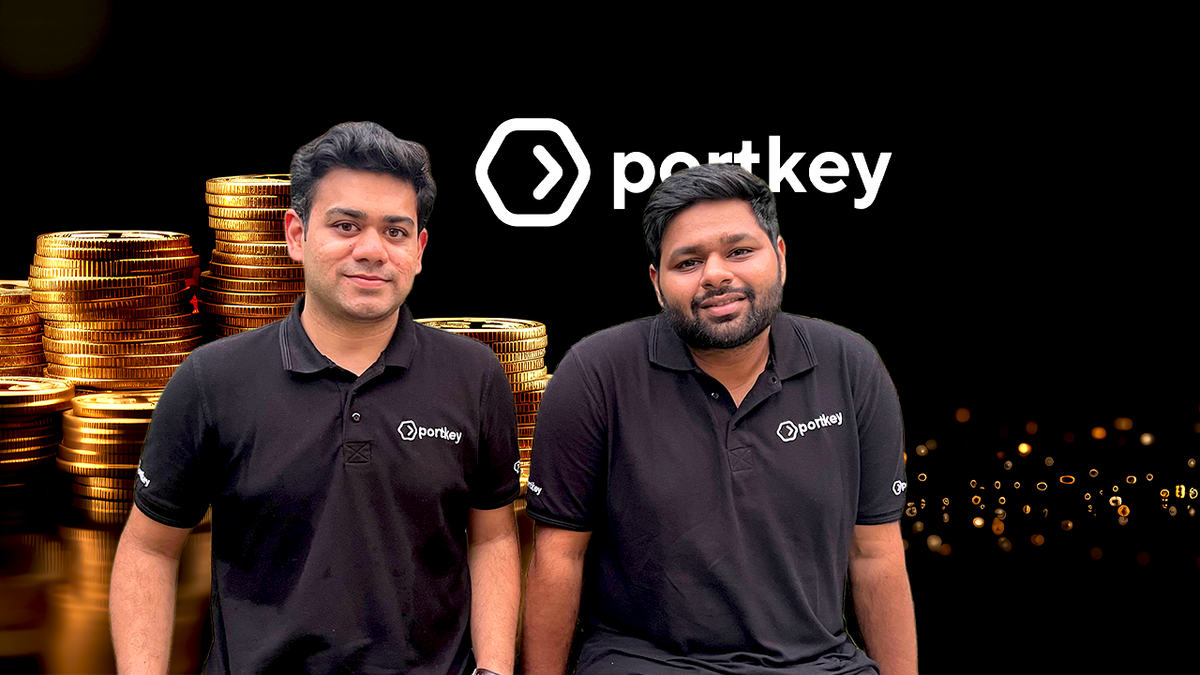
The newly secured capital will be used to expand Portkey’s engineering and research teams, enhance platform capabilities, and accelerate global market expansion. The company plans to introduce advanced enterprise-focused features, including improved analytics, security controls, and automated optimization systems that help businesses manage large-scale AI usage more effectively.
The investment reflects a broader shift in venture capital toward AI infrastructure companies rather than only consumer-facing AI applications. As demand grows for reliable and production-ready AI systems, infrastructure platforms that support development and deployment are emerging as critical components of the technology ecosystem.
Portkey has seen increasing adoption among startups and enterprises seeking efficient ways to build AI-driven products without investing heavily in backend infrastructure. By positioning itself as a core technology layer for AI operations, the company aims to support organizations transitioning toward long-term AI integration.
The Series A round also highlights the rising strength of India’s deeptech startup ecosystem, where founders are increasingly building globally competitive AI solutions. With fresh funding and expanding enterprise demand, Portkey is expected to scale its operations internationally while strengthening its role in enabling responsible and scalable AI adoption.
As artificial intelligence continues reshaping industries, platforms like Portkey are poised to play a key role in supporting the next phase of innovation and enterprise transformation.
Klassroom Files DRHP for SME IPO as Revenue Surges 120% in FY25
Edtech firm Klassroom has filed its Draft Red Herring Prospectus (DRHP) to launch an initial public offering (IPO) on the SME exchange, following a strong financial year in which the company recorded a 120 percent jump in revenue for FY25. The planned public listing marks a major milestone as the company looks to accelerate expansion and strengthen its position in India’s evolving education technology sector.
Klassroom operates in the hybrid learning segment, combining online education tools with offline classroom partnerships. The company works closely with coaching institutes and educators, enabling them to digitize teaching content while continuing in-person instruction. This blended model has gained popularity among students seeking flexibility without completely moving away from traditional classroom learning.
The sharp increase in revenue during FY25 was primarily driven by rising student enrollments, expansion into new geographic markets, and growing demand for structured exam preparation services. The company has focused on scaling operations in Tier-2 and Tier-3 cities, where demand for affordable and accessible coaching solutions remains strong. Increasing digital adoption and smartphone penetration have further supported the company’s growth in these regions.

Through the proposed SME IPO, Klassroom aims to raise funds to enhance its technology platform, expand learning centres, invest in marketing initiatives, and improve content delivery systems. The capital may also be used to strengthen operational infrastructure and explore strategic partnerships that can support long-term scalability.
The IPO filing comes at a time when India’s edtech industry is transitioning toward sustainable growth models after a phase of rapid expansion and market correction. Investors are increasingly showing interest in companies demonstrating steady revenue growth, operational discipline, and clear paths to profitability. Hybrid education platforms like Klassroom are benefiting from this shift, as they combine digital efficiency with the credibility of offline learning.
Listing on the SME platform is expected to improve the company’s brand visibility and credibility while providing access to public capital markets. The move also reflects a broader trend of emerging startups opting for SME IPOs to finance growth without relying solely on private funding.
With revenue more than doubling in FY25, Klassroom’s market debut could strengthen its expansion plans and position the company as a rising player in India’s competitive edtech ecosystem, driven by demand for flexible and technology-enabled learning solutions.