OpenAI has acquired AI personal finance startup Hiro Finance in a talent-focused acquihire deal, bringing on board founder Ethan Bloch and his team as the company deepens its push into high-precision, real-world applications of artificial intelligence.
The financial details of the transaction have not been disclosed. As part of the agreement, Hiro Finance will cease operations on April 20, with all user data scheduled to be permanently deleted by May 13. The company has informed its users that no personal or financial data will be transferred to OpenAI, and customers have been urged to export their information before the shutdown deadline.
Founded in 2023, Hiro Finance emerged as a promising player in the growing intersection of artificial intelligence and personal finance. The startup differentiated itself by focusing on accuracy in financial calculations, an area where many AI-driven platforms have historically struggled. Its platform enabled users to input detailed financial information—including income, savings, liabilities, and long-term goals—and receive projections based on various hypothetical scenarios.
One of Hiro’s key innovations was its “what-if” scenario modelling, which allowed users to explore the financial consequences of major life decisions. Whether evaluating the impact of purchasing a home, adjusting investment strategies, paying off debt more aggressively, or planning early retirement, the platform provided data-driven insights that combined conversational AI with rigorous numerical computation. This blend of accessibility and precision helped Hiro carve out a niche among users seeking more reliable financial planning tools.
The acquisition underscores OpenAI’s broader strategy of expanding beyond general-purpose AI systems into domain-specific solutions that require a higher degree of accuracy and trust. While OpenAI is best known for its conversational AI products, it has increasingly been exploring ways to make its technology more useful in professional and enterprise contexts, including finance, law, and healthcare.
By bringing Hiro’s team into the fold, OpenAI gains access to specialized expertise in financial modelling and quantitative reasoning. These capabilities are expected to play a critical role as AI systems are tasked with handling more complex decision-making processes, particularly in areas where errors can carry significant real-world consequences.
Industry analysts view the deal as part of a wider trend in which major AI companies are acquiring smaller startups not for their products, but for their talent and technical know-how. In such acquihire arrangements, the startup’s existing service is often discontinued, allowing the acquiring company to integrate the team’s expertise into its broader research and development efforts. Hiro Finance’s shutdown aligns with this pattern, suggesting that its underlying technology and human capital were the primary drivers of the acquisition.
Ethan Bloch’s addition to OpenAI is particularly noteworthy. A seasoned entrepreneur in the financial technology space, Bloch previously founded Digit, a widely recognized savings and budgeting platform that was acquired in a major deal. His experience in building consumer-facing financial tools, along with his understanding of user trust and behavioral finance, is expected to contribute significantly to OpenAI’s evolving product strategy.
The move also reflects the growing importance of personal finance as a frontier for artificial intelligence. As individuals face increasingly complex financial landscapes—ranging from volatile markets to rising living costs—there is a growing demand for tools that can provide personalized, data-driven guidance. AI has the potential to democratize access to financial planning, offering insights that were once the domain of professional advisors.
However, the acquisition also raises questions about the lifecycle of emerging tech products and the responsibilities companies have toward their users. While Hiro has assured customers that their data will be securely deleted and not shared, the abrupt shutdown of the platform highlights the risks associated with relying on early-stage digital services. Users are now left to seek alternative solutions, even as the technology they relied on becomes part of a larger corporate ecosystem.
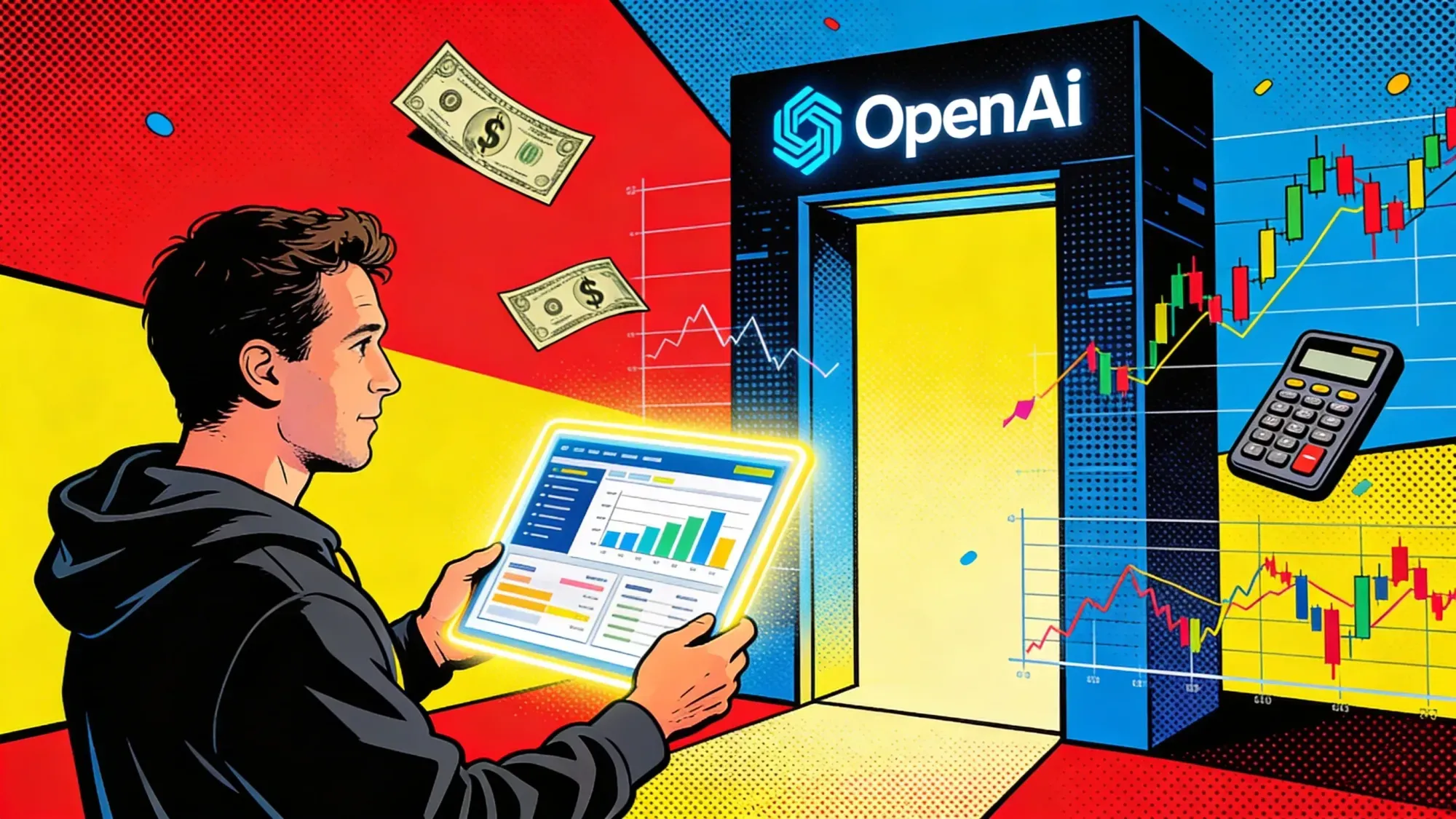
For OpenAI, the challenge will be to effectively integrate Hiro’s capabilities into its existing offerings without compromising user trust or data security. Although no immediate product updates have been announced, it is widely expected that Hiro’s expertise in scenario modelling and financial computation could eventually enhance OpenAI’s tools, potentially enabling more advanced planning features within its AI platforms.
The acquisition signals a clear direction for OpenAI as it continues to evolve: moving beyond conversation and into computation, analysis, and decision support. As AI becomes more embedded in everyday life, the ability to deliver precise, context-aware insights will be a key differentiator.
With the addition of Hiro Finance’s team, OpenAI is positioning itself to play a more influential role in shaping how individuals interact with and understand their financial futures—marking another step in the convergence of artificial intelligence and practical, real-world problem solving.