
Friday, March 27, 2026
  • Login
Techstory Australia
  • Home
  • News
  • AI
  • Social Media
  • Technology
  • Markets
No Result
View All Result
  • Home
  • News
  • AI
  • Social Media
  • Technology
  • Markets
No Result
View All Result
Techstory Australia
No Result
View All Result
Home Markets

US Bans Foreign-Made Routers in Major Cybersecurity Crackdown

Network routers play a crucial role in modern digital life, acting as the gateway through which internet data flows in homes, businesses, and government systems.

Sara Jones by Sara Jones
March 24, 2026
in Markets, Technology
0
US Bans Foreign-Made Routers in Major Cybersecurity Crackdown

PHOTO CREDITS : ET Telecom

74
SHARES
1.2k
VIEWS
Share on FacebookShare on Twitter

In a sweeping and controversial move, the United States has announced a ban on all new foreign-made network routers, marking a significant escalation in its efforts to secure domestic communications infrastructure. The decision, led by the Federal Communications Commission (FCC), reflects growing concerns within the government that foreign manufacturing could expose critical systems to cyber threats, espionage, and potential disruption.

You might also like

2027 Mercedes-Maybach S-Class Dials Up the Glitz and Glamour with Bolder Design and Refined Power

OpenAI Drops AI Video Tool Sora, Startling Disney, Sources Say

China Bars Manus Co-Founders from Leaving Country Amid Review of Meta’s $2 Billion Deal

Under the new policy, any network router produced outside the United States will no longer be permitted for sale or deployment within the country. The ban applies not only to foreign companies but also to American firms that rely on overseas manufacturing. This means that even U.S.-based brands will face restrictions if their products are assembled or manufactured abroad, effectively reshaping the global supply chains that have defined the technology industry for decades.

FCC Chair Jessica Rosenworcel described the decision as a necessary step to safeguard national security in an era of increasingly sophisticated cyber threats. She emphasized that while software vulnerabilities often dominate public discussion, risks embedded in hardware—particularly during the manufacturing stage—can be far more difficult to detect and mitigate. According to the FCC, ensuring trust in the production process is now as critical as ensuring the integrity of the technology itself.

The move comes amid heightened geopolitical tensions, particularly between the United States and China, which has long been a central hub for electronics manufacturing. U.S. intelligence agencies have repeatedly warned that reliance on foreign-made hardware could create opportunities for adversarial governments to exploit hidden backdoors or insert malicious components into widely used devices such as routers. These concerns have driven a broader shift in policy toward reducing dependence on overseas technology supply chains.
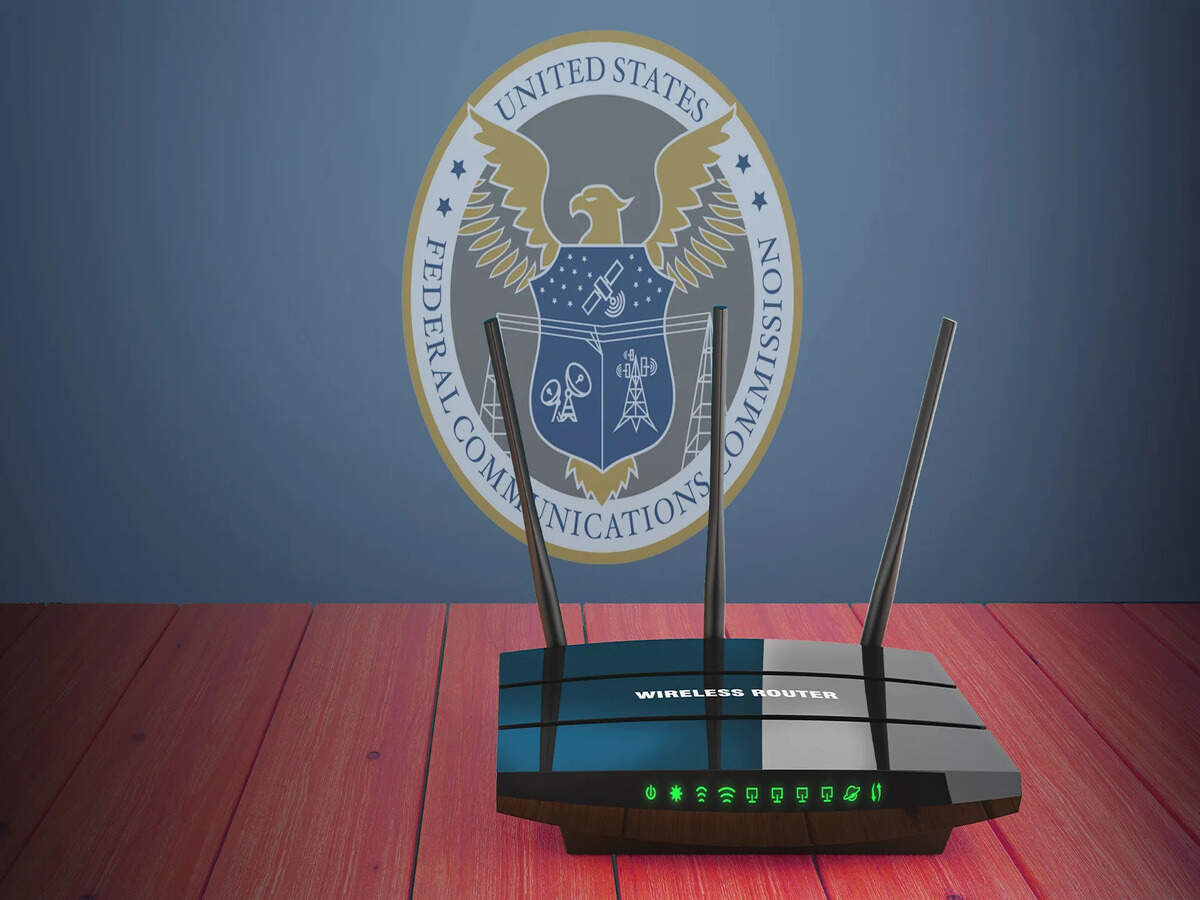
US regulator bans imports of new foreign-made routers, citing security  concerns, ETManufacturing

Network routers play a crucial role in modern digital life, acting as the gateway through which internet data flows in homes, businesses, and government systems. Because of their central function, any compromise in router security could have widespread consequences, from data theft to large-scale network disruptions. Officials argue that eliminating foreign manufacturing risks is essential to protecting these critical points of vulnerability.

The ban is expected to have far-reaching implications for major technology companies, including Cisco Systems, Netgear, and TP-Link, all of which depend heavily on international production facilities. These firms will now face the challenge of relocating manufacturing operations to the United States or other approved domestic environments. Such a transition is likely to be costly and time-consuming, potentially leading to disruptions in supply and increased prices for consumers.

Industry analysts warn that the immediate impact could include a tightening of supply in the router market, particularly for affordable consumer-grade devices. With fewer products available and higher production costs, consumers may face higher prices for essential networking equipment. This could disproportionately affect lower-income households and rural communities, where access to reliable and affordable internet infrastructure is already limited.

At the same time, supporters of the policy argue that the long-term benefits outweigh the short-term economic challenges. They point to previous actions taken by the U.S. government against companies such as Huawei Technologies and ZTE Corporation, which were restricted from participating in American telecommunications networks over similar security concerns. The new router ban builds on these measures, expanding the scope from specific companies to an entire category of products based on their place of manufacture.

The policy also aligns with broader efforts to revive domestic manufacturing in the United States. By effectively requiring companies to produce routers within the country, the government hopes to stimulate investment in local production facilities, create jobs, and reduce reliance on global supply chains that have proven vulnerable to both geopolitical tensions and disruptions such as pandemics.

However, experts caution that rebuilding a domestic manufacturing base for networking equipment will not happen quickly. The infrastructure, workforce, and supply networks needed to support large-scale production have been developed over decades in countries outside the United States. Replicating this ecosystem domestically will require sustained investment and coordination between government and industry.

Internationally, the decision is likely to draw criticism and could lead to trade disputes. Countries that currently host manufacturing operations for networking equipment may view the ban as protectionist, potentially prompting retaliatory measures. The move may also encourage other nations to adopt similar policies, leading to a more fragmented global technology market.

FCC bans foreign routers over rising US cybersecurity threats

Despite these concerns, U.S. officials remain resolute in their position. They argue that the increasing complexity and importance of digital infrastructure demand a more cautious and controlled approach to technology sourcing. By prioritizing security over cost and convenience, the United States is signaling a fundamental shift in how it approaches the intersection of technology, economics, and national defense.

As the ban takes effect, its consequences will ripple across industries and borders. From reshaping manufacturing strategies to redefining global trade relationships, the policy represents a turning point in the evolution of digital security. Whether it ultimately strengthens resilience or introduces new challenges will depend on how effectively both government and industry adapt to this new reality.

Tags: acting as the gateway through which internet data flows in homesand government systems.businessesIn a sweeping and controversial movemarking a significant escalation in its efforts to secure domestic communications infrastructure.Network routers play a crucial role in modern digital lifetechstorythe United States has announced a ban on all new foreign-made network routersunited Statesunited States newsUnited States updatesUS Bans Foreign-Made Routers in Major Cybersecurity Crackdown
Share30Tweet19
Sara Jones

Sara Jones

Recommended For You

2027 Mercedes-Maybach S-Class Dials Up the Glitz and Glamour with Bolder Design and Refined Power

by Sara Jones
March 25, 2026
0
2027 Mercedes-Maybach S-Class Dials Up the Glitz and Glamour with Bolder Design and Refined Power

The ultra-luxury automotive segment is entering a new phase of opulence as Mercedes-Benz unveils the 2027 Mercedes-Maybach S-Class, a refreshed flagship sedan that blends elevated design, heightened comfort,...

Read more

OpenAI Drops AI Video Tool Sora, Startling Disney, Sources Say

by Sara Jones
March 25, 2026
0
OpenAI Secures Funding at $157 Billion Valuation, Attracting Major Investments from Microsoft, Nvidia, and SoftBank

In a surprising strategic shift, OpenAI has discontinued its high-profile AI video generation tool Sora, a move that has reportedly caught partners including The Walt Disney Company off...

Read more

China Bars Manus Co-Founders from Leaving Country Amid Review of Meta’s $2 Billion Deal

by Sara Jones
March 25, 2026
0
China Bars Manus Co-Founders from Leaving Country Amid Review of Meta’s $2 Billion Deal

Chinese authorities have barred two senior executives of artificial intelligence startup Manus from leaving the country, as regulators examine whether a planned $2 billion acquisition by Meta complies...

Read more

U.S. Bans New Foreign-Made Consumer Internet Routers Over Security Concerns

by Sara Jones
March 24, 2026
0
U.S. Bans New Foreign-Made Consumer Internet Routers Over Security Concerns

The Federal Communications Commission has announced a sweeping ban on the authorization of new foreign-made consumer internet routers, marking a major shift in the United States’ approach to...

Read more

Snowflake Implements Targeted Layoffs as CEO Sridhar Ramaswamy Accelerates AI-Driven Transformation

by Sara Jones
March 23, 2026
0
Snowflake Implements Targeted Layoffs as CEO Sridhar Ramaswamy Accelerates AI-Driven Transformation

Cloud data platform leader Snowflake has announced a series of targeted layoffs, primarily affecting its technical writing and documentation teams, as part of a broader strategic shift toward...

Read more
Next Post
China Bars Manus Co-Founders from Leaving Country Amid Review of Meta’s $2 Billion Deal

China Bars Manus Co-Founders from Leaving Country Amid Review of Meta’s $2 Billion Deal

Leave a Reply Cancel reply

Your email address will not be published. Required fields are marked *

Related News

OpenAI Achieves Remarkable $2 Billion Revenue Milestone, Cementing Its Position in AI Landscape

OpenAI Urges U.S. to Relax Copyright Rules to Fuel AI Development

March 18, 2025
Owners of Tesla’s $80,000 Cybertrucks Raise Concerns Over ‘Orange Rust Marks’

Tesla Cybertruck Owner Finds New Way to Chop Off Fingers in Its Doors

July 12, 2024
Telegram Founder Pavel Durov Granted Temporary Leave from France

Telegram Founder Pavel Durov Granted Temporary Leave from France

March 16, 2025

Browse by Category

  • AI
  • Archives
  • Business
  • Crypto
  • Finance
  • Investing
  • Markets
  • News
  • Social Media
  • Technology

Techstory.com.au

Tech, Crypto and Financial Market News from Australia and New Zealand

CATEGORIES

  • AI
  • Archives
  • Business
  • Crypto
  • Finance
  • Investing
  • Markets
  • News
  • Social Media
  • Technology

BROWSE BY TAG

amazon apple apple news apple updates Artificial intelligence Artificial Intelligence news Artificial Intelligence updates australia Australia news Australia updates china China news China updates Donald Trump Donald Trump news Donald Trump updates Elon musk elon musk news Elon Musk updates google google news Google updates meta meta news meta updates Microsoft microsoft news microsoft updates OpenAI OpenAI news OpenAI updates Social media tech news technology Technology news technology updates techstory Tesla tesla news tesla updates TIKTOK twitter united States united States news United States updates

© 2023 Techstory Media. Editorial and Advertising Contact : hello@techstory.com.au

No Result
View All Result
  • Home
  • News
  • Technology
  • Markets
  • Business
  • AI
  • Investing
  • Social Media
  • Finance
  • Crypto

© 2023 Techstory Media. Editorial and Advertising Contact : hello@techstory.com.au

Welcome Back!

Login to your account below

Forgotten Password?

Retrieve your password

Please enter your username or email address to reset your password.

Log In
Are you sure want to unlock this post?
Unlock left : 0
Are you sure want to cancel subscription?