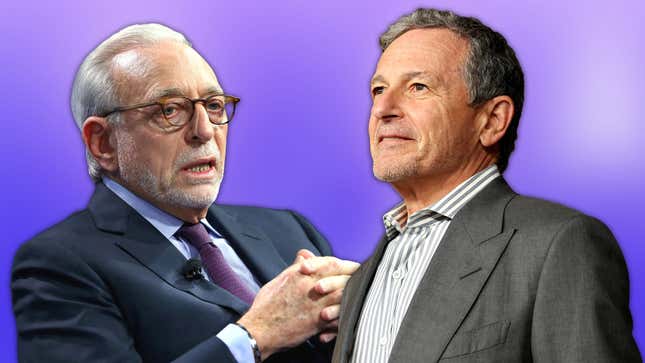
Activist investor Nelson Peltz has sold his entire stake in The Walt Disney Company, just weeks after losing a high-profile proxy battle aimed at securing a seat on the entertainment giant’s board.
Peltz, the billionaire founder of Trian Fund Management, had been advocating for significant changes at Disney, citing concerns over the company’s strategic direction and financial performance. His campaign culminated in a proxy fight earlier this year, where he sought to win shareholder support for his bid to join the board and push for a more aggressive restructuring plan.
Despite his efforts, Peltz failed to garner the necessary votes at Disney’s annual shareholder meeting in April. Following this defeat, Peltz’s decision to divest his holdings signals a retreat from his activist campaign. Trian Fund Management confirmed that it has liquidated its position in Disney, which was valued at approximately $1.8 billion.

In a brief statement, Peltz expressed his disappointment with the outcome but maintained that his campaign had highlighted important issues within Disney. “While we are disappointed with the result, we believe our involvement has brought greater attention to the strategic and operational challenges facing Disney,” Peltz said.
Disney’s board and management had strongly opposed Peltz’s proposals, arguing that the company’s current strategy was already addressing key issues. Under the leadership of CEO Bob Chapek, Disney has been navigating a challenging landscape, marked by disruptions from the COVID-19 pandemic, evolving consumer habits, and intense competition in the streaming market.
Chapek recently outlined a comprehensive plan to streamline operations, cut costs, and focus on core content creation and distribution, particularly through its streaming platforms, Disney+ and Hulu. The company has also been working to reinvigorate its theme parks and resorts, which have been significant revenue drivers.
Industry analysts have noted that Peltz’s exit removes a source of pressure from Disney’s leadership but also underscores the challenges the company faces. “Peltz’s departure doesn’t change the underlying issues Disney needs to address,” said media analyst Laura Martin. “The company must continue to adapt to a rapidly changing entertainment landscape and ensure that its strategic initiatives bear fruit.”
Disney’s stock has experienced volatility in recent months, reflecting investor uncertainty about the company’s future direction. Following the announcement of Peltz’s stake sale, Disney shares saw a slight dip in early trading, though market reactions were muted overall.
The broader implications of Peltz’s exit for Disney’s strategic direction remain to be seen. While some investors may see it as a relief that the proxy battle is over, others may view it as a missed opportunity for more radical changes at the company.
As Disney moves forward, it will need to demonstrate that its current strategies can effectively navigate the challenges ahead and deliver long-term value to shareholders. The spotlight will remain on Chapek and his leadership team as they steer Disney through this critical juncture in its storied history.