


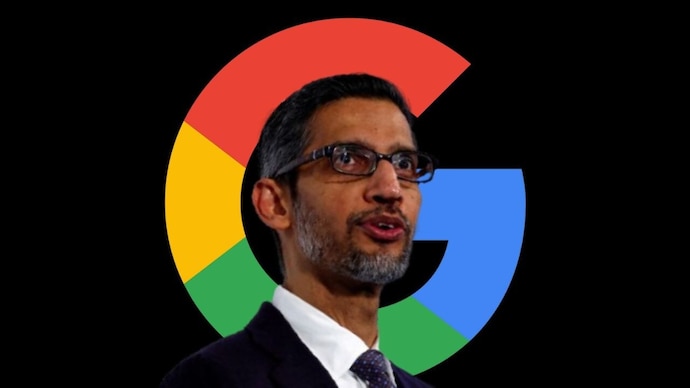
Sundar Pichai, the long-serving CEO of Alphabet Inc., has officially joined the ranks of billionaires, propelled by a sharp surge in Alphabet’s stock price. As the parent company of Google rides a wave of investor optimism fueled by its aggressive expansion in artificial intelligence and cloud computing, Pichai’s net worth has crossed the $1 billion threshold — a rare achievement for a professional CEO who did not found the company.
The milestone marks a personal and professional high point for Pichai, who has spent over two decades at Google and nearly ten years at its helm. His financial ascent is a direct result of Alphabet’s exceptional market performance over the last two years. The company’s stock has more than doubled in value, adding over $1 trillion to its market capitalization and pushing its share price to record highs.
Pichai holds a relatively modest equity stake in Alphabet — estimated at around 0.02% — but that slice of the trillion-dollar giant has now ballooned in value. In addition to his current holdings, Pichai has earned hundreds of millions in equity awards and performance bonuses over his tenure, including a landmark compensation package in 2019. Though he has sold a significant portion of his shares over time, the combination of retained stock and cumulative earnings has vaulted his personal net worth above the billion-dollar mark.
Driving Alphabet’s AI-Led Comeback
The company’s recent financial results have underscored its return to high-growth territory. Alphabet has posted consistent gains across all its major business segments, including Search, YouTube, Google Cloud, and newer AI initiatives. The latest quarterly earnings showed double-digit growth in both revenue and net income, with the cloud division delivering particularly strong performance thanks to increased demand for AI-related services.
One of the most notable drivers of growth has been Alphabet’s investment in generative AI. Over the past year, the company has rolled out a series of high-profile AI features across its products — from AI Overviews in Search to generative text and image tools in Google Workspace. The introduction of multimodal AI in Google’s Gemini model has also helped Alphabet compete with rivals like Microsoft and OpenAI in the enterprise and consumer AI markets.
To support this rapid expansion, Alphabet has significantly increased its capital expenditures. In 2025 alone, the company is expected to invest more than $85 billion — a large portion of which is allocated to data center infrastructure, AI chips, and cloud capacity. This is the largest single-year investment in the company’s history and reflects its long-term bet on AI becoming central to every major product line.
A Career Built on Quiet Discipline
Pichai’s rise is exceptional not only for its scale, but also for the path he took to get there. Unlike most billionaires in Silicon Valley, he did not co-found his company. Instead, Pichai built his career inside Google, steadily climbing through the ranks with a reputation for thoughtful leadership, operational precision, and technological acumen.
Born in 1972 in Chennai, India, to a modest middle-class family, Pichai’s early years were marked by academic excellence and an interest in technology. He earned a degree in metallurgical engineering from the Indian Institute of Technology in Kharagpur before receiving a scholarship to study at Stanford University. After completing his master’s in materials science and engineering, and later an MBA from the Wharton School, he joined Google in 2004.
At Google, Pichai quickly rose to prominence by leading the development of Chrome, now the world’s most-used web browser. He later oversaw Android, Google Drive, Gmail, and Maps — products used by billions of people worldwide. His success in managing complex, large-scale engineering projects made him an obvious candidate for the CEO role when Google restructured under the Alphabet umbrella in 2015.
In 2019, Pichai was appointed CEO of Alphabet after founders Larry Page and Sergey Brin stepped back from day-to-day operations. Since then, he has led the company through both turbulent and triumphant times — including regulatory scrutiny, competition in the AI space, and internal challenges related to ethics and employee activism.
A New Breed of Tech Billionaire
Pichai’s billionaire status puts him in an elite group of corporate leaders who achieved immense wealth without founding their companies — a list that includes Microsoft’s Satya Nadella and Apple’s Tim Cook. What makes Pichai’s case especially notable is the scale of Alphabet’s transformation during his leadership. Under his guidance, Alphabet has shifted from being primarily an advertising-driven business to a more diversified tech powerhouse with deep investments in AI, cloud computing, hardware, and quantum computing.
Pichai has remained relatively low-key about his personal wealth, continuing to project the calm and measured persona that has defined his public image. His success stands in contrast to the brashness often associated with Silicon Valley wealth, and his leadership style is often described as consensus-driven and thoughtful.

Looking Ahead
With Alphabet’s future increasingly tied to its success in artificial intelligence, Pichai’s next challenge will be to maintain the company’s momentum in a fast-evolving and highly competitive landscape. As regulatory pressures mount and the arms race in AI accelerates, the company will need to continue innovating while ensuring responsible and ethical development of its technologies.
Still, for now, Pichai’s financial milestone is a clear reflection of the market’s confidence in his leadership and Alphabet’s direction. It also serves as a powerful symbol of what is possible in the tech world — not just for founders with bold visions, but for career executives who build value through steady, strategic execution.






