Alcatel-Lucent Enterprise Launches Cloud Communications Platform in Australia
Alcatel-Lucent Enterprise (ALE) has launched its new cloud-based communications platform in Australia, aiming to meet growing demand for flexible, scalable solutions in a hybrid work era. The move brings ALE’s global cloud strategy to local businesses seeking modern communication tools without the complexity of traditional infrastructure.
The new offering, designed to deliver communications-as-a-service (CaaS), provides an integrated suite of services including voice, video, messaging, and collaboration. Packaged under a subscription model, it allows businesses to access enterprise-grade telephony and communication capabilities with minimal upfront costs and scalable deployment options.

With a shift towards hybrid and remote work, Australian businesses are increasingly seeking solutions that support mobility, flexibility, and security. ALE’s platform is designed to help organisations manage communications more efficiently—whether teams are in the office, working from home, or on the move.
One of the platform’s key features is its modularity. Businesses can select the services they need, scale up or down as their operations evolve, and manage everything through a centralised interface. Built-in security and support for private cloud or on-premises deployments also make it suitable for industries with strict compliance needs, such as healthcare, education, and government.
The rollout is backed by ALE’s local partner ecosystem, which will support implementation, integration, and ongoing service. ALE views the platform as a catalyst for digital transformation, helping Australian organisations move beyond legacy systems and embrace more agile, cloud-native operations.
As businesses continue to prioritise digital tools that enhance productivity and customer experience, ALE’s new platform positions itself as a timely solution—offering the reliability of a global provider with the flexibility Australian enterprises now demand.
ServiceNow Launches Zurich Platform to Accelerate Enterprise AI Adoption
ServiceNow has unveiled its latest platform release, Zurich, designed to help enterprises scale AI adoption with greater speed, security, and confidence. The update marks a significant leap toward embedding generative AI into everyday workflows—beyond pilot projects and into real-world operations.
The Zurich release introduces a suite of new capabilities that bring together automation, AI agents, and robust governance. At its core is the idea of “agentic workflows”—AI-powered task flows that can independently complete complex sequences across departments, while allowing human intervention when needed. This hybrid model is built to improve efficiency without compromising control.
Developers and non-technical users alike benefit from enhanced creation tools. Using natural language prompts, teams can now build apps and automate tasks with minimal coding. The platform handles setup, integration, testing, and deployment—streamlining development and reducing reliance on specialised teams.
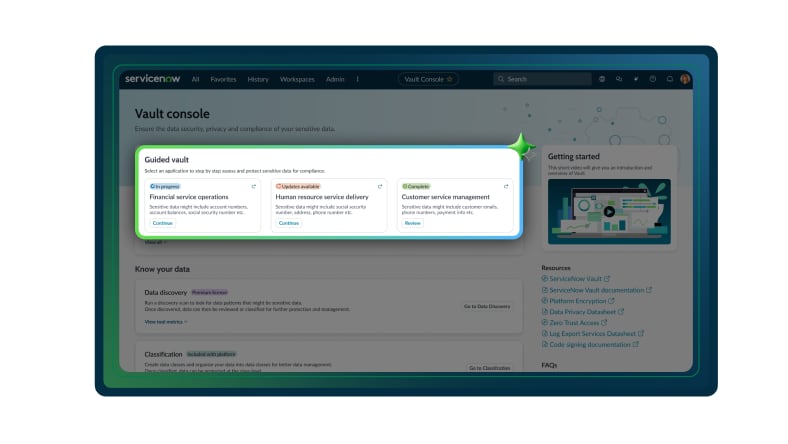
Security and trust remain central to Zurich’s design. New tools allow enterprises to monitor how AI is used, control access to sensitive data, and manage automated processes as if they were digital employees—with authentication, oversight, and audit trails. These capabilities aim to address longstanding concerns around AI risk, compliance, and transparency.
A key feature of the release is a governance hub that provides visibility across all AI and automation efforts. This centralised console helps organisations track performance, enforce policies, and maintain alignment with regulatory and internal standards.
With Zurich, ServiceNow positions itself as a platform not just for workflow automation, but as a secure foundation for enterprise-wide AI adoption. As businesses look to move past experimentation and into scaled deployment, Zurich offers a clear path forward—blending innovation with the control and accountability large organisations demand.
Former AirTrunk Executive Michael Juniper Joins DigiCo in Senior Role
DigiCo Infrastructure REIT has announced the appointment of Michael Juniper, a founding executive of AirTrunk, to a senior leadership position, marking a major move for the fast-growing data infrastructure platform. Juniper will also serve on DigiCo’s board of directors, bringing deep experience in hyperscale data centre development and international expansion.
With more than 20 years in the digital infrastructure sector, Juniper played a pivotal role in scaling AirTrunk from its early stages to one of the Asia-Pacific’s largest data centre operators. At AirTrunk, he led market entry strategies across Singapore, Japan, Malaysia, and Hong Kong, establishing a strong reputation for delivering complex, high-capacity projects aligned with hyperscale cloud providers’ needs.
At DigiCo, Juniper will focus on strengthening operational execution, leasing, and development capabilities. His appointment comes at a critical time, as DigiCo accelerates its response to soaring demand driven by AI workloads, cloud adoption, and enterprise digital transformation. He is expected to play a key role in shaping DigiCo’s growth strategy and positioning the company as a leading data centre operator across the region.

Juniper said he is excited to join DigiCo and sees enormous potential in the company’s vision to build efficient, scalable, and sustainable digital infrastructure. He emphasised the increasing importance of energy-efficient, carbon-neutral facilities as global tech firms seek infrastructure partners that align with their sustainability goals.
DigiCo’s leadership believes Juniper’s track record in scaling platforms and securing hyperscale partnerships will be instrumental as the company continues to expand. His appointment signals DigiCo’s ambitions to become a dominant player in the digital infrastructure space, ready to meet the rising global demand for reliable, high-performance data centre capacity.
The move further solidifies DigiCo’s position as a serious contender in the competitive and fast-evolving data centre landscape.
SA Department of Premier and Cabinet Issues RFI for AI Tools
Adelaide – The South Australian Department of Premier and Cabinet (DPC) has issued a Request for Information (RFI) inviting AI providers to share details of tools, solutions, and services that could help improve government operations. The RFI is part of the state’s effort to better understand what AI offerings are available, how mature and scalable they are, and how they might integrate with existing systems.
DPC is seeking innovative AI technologies that address government‑centric needs—enhancing efficiency, improving decision‑making, and delivering more responsive public services. Of particular interest are AI solutions that have strong compliance credentials—those that robustly address privacy, security and cyber regulation issues relevant to public sector use.

The RFI also asks vendors to include indicative costing models and pricing structures. These data will inform budgeting and planning for future AI procurement. Additionally, vendors are encouraged to share their experience deploying similar AI tools in government or regulated sectors, including lessons learned and best practices.
Another aim is to explore possible pilot programs or partnerships. By trialling solutions in real‑world settings within government, DPC hopes to assess performance, identify challenges, and refine implementation strategies before wider rollout.
Insights collected through this RFI will feed into a catalogue of AI offerings, which is expected to inform future policy development and procurement strategy. Starting in 2026, DPC intends to conduct regular RFIs of this nature for AI tools.
This particular RFI closes at 2pm (ACST) on Friday, 31 October 2025. Interested suppliers and vendors are invited to respond.
Kinetic IT Marketing Chief: How MSPs Can Escape the ‘Sea of Sameness’
In a market flooded with Managed Service Providers (MSPs) offering near-identical services, standing out is more challenging than ever. According to Kinetic IT’s marketing chief, the key to breaking free from the “sea of sameness” lies in clarity, authenticity, and customer-centric storytelling.
Too many MSPs rely on generic messaging—promising reliability, security, and partnership—without clearly expressing what makes them different. To cut through, MSPs must define a clear identity. This means knowing exactly who they serve, the problems they solve best, and why their approach delivers better outcomes than competitors.
Rather than focusing on services or technology stacks, MSPs should lead with customer outcomes. Businesses care about reduced downtime, improved compliance, or streamlined operations—not just uptime percentages or toolsets. Translating technical capabilities into real-world value builds stronger connections with decision-makers.
Humanising the brand is also essential. Telling stories of how teams solve problems, showcasing employee expertise, or highlighting real client wins adds authenticity. In a trust-driven industry, these narratives are often more persuasive than feature lists.

Consistency is another pillar of differentiation. From website copy to sales proposals, a unified brand voice and clear value proposition reinforce recognition and trust.
Finally, the smartest MSPs segment their audiences and tailor their approach. What resonates with a large enterprise will differ from what matters to a local council or healthcare provider. Demonstrating sector-specific knowledge builds credibility and relevance.
Escaping the sea of sameness isn’t about being louder—it’s about being clearer, truer, and more aligned with what customers actually care about. For Kinetic IT, this approach isn’t just a marketing strategy—it’s a business imperative in an increasingly competitive and commoditised market.