Federal safety regulators have opened an investigation into the Tesla Model Y, focusing on potential failures of its exterior door handles. The probe comes after a growing number of complaints from owners who say the handles may stop functioning, particularly in low-power situations — raising serious concerns about emergency access and child safety.
At the center of the scrutiny is the Model Y’s sleek, flush-mounted, electronic door-handle system, which relies on the vehicle’s power supply to operate. While the design supports Tesla’s minimalist aesthetic and aerodynamic efficiency, it may also be creating unintended safety issues.
The Problem at Hand
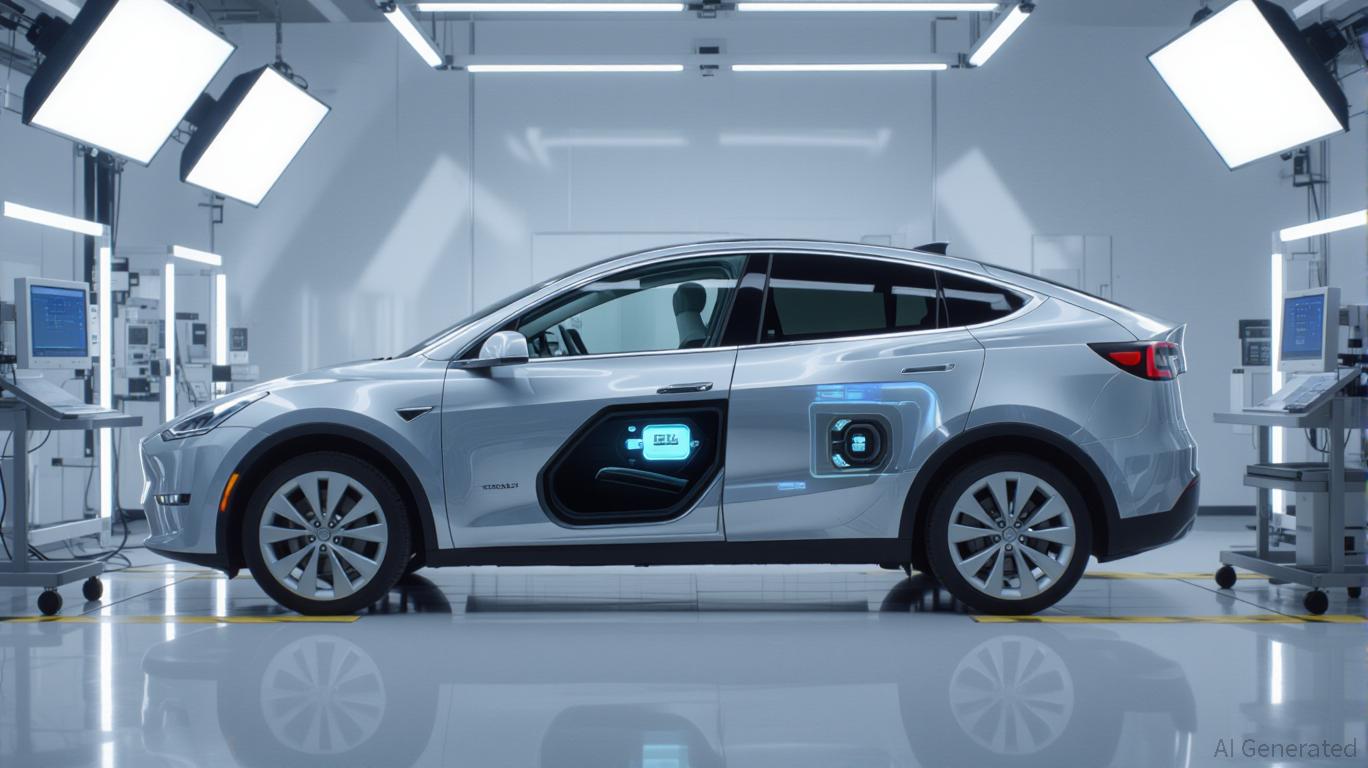
Unlike traditional mechanical door handles, the Model Y’s handles function through electronic actuation. When the vehicle detects an authorized key or smartphone nearby, the handles become accessible — popping out and allowing entry. However, when power is lost or reduced, the handles may fail to respond altogether, effectively locking the exterior doors even when people or pets are inside.

Owners have reported scenarios where they exited the vehicle to place a child or pet in the back seat, only to find themselves unable to reopen the doors moments later. In multiple cases, the situation became so severe that occupants were trapped inside, forcing adults to break windows to regain access.
Although the Model Y is equipped with manual interior release mechanisms, critics say they are not clearly marked, intuitive, or accessible — especially for young children who may not know how to use them or may be buckled into child safety seats.
Federal Investigation Launched
The U.S. National Highway Traffic Safety Administration (NHTSA) has launched a formal preliminary evaluation of the issue. The scope of the probe covers a substantial number of vehicles, with a focus on 2021 model-year Model Ys. While Tesla vehicles have faced investigations before, this particular case centers not on autonomous driving or software, but on a very basic, human issue: being able to open a door.
The agency is now collecting data from Tesla and affected owners to determine whether a full recall is warranted. This process involves evaluating not only the failure itself, but the frequency, potential risk, and Tesla’s response — including whether affected users were provided clear instructions or warning signals related to low battery power or door failure.
Why This Matters
For most drivers, a malfunctioning door handle may seem like a minor inconvenience. But when the door is the only way to access a child strapped into a car seat, or when someone is trapped inside during an emergency, the stakes become dangerously high.
The core concern revolves around the dependency of basic vehicle functions — like door access — on electronic systems that are vulnerable to power loss. While it’s common for modern vehicles to integrate electronic convenience features, many still maintain mechanical redundancy. In Tesla’s case, that redundancy exists inside the car but may not be sufficient from the exterior when things go wrong.
This issue brings into focus broader questions about how much automation is too much, and whether convenience should ever come at the expense of safety. Tesla’s design ethos emphasizes minimalism and software-driven control, but critics argue that this approach sometimes neglects real-world usability under failure conditions.
Tesla’s Response and Next Steps
Though Tesla has not issued a public statement about the investigation, reports suggest the company is internally exploring possible design changes. One potential solution could be a redesigned handle system that includes a mechanical override accessible from the outside. Another idea reportedly under discussion is a more visible and intuitive manual release system that can be accessed without power or electronic input.
In the past, Tesla has been quick to address software-based concerns with over-the-air updates, but hardware issues like this one are harder to solve remotely. If regulators determine that the issue presents a significant safety risk, Tesla may be forced to initiate a physical recall, retrofit existing vehicles, or provide clear and enforceable guidance on emergency protocols.
Owner Awareness and Advice
For now, owners of affected Model Ys are being encouraged to familiarize themselves with their vehicle’s manual door-release features and to regularly monitor the health of the car’s 12-volt battery — which powers many auxiliary systems, including the door mechanisms. Some users have already shared tips online about how to perform regular checks and prepare for a possible power failure, but this is far from an ideal solution.
Parents, in particular, are urged to be cautious when loading or unloading children and to avoid closing all doors if they suspect any power irregularities. Until the investigation concludes or a formal fix is issued, driver vigilance may be the only line of defense against accidental lockouts.
Broader Industry Implications
This probe into Tesla’s door-handle system could have ripple effects beyond the Model Y. With more automakers adopting flush, electronic, or retractable handle designs, regulators may begin pushing for stricter safety standards that require mechanical backups for all exterior access points. Similar discussions are already underway in some international markets.
If anything, this incident underscores a growing tension in the automotive world: the race toward futuristic design vs. the need for foolproof, real-world functionality. As vehicles become more computerized and aesthetically driven, regulators will increasingly be called upon to ensure that innovation doesn’t outpace common-sense safety.
Conclusion
The federal investigation into the Tesla Model Y’s door handles has highlighted a potentially dangerous flaw in the way modern cars balance design, technology, and safety. For Tesla, a company that prides itself on redefining the driving experience, this may serve as a wake-up call — reminding both engineers and executives that in certain moments, the simplest function can be the most critical one.