Tesla has firmly rejected reports suggesting that it is preparing to lay off around 1,700 workers at its Gigafactory in Grünheide, near Berlin, pushing back against growing speculation about job cuts at one of its most important European manufacturing hubs.
The rumors emerged amid wider concerns about slowing demand for electric vehicles in parts of Europe and Tesla’s ongoing global cost-cutting measures. However, the company has described the claims as misleading and insisted that operations at its German plant remain stable, with no plans for mass redundancies.
Tesla Responds to Speculation
In a statement addressing the reports, Tesla clarified that there has been no significant reduction in permanent staff at the German facility and that the company is not planning layoffs of the scale suggested. According to the automaker, routine changes in employment numbers are a natural part of industrial operations, especially at a large manufacturing complex that has been steadily evolving since its opening.
Tesla emphasized that variations in staffing can often be linked to the use of temporary workers, the completion of specific project phases, and shifts in production cycles, rather than structural job cuts. The company maintained that permanent employees at the site continue to have job security and that production activities are proceeding as planned.
Why the Rumors Gained Traction
The speculation surrounding layoffs appears to stem from reports indicating a decline in the total number of workers at the Grünheide facility compared to earlier years. Observers noted that workforce figures are lower than during the initial ramp-up period, when Tesla hired aggressively to bring the factory to full production capacity.
Industry analysts point out that such changes are not uncommon once a new factory moves from rapid expansion into a more mature operational phase. During the early years, companies often employ large numbers of contract workers, consultants, and temporary staff to handle construction, setup, and production stabilization. As operations become streamlined, the need for such roles naturally decreases.
This distinction between temporary and permanent staff may have contributed to confusion around the reported figures, fueling concerns of large-scale layoffs that Tesla says are unfounded.
Strategic Importance of the German Gigafactory
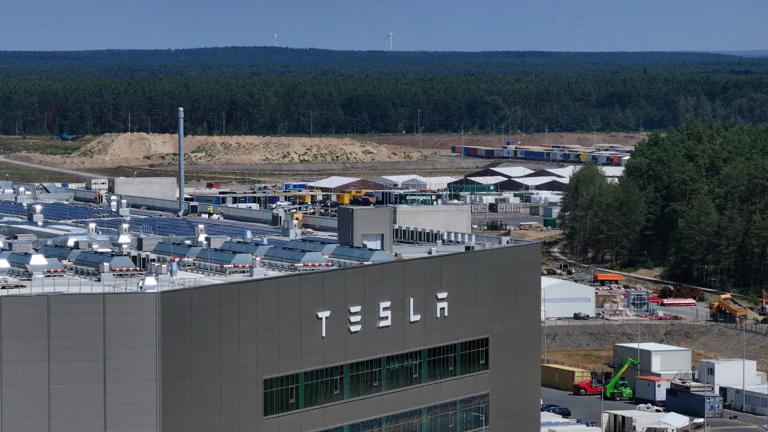
Tesla’s Gigafactory Berlin-Brandenburg holds a central position in the company’s European strategy. Opened in 2022, it is responsible for producing the Model Y and other vehicles primarily for European markets. The plant was designed to reduce Tesla’s reliance on imports from China and the United States while bringing production closer to key customers.
Over the past few years, the facility has grown into a major employer in the region and a symbol of Germany’s transition toward electric mobility. Any suggestion of job cuts at the site therefore carries significant economic and political sensitivity, especially as Germany seeks to maintain its status as a global automotive powerhouse amid the shift away from internal combustion engines.
Local authorities and labor groups have closely followed developments at the factory since its inception, often highlighting both its contribution to employment and the environmental and labor concerns associated with its rapid construction.
Tesla’s Broader Workforce Strategy
Globally, Tesla has undertaken periodic workforce adjustments as part of its efforts to improve efficiency and control costs in an increasingly competitive electric vehicle market. In recent years, the company has trimmed jobs in some divisions, particularly in administrative and non-manufacturing roles, while continuing to invest in automation and productivity improvements.
However, Tesla has consistently argued that these changes are aimed at long-term sustainability rather than retreating from key markets. The firm has continued expanding production capacity in several regions and has reaffirmed its commitment to Europe as a major pillar of its international operations.
The denial of layoffs at the German Gigafactory aligns with this broader narrative, signaling that Tesla does not intend to scale back its manufacturing footprint in Europe despite economic headwinds and intense competition from both traditional automakers and new electric vehicle startups.
Market and Investor Reactions
The reports of possible layoffs initially raised concerns among investors and market watchers, as they were interpreted by some as a sign of weakening demand or deeper financial pressures. Tesla’s prompt response, dismissing the rumors, helped reassure markets that the company’s European operations remain on solid footing.
While Tesla’s stock price is influenced by a wide range of factors, including global sales, technological developments, and broader market conditions, clarity around its production sites is particularly important to investors assessing the company’s long-term growth prospects.

Challenges Ahead
Despite denying mass layoffs, Tesla is not immune to the challenges facing the electric vehicle industry. Rising interest rates, reduced government subsidies in some countries, and intensifying price competition have all put pressure on automakers’ margins. In Europe, consumers are becoming more price-sensitive, while local manufacturers are rapidly expanding their own electric offerings.
In this context, Tesla’s German Gigafactory is expected to play a crucial role in maintaining cost efficiency, improving delivery times, and tailoring vehicles more closely to European consumer preferences. Any major disruption at the plant could have ripple effects across the company’s European business.
Conclusion
Tesla’s dismissal of rumors about 1,700 layoffs at its German Gigafactory underscores the company’s determination to project stability and confidence in its European operations. While workforce numbers may fluctuate as part of normal industrial adjustments, Tesla insists that there is no plan for large-scale job cuts at the site.
As the electric vehicle market continues to evolve, the Berlin-area factory remains a cornerstone of Tesla’s global strategy — not a symbol of retreat, but of its ongoing commitment to manufacturing and innovation in Europe.