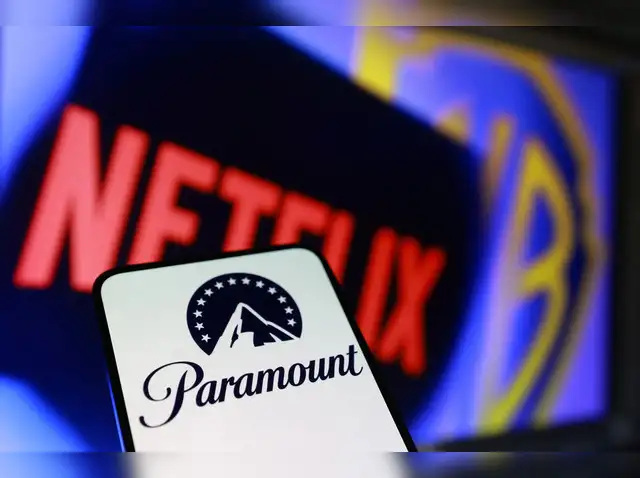
In a surprising development that has sent shockwaves across the entertainment industry, streaming giant Netflix has officially withdrawn from the bidding race to acquire iconic film studio Warner Bros., leaving Paramount Global poised to secure what could become one of the most consequential media deals of the decade.
The decision, confirmed by Netflix’s co-chief executives during discussions with investors, signals a major strategic recalibration for the company that once led Hollywood’s aggressive expansion into streaming-led consolidation. Executives described Warner Bros. as “always a nice to have at the right price, not a must have at any price,” emphasizing financial discipline amid rising acquisition costs.
A Stunning Withdrawal
For months, industry insiders viewed Netflix as one of the strongest contenders to acquire Warner Bros., whose extensive catalog of films, television properties, and global production assets represents one of Hollywood’s most valuable entertainment portfolios. Analysts believed the acquisition could fundamentally transform Netflix from a streaming platform into a fully integrated entertainment powerhouse with expanded theatrical and television capabilities.

However, negotiations reportedly grew increasingly complex as valuations climbed and long-term operational costs became clearer. Rather than entering a prolonged bidding war, Netflix leadership opted to step away, choosing caution over scale.
The move surprised many observers, particularly given Netflix’s historic willingness to spend heavily in pursuit of market dominance during the early years of the streaming boom.
Paramount Emerges as Front-Runner
Netflix’s exit has effectively cleared the field for Paramount Global, which is now widely expected to finalize a deal for Warner Bros. Industry analysts suggest that the acquisition would significantly strengthen Paramount’s competitive position by combining its existing film, television, and streaming operations with Warner Bros.’ globally recognized production infrastructure.
If completed, the merger would unite two major content ecosystems, creating an entertainment entity with vast intellectual property holdings, expanded studio capacity, and stronger negotiating leverage in international markets.
Executives close to the discussions believe Paramount sees the acquisition not merely as expansion but as a long-term survival strategy in an increasingly consolidated media environment.
Changing Economics of Streaming
Netflix’s withdrawal highlights a broader transformation underway across the entertainment business. After years defined by subscriber growth and large-scale spending, streaming companies are increasingly prioritizing profitability and operational sustainability.
Owning a traditional Hollywood studio carries significant financial responsibilities, including physical production facilities, theatrical distribution commitments, union contracts, and legacy television obligations. For Netflix, whose success has historically depended on digital distribution efficiency, absorbing such structures could have complicated its lean operational model.
By stepping back, Netflix preserves capital that can instead be directed toward original programming, international market growth, and technological innovation.
Industry experts say the decision reflects a maturing streaming market in which companies must balance ambition with economic reality.
Hollywood Reacts to the Shift
News of Netflix’s withdrawal sparked immediate discussion throughout Hollywood. Producers, agents, and creatives had closely followed the bidding process, recognizing that ownership changes at Warner Bros. could influence everything from film financing to streaming licensing agreements.
Some industry professionals welcomed Netflix’s decision, arguing that further consolidation among streaming giants could limit creative competition. Others expressed concern that fewer independent buyers may reduce opportunities for filmmakers seeking distribution partners.
Investors, meanwhile, interpreted the move as a signal that Netflix is entering a more disciplined phase following years of aggressive expansion.
Strategic Discipline Over Expansion
Netflix leadership has increasingly emphasized strategic flexibility rather than ownership of every major content pipeline. Executives believe partnerships, licensing arrangements, and internally developed productions provide sufficient competitive strength without assuming the risks associated with massive acquisitions.
The company’s stance suggests confidence that brand identity, global reach, and algorithm-driven content discovery remain stronger advantages than traditional studio ownership alone.
Rather than competing through consolidation, Netflix appears focused on maintaining agility in an industry undergoing rapid technological and consumer change.
A New Phase in the Streaming Wars
Should Paramount complete its acquisition of Warner Bros., the global entertainment landscape could enter a new era defined by hybrid media companies combining legacy studio power with modern streaming platforms.
Such consolidation may reshape competition among major entertainment players, shifting focus from subscriber counts toward exclusive intellectual property ecosystems capable of generating revenue across film, television, gaming, and merchandising.
Regulatory scrutiny is expected, as authorities examine potential impacts on market competition and media diversity. Approval processes could take months, delaying final integration even if negotiations conclude soon.
Looking Ahead
For Netflix, walking away from Warner Bros. represents a calculated gamble — one that prioritizes long-term financial stability over immediate expansion. Whether the decision proves visionary restraint or a missed opportunity will depend largely on how the streaming market evolves in the coming years.
Meanwhile, Paramount now stands on the verge of acquiring one of Hollywood’s most storied studios, a move that could redefine its global influence and reshape the balance of power across entertainment.
As the industry awaits official confirmation of the deal, one reality has become clear: the streaming wars are no longer just about growth, but about choosing which battles are worth winning — and which are better left behind.