In a landmark move that signals a decisive shift in the future of professional computing, Apple Inc. has officially discontinued the Mac Pro, bringing an end to one of the most iconic workstation lineups in the tech industry.
The decision marks the conclusion of a nearly 20-year journey for a machine that once defined high-performance desktop computing. Introduced in 2006, the Mac Pro quickly became a staple for professionals in video production, music engineering, 3D rendering, and scientific research. Known for its power, modularity, and premium design, the workstation symbolized Apple’s commitment to high-end users who required uncompromising performance.
However, the landscape of computing has evolved dramatically in recent years, and the Mac Pro—once a symbol of cutting-edge capability—has struggled to maintain its relevance.
A Gradual Decline
The discontinuation did not come as a sudden surprise. Over the past decade, the Mac Pro had seen fewer updates and a diminishing share of attention within Apple’s broader product ecosystem. While earlier versions were celebrated for their expandability and raw power, more recent iterations failed to capture the same enthusiasm among professionals.
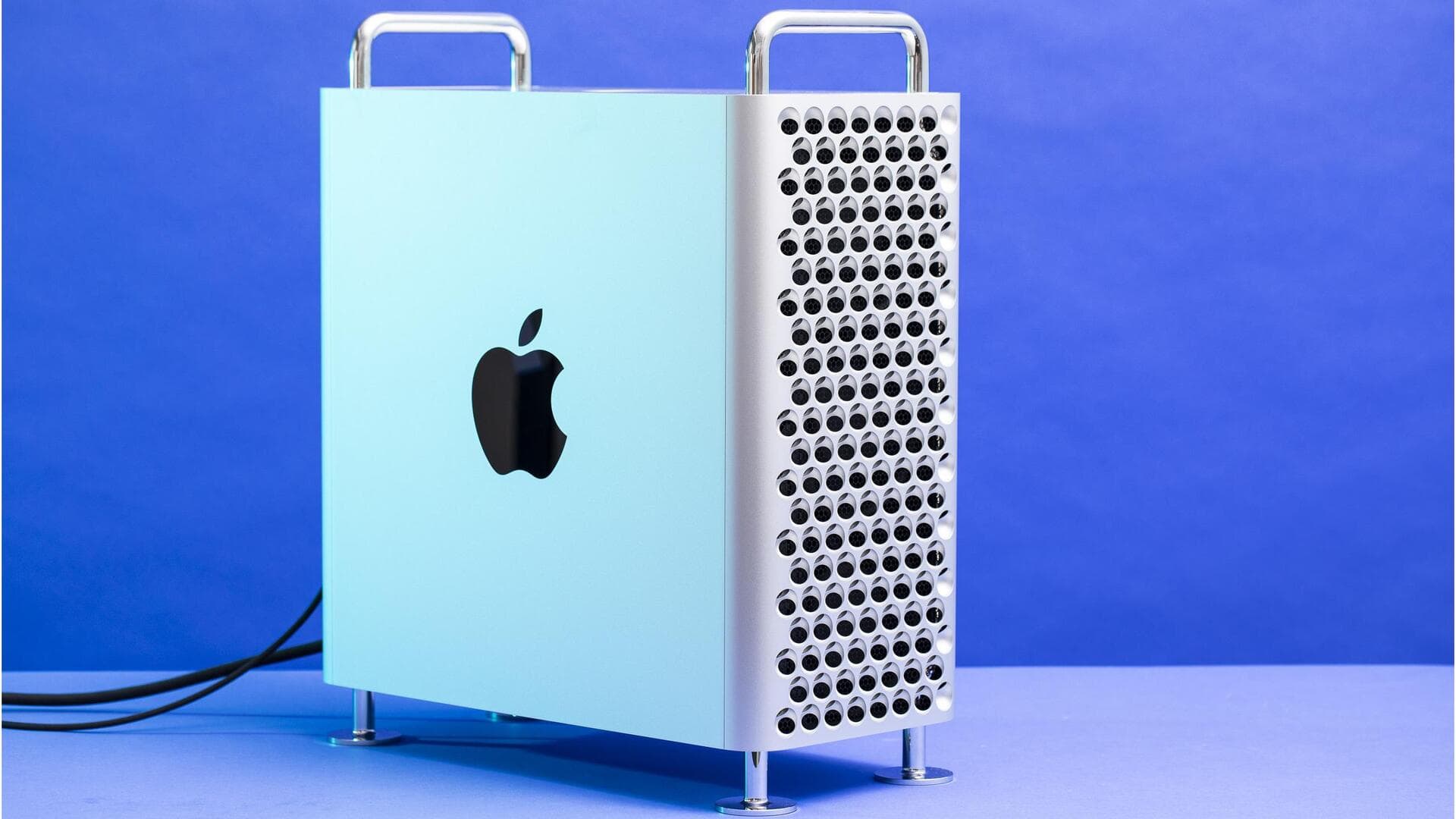
The final version of the Mac Pro, powered by Apple’s custom silicon, showcased impressive performance benchmarks but lacked the flexibility that had once defined the product. For many users, the inability to upgrade core components or add external GPUs represented a significant departure from what made the workstation appealing in the first place.
As a result, a growing number of professionals began exploring alternatives—either within Apple’s own lineup or from competitors offering more customizable solutions.
Apple Silicon Changes Everything
At the heart of this transition lies Apple’s shift to its in-house processors, commonly referred to as Apple silicon. These chips have transformed the company’s entire computing strategy, emphasizing efficiency, integration, and performance per watt.
While Apple silicon has enabled remarkable advancements in speed and energy efficiency, it has also fundamentally changed how computers are designed. Unlike traditional workstation architectures, which rely on interchangeable components, Apple’s newer systems integrate CPU, GPU, and memory into a single unified structure.
This approach has delivered exceptional performance but at the cost of modularity. For a product like the Mac Pro, whose identity was built on customization and scalability, this shift created an inherent contradiction.
Rise of Compact Powerhouses
As the Mac Pro fades into history, other products in Apple’s lineup have stepped in to fill the gap. Most notably, the Mac Studio has emerged as the company’s new flagship for professional users.
Compact, powerful, and relatively more affordable, the Mac Studio offers performance levels that rival—and in many cases exceed—the Mac Pro, all within a significantly smaller form factor. For many users, it has become the preferred choice, rendering the larger and more expensive workstation increasingly redundant.
This shift reflects a broader industry trend where size and modularity are no longer the defining features of professional computing. Instead, efficiency, speed, and integration are taking center stage.
End of an Icon
The Mac Pro’s journey has been marked by both innovation and controversy. From its original aluminum tower design to the bold cylindrical model introduced in 2013—often criticized for its limited upgradeability—the product has continually pushed boundaries while occasionally misjudging user expectations.
In 2019, Apple attempted to return to its roots with a redesigned modular Mac Pro, complete with a lattice-patterned exterior and extensive customization options. While it was praised for restoring flexibility, its high price point limited its accessibility to a niche audience.
The final iteration, despite its technical prowess, could not reconcile the competing demands of modern chip architecture and traditional workstation design.
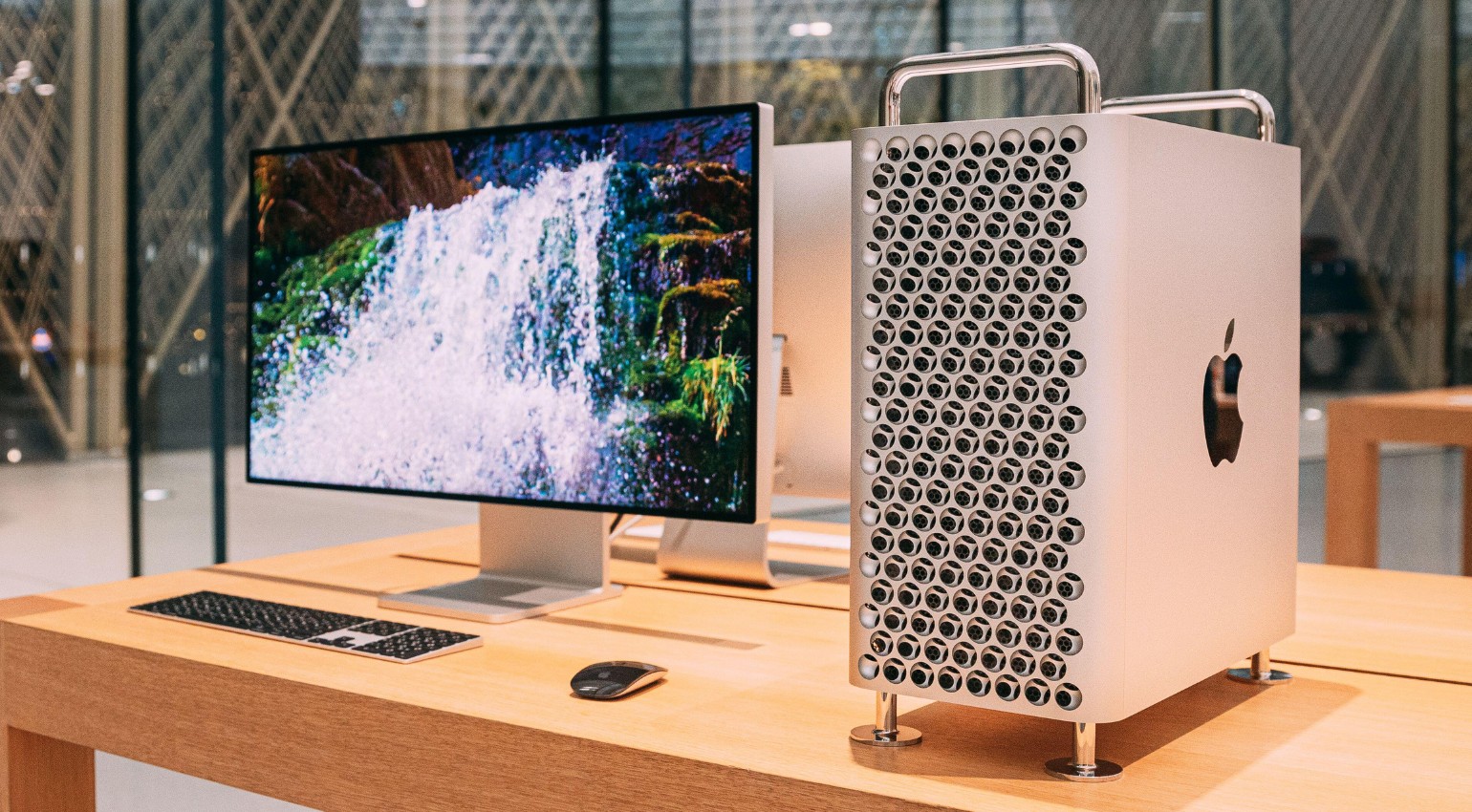
What This Means for Professionals
The discontinuation of the Mac Pro marks more than just the end of a product—it represents a fundamental transformation in how professional computing is defined.
For decades, workstations were synonymous with large towers, upgradeable components, and near-limitless customization. Today, that model is being replaced by tightly integrated systems that deliver exceptional performance out of the box, with little need for user modification.
While this shift offers advantages in terms of reliability and efficiency, it also raises questions about flexibility and long-term adaptability. Professionals who rely on highly specialized workflows may find fewer options for hardware customization within Apple’s ecosystem.
A Strategic Realignment
For Apple, the move is part of a broader effort to streamline its product lineup and align it with its long-term vision. By focusing on a smaller number of highly optimized devices, the company aims to deliver consistent performance and user experience across its ecosystem.
The decision also underscores Apple’s confidence in its silicon strategy, which has already reshaped the Mac lineup and positioned the company as a leader in chip design.
The End of the Workstation Era
With the Mac Pro officially retired, the era of traditional workstations within Apple’s ecosystem has come to a close. What replaces it is not a direct successor, but a new philosophy—one that prioritizes integration over expansion and efficiency over scale.
For longtime users, the Mac Pro will be remembered as a symbol of power and possibility. For the industry, its discontinuation signals a turning point, as the definition of professional computing continues to evolve in an increasingly integrated world.