


Apple and Google Issue New Global Cyber Threat Alerts
Apple and Google have issued a fresh round of cyber threat notifications to users around the world, warning of potential targeting by sophisticated state-backed hackers and commercial spyware operators. The alerts are part of a broader effort by both tech giants to proactively notify individuals whose devices or accounts may have been compromised.
Apple reported sending alerts to users in more than 80 countries, signaling possible intrusion attempts linked to highly sophisticated attacks. While the company did not disclose specific details about the perpetrators, the notifications are intended to give users a chance to secure their accounts and devices before any potential data breach escalates.
Following Apple’s announcement, Google also issued warnings to several hundred users across multiple countries, highlighting risks posed by spyware from commercial vendors known to provide tools to state actors. The company encouraged affected users to immediately update passwords, enable multi-factor authentication, and review device security settings to mitigate potential damage.

Cybersecurity experts note that such alerts are increasingly important as digital surveillance becomes more sophisticated and widespread. State-backed attackers often target journalists, activists, government officials, and business leaders, making early notification crucial in preventing unauthorized access and safeguarding sensitive information.
Both Apple and Google emphasized that these notifications are precautionary measures and do not necessarily indicate that user accounts have already been breached. Instead, they serve as a proactive defense, reflecting a growing trend among major tech firms to enhance user awareness and resilience against cyber threats.
The move underscores the ongoing challenges of securing personal and professional digital information in an era of advanced cyber espionage. By alerting users early, Apple and Google aim to empower individuals to take swift action, protect their data, and reduce the risk of exploitation by malicious actors operating across international borders.
Meta Delays Release of Phoenix Mixed-Reality Glasses to 2027
Meta has announced that its highly anticipated mixed-reality glasses, code-named Phoenix, will now launch in the first half of 2027, pushing back the previously planned release by roughly six to nine months. The company cited the need for additional development time to ensure the device meets user expectations and delivers a polished experience.
The Phoenix glasses, formerly known internally as Puffin, are designed as a lightweight, goggle-style headset weighing approximately 100 grams. Unlike high-end, performance-heavy headsets, Phoenix aims to provide a more accessible mixed-reality experience, with streamlined computing power and displays optimized for comfort and everyday use. The delay will allow Meta to refine the design, performance, and overall user interface to meet these goals.

Meta’s internal teams described the additional development period as “breathing room” to get the details right, emphasizing quality over rushing to market. Executives view the delay as an opportunity to strengthen the product’s hardware and software integration, ensuring that users receive a stable, reliable, and intuitive mixed-reality experience upon release.
The decision comes amid broader adjustments to Meta’s hardware strategy, with the company balancing innovation in the metaverse with budget and operational considerations. Reality Labs, the division responsible for mixed-reality and virtual-reality products, has been undergoing restructuring, including cost management measures, while continuing to invest in wearable technology.
Despite the delay, Meta remains committed to the mixed-reality market. Phoenix is expected to serve as a lighter, more approachable entry point for consumers, potentially expanding adoption of augmented and virtual reality beyond gaming and enterprise users. By taking extra time to refine the glasses, Meta aims to position Phoenix as a device that sets a new standard for usability, comfort, and everyday mixed-reality applications.
The tech world will be watching closely in 2027, when Phoenix is expected to hit the market and potentially redefine the landscape of consumer mixed-reality devices.
Europe Forges Ahead with Big Tech Crackdown, Fines X Despite U.S. Pressure
Europe is intensifying its regulatory crackdown on Big Tech, imposing a significant fine on X, the social media platform formerly known as Twitter, in a move that directly challenges U.S. criticism. European regulators announced a €120 million penalty against the platform for violations of the bloc’s Digital Services Act (DSA), marking one of the first major enforcement actions under the new legislation.
The fine comes after X allowed a paid verification system, commonly known as the “blue checkmark,” that misleads users about account authenticity. Regulators also highlighted the platform’s failure to provide transparent advertising records and grant researchers access to public data, which undermines the DSA’s goals of accountability, transparency, and online safety.
The European Commission emphasized that enforcing these rules is a matter of regulatory sovereignty. While the Trump administration has criticized the fine as an unfair attack on American tech companies and a threat to free expression, European officials remain firm, asserting that compliance with the DSA is non‑negotiable.

This action follows other high-profile fines against major tech firms in Europe and signals a growing willingness to hold global platforms accountable for practices that could harm users or distort competition. Analysts say it could reshape how U.S.-based tech companies approach content moderation, transparency, and platform governance in international markets.
In addition to the fine, ongoing investigations are reportedly underway into other social media and technology companies, suggesting that Europe’s regulatory scrutiny is far from over. The enforcement against X demonstrates that the European Union intends to implement its digital regulations rigorously, regardless of political pushback from abroad.
As tensions rise between U.S. tech giants and European regulators, the X fine is likely to set a precedent for future enforcement actions, emphasizing that compliance with Europe’s evolving digital rules will be a critical factor for any platform operating on the continent.
EU Fines X $140 Million for Content Rule Violations While TikTok Settles
The European Commission has issued a €120 million (approximately $140 million) fine against X, formerly known as Twitter, for breaching the bloc’s Digital Services Act (DSA). This represents the first major enforcement under the DSA, signaling Europe’s commitment to holding large tech platforms accountable for transparency, content moderation, and user safety.
Regulators cited multiple violations, including X’s paid “blue checkmark” verification system, which they said misled users about account authenticity. Additionally, the platform failed to maintain a transparent advertising registry and restricted researchers’ access to public data. These shortcomings, the Commission said, undermined the DSA’s goals of transparency, accountability, and a safer online environment. X has been given a fixed period to propose corrective measures or face further penalties.

In contrast, TikTok, which was also under scrutiny for similar compliance issues, avoided a fine. Instead, European regulators accepted the platform’s commitments to enhance transparency in advertising and data practices, effectively settling the matter through voluntary corrective actions.
The fines come amid rising tensions between European regulators and U.S.-based tech firms. Critics in the United States have argued that these measures unfairly target American companies and could threaten free expression, but EU officials insist that enforcement is based solely on compliance with established laws. They emphasize that all platforms, regardless of origin, must adhere to Europe’s rules.
Analysts say the X fine sets a significant precedent, demonstrating that Europe will enforce the DSA rigorously. It may also influence how global tech companies approach transparency, content moderation, and governance in the region. With additional investigations into other platforms reportedly underway, the EU’s first major DSA penalty marks a turning point in the regulation of digital services, signaling that the era of unregulated Big Tech in Europe is coming to an end.
As regulators continue to monitor compliance, the outcome for X and TikTok underscores that adherence to Europe’s digital rules is now non‑negotiable.
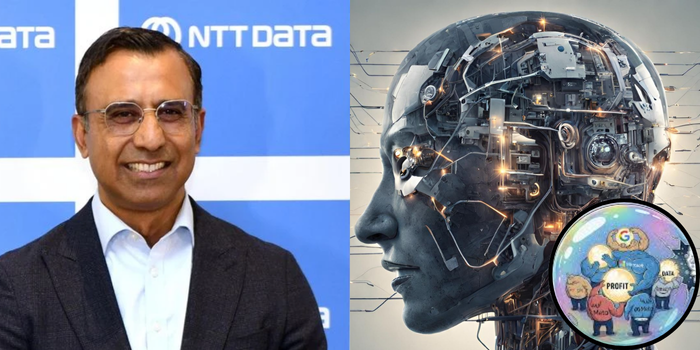
AI Bubble May Be Short‑Lived, Stronger Rebound Expected, Says NTT DATA Chief
The chief executive of NTT DATA has suggested that the current surge of enthusiasm surrounding artificial intelligence could represent a temporary bubble, but warned that any downturn will likely be followed by a stronger, more sustainable rebound.
Speaking in a recent interview, the executive acknowledged that the next 12 months may see a period of “normalization” as inflated expectations and speculative investment meet the realities of enterprise adoption. While some hype and overcapacity may dissipate, he emphasized that this is not a sign that AI’s growth potential is over. Instead, it is an opportunity for the industry to consolidate, focus on practical applications, and lay the groundwork for long-term expansion.
He highlighted the current supply-demand imbalance in AI infrastructure. Demand for computing power and cloud services remains high, but chip and data center capacity are stretched, giving major hardware and cloud providers significant leverage. Once infrastructure bottlenecks ease and systems scale effectively, he expects AI deployment to accelerate, with measurable productivity and business outcomes driving value beyond the speculative hype.
The executive also noted the potential social and workforce implications of AI adoption. Over a medium- to long-term horizon, technological disruption may shift labor market dynamics, requiring businesses to rethink hiring and reskilling strategies. Despite these challenges, NTT DATA plans to continue global hiring, reflecting confidence that AI-driven growth will generate new opportunities even as it reshapes existing roles.
In summary, while the AI landscape may experience a short-term correction, the outlook remains positive. The initial hype may fade, but it will be replaced by a stronger, more grounded wave of adoption driven by real-world implementations, scalable infrastructure, and tangible business results. According to NTT DATA leadership, the AI “bubble” is a temporary phase in a much larger and ongoing technological transformation.






